Settle in — this guide tells you if today’s the right day for a seaside outing. You’ll find ocean views, clifftops, hidden coves and plenty of photo stops 📸. It’s especially lovely in winter on the Sunshine Coast when skies are clear and temps are comfortable.
Start with a plan: the route moves predictably from headland to bay, with highlights in order so you can map the day before your first step. Expect Tea Tree Bay, Fairy Pools and Alexandria Bay, plus quieter detours if you want peace.
This is practical and mobile-friendly. We cover where to start, how long the walk takes, what to pack and simple ways to get back without stress. Crowds can change the vibe, so timing matters.
It’s written for travellers and locals across Australia who want a reliable, on-the-go plan. Ready to see the coast from a fresh angle?
Key Takeaways
- Expect dramatic ocean views and photo-friendly clifftops.
- Follow the route order to mentally map Tea Tree Bay to Alexandria Bay.
- Plan start time to avoid crowds and enjoy clearer winter skies.
- Pack sun protection, water and comfortable shoes for the walk.
- This guide is mobile-friendly and aimed at Australian travellers.
Acknowledgement of Country and what makes Noosa National Park special
We begin with a respectful Acknowledgement of Country. We acknowledge the Kabi Kabi people, the Traditional Owners of this land and sea, and pay respect to Elders past and present. Your visit honours a living connection to country and community.
Noosa National Park on Kabi Kabi Country
Noosa National Park sits on Kabi Kabi Country and offers a mix of rugged headlands and calm bays. The area’s cultural and natural value is obvious in every lookout and shoreline.
Clifftop scenery, turquoise water and tucked-away coves
The signature look is clear: pandanus-framed bays, clifftop lookouts and that deep sapphire colour on clear days. Steep headlands drop to turquoise water and small coves you can’t reach by car.
“Expect dramatic panoramas and quiet beaches tucked away from the main tracks.”
Best timing for clearer views and fewer people
Winter, especially mid-week, gives crisp visibility and comfortable temps — the sweet spot for better views and photos. Avoid weekends and school holidays if you want quieter viewpoints.
- Early starts on a weekday = calmer lookouts and cleaner photos.
- If you only have one day, aim for a morning arrival to beat crowds.
Quick overview of the coastal track: distance, difficulty and time
Before you lace up, get the short version: distance, duration and difficulty in a glance. This helps you decide how much daylight and energy to set aside. ☀️
At a glance
- Distance: ~10.8 km loop.
- Typical time: 3–4 hours (2–3 hours if you move quickly).
- Difficulty: easy to moderate — not technical but you’ll feel it in the legs, especially with steps near Sunshine Beach.
How people usually do it
Point-to-point — start at the Park Road day-use area and finish at Sunshine Beach. This is direct and lets you follow the headlands.
Loop option — use inland links to return to your start. Good if you prefer finishing where you began.
Surface and pacing notes
The early section near the day-use area is wide and sealed, and more wheelchair friendly and busier.
After Dolphin Point the trail becomes unsealed and more natural underfoot. That’s where the crowds thin and the scenery feels wilder.
“Pace changes everything — photos, wildlife stops and beach dips add extra time.”
How to get to the trailhead from Noosa Heads, Hastings Street and Sunshine Beach
Where you begin changes the pace—choose the Hastings Street side for lookouts or Sunshine Beach for quieter parking. Both are valid. Your choice affects walking, parking and the final transport plan.
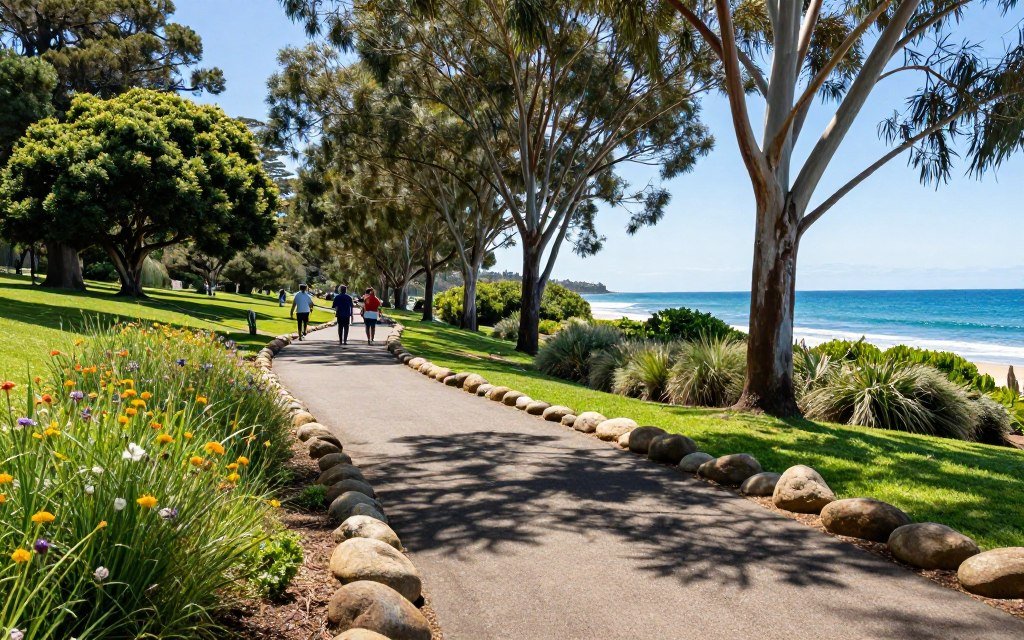
Starting from the Park Road day-use area
The Park Road day-use carpark is the closest option if you’re staying near Hastings Street and the Surf Club.
Note: spaces are limited. Expect about a 1 km walk from Hastings Street via the Park Road boardwalk, with a slight uphill to the park entrance.
Starting from Sunshine Beach
Street parking around Seaview Terrace is often easier and quieter.
Be ready to start on sand and climb a solid set of steps early on. You trade a gentler arrival for some extra effort at the outset.
Public transport and the “bus back” plan
If you finish at Sunshine Beach, plan for an extra 1.2–1.3 km walk to the Duke Street bus stops. Bus route 627 commonly runs back to central points.
Bus back tip: allow time for the walk to the stop so you’re not waiting late in the sun.
Parking realities on weekends and holidays
Weekends and school holidays fill the park fast. Aim to arrive early or expect to loop carparks looking for a spot.
Overflow parkland car parks help, but they can add around 2 km to your day. Factor that into your plan.
- Quick decision: Want easiest access to lookouts? Start the Hastings Street/park end.
- Want less parking stress? Start the Sunshine Beach end and accept the sand + steps start.
What to pack and how to prep for a comfortable day on the walk
Pack smart so the day stays fun and you avoid any sweaty surprises. A little planning keeps your pace steady and your energy up.
Water and snacks
Bring enough water. There are limited water points and no food for sale along the route, so plan for a few hours on the track.
Carry easy snacks: fruit, muesli bars or a sandwich. Eat at a bay and keep moving without rushing.
Sun and heat management
Sunscreen and a hat are essential. Open headlands get hot quickly. Pack a light cover-up you can throw on.
Add a towel and bathers if you want a quick swim at calmer coves. Remember some beaches are unpatrolled — swim with care.
Footwear and timing tips
Wear grippy shoes for sand, steps and unsealed sections of the trail.
Start earlier in the morning. Cooler time of day makes the steps and sand feel far easier and keeps the return pleasant.
First viewpoints and bays from the Noosa end: Boiling Pot to Dolphin Point
Begin at the park picnic area and expect quick, dramatic sea views within minutes. The trail from this side is sealed and easy to follow, so you can set your pace and enjoy the scenery.
Boiling Pot lookout
About 300 m from the picnic area, Boiling Pot is your first “wow”. Rock platforms and swirling water change with tide and swell.
On clear days you may spot dunes along Teewah Beach. The wide, sealed lookout is wheelchair accessible and photo-friendly.
Tea Tree Bay
Shortly after, Tea Tree Bay appears: pandanus, palms and a postcard bay framed by headlands.
Surfers love this beach for its breaks. Swimming here is unpatrolled and can have strong rips, so take care.
Dolphin Point
It’s roughly 900 m from Boiling Pot to Dolphin Point on a sealed track. The upgraded lookout has stone benches and a calm spot to pause.
Watch for dolphins and, in season, whales passing offshore. The view rewards a slow cup of coffee and binoculars.
Wildlife chances on the track
Keep an eye in the trees for koalas. You may also spot echidnas on the ground near the path.
Wildlife etiquette: stay on the track, keep distance, and never touch or feed animals.
| Point | Distance from picnic area | Highlights |
|---|---|---|
| Boiling Pot | ~300 m | Rock formations, swirling water, wheelchair access |
| Tea Tree Bay | ~450–600 m | Pandanus and palms, surfers, unpatrolled beach |
| Dolphin Point | ~1.2 km (from picnic area) | Sealed lookout, benches, dolphins and whales in season |
Quieter coves and the mid-walk highlights: Winch Cove, Picnic Cove and Granite Bay
The middle stretch feels more private, with unsealed track and calm sandy coves to discover. Crowds thin here and the mood shifts toward quieter, natural views.
Winch Cove
Winch Cove is a lovely, low-key beach stop. It often feels calmer than earlier bays and is a handy reset point. Note: it’s unpatrolled, so swimming is not advised unless conditions are perfect.
Picnic Cove
Picnic Cove makes a natural breather. Pause for a snack, top up water and enjoy the shelter before the headlands get wilder. Short breaks here help you tackle the next section with fresh legs.
Granite Bay
Granite Bay opens into longer sandy stretches and visible surf breaks. Surfers pick the better rides here and the shore leads you toward the Fairy Pools at the far end. Slow down and watch the coastline change — Granite Bay is the runway to the pools.
- Practical tip: from Dolphin Point the unsealed section runs for about 1.5 km past these coves toward Hell’s Gates.
- Safety: these beaches are mostly unpatrolled—treat the ocean with respect and swim only when conditions suit you.
Fairy Pools and Hell’s Gates: the dramatic section everyone comes for
Here the trail reaches its most dramatic stretch — jagged rock, deep blue water and natural pools that photographers and nature lovers chase. This is the hero section of the park and the reason many people plan their day around a single stop.
Noosa Fairy Pools: timing your visit and checking conditions
Go very early and aim for a weekday to avoid crowds. The pools become busy fast on weekends and public holidays.
Check tide and swell before you climb the rocks. Pools are safe-looking but conditions change; big swell can make edges slippery and dangerous.
Hell’s Gates lookout: crashing water and standout photos
Hell’s Gates sits on a high bluff. Waves smash into the rock face and spray can reach the lookout.
The contrast between calm bays and this raw scene is what makes the view so memorable. Bring a windproof layer and a camera for dramatic shots. 📸
Safety on the headlands
“There are no barriers at some points — beware of sharp edges and sudden gusts.”
Keep children close. Some drops are steep and rocks can be slippery. Stay off wet rock edges and never turn your back to the sea.
Marine life spotting
Watch rocky outcrops for turtles feeding and reef fish in the pools. Enjoy sightings from a safe distance and avoid crowding wildlife.
| Spot | Why go | Key safety tip |
|---|---|---|
| Fairy pools | Natural rock pools for photos and tide-fed pools | Check tide/swell; avoid during big swell |
| Hell’s Gates | High bluff with dramatic wave action and sweeping views | Strong winds and no barriers—keep to firm ground |
| Rocky outcrops | Good chance to see turtles and coastal life | Observe from distance; do not climb on feeding areas |
Plan your time so the Fairy Pools and Hell’s Gates are highlights, not hazards. For a full route plan and practical tips, see the park guide.
Alexandria Bay to Sunshine Beach: the final stretch and what to expect
The final stretch unfurls into open sand and a quieter mood, signalling the end is near. From Hell’s Gates it’s about 600 m to Alexandria Bay, where the atmosphere changes. The place feels more remote and open, and the day starts to feel properly wild.
Alexandria Bay — a quieter, mixed-use bay
Alexandria Bay is popular with surfers and beachgoers, and parts are used as an unofficial nudist beach. It’s common and tolerated, so don’t be surprised.
The bay keeps a relaxed vibe. People surf, stroll or rest on the sand. Respect privacy and keep a calm presence.
Finding the exit and continuing south
Walk along the sand toward the southern end of the bay. In daylight the track is easy to spot where it re-enters the headland.
If visibility is low, give yourself extra time. The sandy approach is straightforward in good light.
The final climb, views and Sunshine Beach finish
The last section from near Alexandria Bay’s north end is roughly 2.1 km. Expect a proper climb, a rewarding lookout and then many steps down to Sunshine Beach.
On a clear day the horizon opens wide and you can pick out Mount Coolum — a nice finale before you hit shore.
Finishing near the Sunshine Beach Surf Club makes planning easy: a swim, shade and a clear meeting point for transport back.
| Section | Distance | Key notes |
|---|---|---|
| Hell’s Gates → Alexandria Bay | ~600 m | Remote feel; surfers and unofficial nudist area |
| Alexandria Bay (southern exit) | Sand approach | Track re-entry visible in daylight |
| Alexandria Bay → Sunshine Beach | ~2.1 km | Climb, lookout views, steps down to Sunshine Beach and Surf Club |
For more practical tips and route details, see this park guide.
Returning options: loop tracks, car logistics and catching the bus back to Noosa
When it’s time to head back, pick the option that matches your energy, schedule and transport plan. Below are three straightforward choices so you can finish smartly and keep the day relaxed.
Same way back on the coastal track
Option A is the simplest: retrace your steps along the coastal track. Navigation is easy and you get both directions of the scenery.
This doubles the distance but removes decision stress. Good if you parked a short car ride from the park.
Loop routes via inland trails
Option B uses inland links such as the Tanglewood Track to form a loop. Trails here are quieter and offer different views.
Loops can save time and split the effort across varied terrain.
Bus back plan from Sunshine Beach
Option C is to finish at Sunshine Beach, then allow ~1.2–1.3 km to the Duke Street stops to catch bus route 627.
Many walkers finish near the Sunshine Beach Surf Club and either catch a bus or use the Surf Club’s courtesy run after lunch. If you need to catch bus options, check timetables and give yourself extra walk time to the stop.
“Plan your return before the last lookout — it saves time and energy.”
| Strategy | When to choose | Key tip |
|---|---|---|
| Retrace the coastal track | Want simple navigation | Pack extra water; expect a longer day |
| Loop via inland trails | Prefer varied scenery | Bring a map or GPS — some links are less signed |
| Bus back / Surf Club | Short on time or one-way parking | Allow extra walk to stops; check bus times |
Conclusion
Wrap up your day with confidence: you now know the route, the time it takes and the key stops to plan around.
Best day formula: aim for winter, mid-week and an early start for clearer views and fewer people. Bring plenty of water and snacks — there are limited water points and no food for sale along the track.
Highlights flow nicely from Tea Tree Bay and Dolphin Point through the Fairy Pools and Hell’s Gates, then Alexandria Bay before the final payoff at Sunshine Beach. Start at the Park Road day-use area or the Sunshine Beach end, and use the bus back option if you don’t want to double your distance.
Safety first: respect headland hazards, check swell, and remember no permits, no dogs and no camping in this national park. For more practical local tips see walks in Noosa.
Pick your start point, check conditions, and enjoy one of the Sunshine Coast’s most iconic noosa coastal walk experiences. 🙂