Ready for a quick, clever guide to the island? This punchy list helps you build a smart itinerary fast. You’ll get a clear mix of street-life and hill escapes so you can plan a relaxed trip without overthinking.
The place pairs George Town’s UNESCO heritage and famous hawker scene with rainforest-clad hills on the quieter west side. Expect two worlds: lively streets and cooler rainforest views.
This guide suits first-timers, foodies, families and travellers who want culture, nature and views in one trip. We flag hero stops like street art, street food, Kek Lok Si, the funicular on Penang Hill, Clan Jetties, Komtar views and the national park.
How to use this list: pick 3–5 must-dos per day, cluster by area to save time, and lock in a tour when it cuts friction. We’ll also note changes to opening hours and known closures so you don’t get caught out.
Key Takeaways
- Use this guide as a fast, friendly list to plan your days.
- Balance George Town’s streets with hilltime for the best experience.
- Pick 3–5 things per day and group them by area.
- We cover practical tips: how long to stay, best time, and getting around.
- Watch for updates on openings and renovations before you go.
Why Penang belongs on every Aussie traveller’s hit list
If you want a bite-sized trip that mixes street life, temples and rainforest walks, this island is an easy win for Aussie travellers. It’s compact, friendly and gives you culture, food and nature without long transfers.
George Town east vs rainforest west
On the east, george town is dense and walkable. Expect heritage lanes, museums and food at every corner.
The west feels quieter. Roads climb into jungle around Air Itam and Penang Hill, with cooler air and slower pace.
How many days to plan
For first-timers aim for 3–5 days. Two days covers highlights fast: a city walk and a food crawl. Four days is sweet — it lets you add Kek Lok Si and a hill day.
A full week gives time for beaches, the national park and lazy cafes. Build in a flexible rain day for Komtar, museums or a guided tour.
Good to know: it can get hot and humid, so start early and pause for shade and water.
- Mini-itinerary: Day 1 heritage in george town; Day 2 street art + food; Day 3 Kek Lok Si + Penang Hill; Day 4 beach or national park.
How to plan your time in Penang Island like a local
Plan your days around cool mornings, lazy middays and lively evenings. Start early for quieter streets and better light. Take a long midday break — cafes, siestas or a short tour save you sweat and stress. Then head out again for hawker food and night markets.
Best time of day for sightseeing
Sunrise and early morning are best for street photography and walking in george town. Late afternoon gives nicer views from viewpoints when the heat eases. Evenings are for food stalls and markets — that’s when local life hums.
Getting around: easy ways to move
Walk the core of george town — it’s the most rewarding way to find lanes and murals. Use rideshares for longer hops or to reach the west side quickly. A guided tour helps on multi-stop days to save time and navigation stress.
Trishaws: fun and relaxed, common near Armenian Street. Typical rates you’ll hear are about RM40 for 30 minutes or RM80 for 60 minutes — negotiate confidently before you climb in.
Where to base yourself
Base in George Town for walkability and easy access to top places. Choose Batu Ferringhi if you want beaches and resorts, but expect longer travel times into the city.
- Crowd tip: avoid school holidays for the funicular; queues can run up to two hours unless you pre-book.
- Packing micro-checklist: water bottle, sunscreen, compact umbrella, comfy shoes, and a light layer for hilltime.
Penang attractions you can’t miss in George Town’s UNESCO zone
Begin in the UNESCO zone; this tight grid links the city’s top heritage sites and makes a great walking loop. This area is your anchor — you’ll tick off many iconic places on foot without long transfers.
The heritage streets feel textured: colourful shophouse façades, clan markers and narrow lanes that slow you down for photos. Pause at tea shops and shady verandahs to rest between short walks. ☕
Heritage streets and colonial-era landmarks worth detouring for
String these into one easy walk around the Town Hall and memorial clock tower precinct:
- Start at the Town Hall plaza.
- Walk past the memorial clock tower to St George’s Church.
- Drop into nearby shophouse lanes and clan houses for photos.
Fort Cornwallis and what to know before you go
Fort Cornwallis dates to the late 1700s and marks the British founding of George Town in 1786. It’s a neat historical stop that sums up colonial-era defence and early trade.
“Fort Cornwallis captures the island’s colonial beginnings and offers clear context for the surrounding heritage streets.”
Practical note: the fort is undergoing renovation and may be temporarily closed. Sources expect a reopening around April 2026, so check before you plan a visit.
Temples, churches and the city’s “one best” multicultural feature
Within a few minutes’ stroll you’ll see temples, churches and mosques side by side. This mix is often called the city’s one best feature — a compact display of faith, food and history.
| Visit style | Best for | Time needed | Tip |
|---|---|---|---|
| Self-guided | Flexible pace, photo stops | 2–4 hours | Use a map app and plan shade breaks |
| Guided heritage tour | Context, stories, hidden details | 2–3 hours | Great if you want local history and anecdotes |
| Short curated walk | Quick highlights | 1–2 hours | Perfect for hot afternoons or mixed itineraries |
Should you book a tour? If you crave background and colour, a heritage tour lifts the stories above pretty façades. If you prefer photos and freedom, self-guided is ideal. Either way, plan short loops, café stops and early starts to beat the heat.
Street art in George Town, starting with Armenian Street
Start your George Town art hunt on Armenian Street — it’s a compact, easy loop and the perfect way to begin.
Iconic murals to track down
Look for Ernest Zacharevic’s Little Children on a Bicycle — the mural that helped spark the local scene in 2012.
Also hunt out “I Want Bao!”, “Teach You Hokkien” and the playful “101 Lost Kittens”.
These pieces matter beyond Instagram: they add local stories, humour and slices of daily life to the lanes.
Best way to do it: stroll or trishaw?
A self-guided stroll is flexible and free. You can pause for photos and cafes at your own pace.
A trishaw covers more ground and beats the heat — great for families or when you’ve only got one day.
Photo tips for beating the crowds
Go early morning for clean shots. Use portrait mode sparingly and try off-centre framing.
Be patient for gaps in doorways and respect residents — don’t block entries or climb on works.
Finish with a nearby coffee or hawker snack to make the art walk feel like a proper outing. 🎨
Penang street food adventure
A food crawl here is a headline act — not a detour; plan it like a choose-your-own feast. Start with a short list of must-try dishes and build a loop that fits your appetite and schedule.
Must-try dishes first-timers should prioritise
Begin with local icons: char kway teow for smoky noodles, asam laksa (sour fish broth) in Air Itam, nasi kandar for mixed curries, hokkien mee for prawn-rich soup and cendol to finish sweet and cooling.
Best streets and hawker areas for a proper food crawl
Make Chulia Street your flexible hub for variety. Kimberley Street lights up at night with market energy. Gurney Drive is a big-hub option with many stalls in one place.
When to book a guided food tour (and why it saves time)
Book a tour if you’re short on time, hate decision fatigue, or want a local guide to skip touristy traps. A guide points you to legacy stalls and explains history as you taste.
How to order like a pro at busy stalls
Queue calmly, have cash ready, and point if the crowd rushes you. Ask about spice level and share plates.
Pacing hack: start light, share one dish between two, sip water, and plan cendol as a reset. Keep a small umbrella and favour covered hawker centres if rain or heat hits.
Kek Lok Si Temple in Air Itam
Perched on a green hillside, Kek Lok Si delivers an immediate sense of scale and calm that’s hard to forget. It’s one of the largest Buddhist complexes in Southeast Asia and the biggest in Malaysia, making it a must-do cultural day trip from George Town. 🏯
Why it stands out
The complex blends Chinese, Thai and Burmese design across layered terraces and shrines. The hilltop setting amplifies the scale and the views. Key draws are the Ten Thousand Buddhas Pagoda and the nearly 40m Kuan Yin statue — true wow moments.
Entrance, price and what costs extra
General entry to the lok temple is free. Paid bits include the pagoda (RM2) and the cable car (about RM8 each way per adult). These small prices make sense for the views and saved walking time.
Best time to visit
Go early in the morning for cooler walking and clearer photos. If you can handle crowds, Chinese New Year lights and lanterns are spectacular but busy. Dress modestly, keep voices low in prayer areas and move slowly through tight spots.
“Combine Kek Lok Si with a Penang Hill visit to save travel time and get the best of hilltop views in one day.”
Penang Hill and the famous funicular railway
A crisp ride up to cooler heights gives you a quick escape from the city heat and a new perspective on the island below.
How the funicular works and how to avoid long queues
The funicular runs daily from 6:30am to 11:00pm and the trip takes about five minutes. Tickets are sold at the base station; boarding is straightforward and fast when queues are short.
Queue tips: arrive early or late afternoon, skip school holidays and weekends if you can, or book a bundled tour to jump the line. During peak periods waits can approach two hours.
Top lookout points for sweeping views
From the top you’ll find several lookout platforms with wide views over the island, the straits and distant hills. Late afternoon creates softer light for photos; morning gives the clearest visibility before haze sets in.
Easy summit walks vs hiking trails
Choose family-friendly loops at the summit for a relaxed wander, or hike up if you want a sweat session. Expect hiking to the top to take around 2.5 hours for many walkers, depending on pace and weather.
“Set Penang Hill up as your cooler-air reset from the city — great for views, short walks and a calm half-day.”
- Weather note: showers can come quickly and trails get slippery; wear grippy shoes.
- Plan: morning for clarity, late arvo for moodier light and sunset shots.
The Habitat Penang Hill for rainforest immersion
Add a rainforest detour to your hill day for a leafy, slower-paced nature hit. The Habitat is the rainforest upgrade you tack onto a funicular trip when you want nature, not just lookout photos. 🌿
The reserve runs a separate-ticket, roughly 1.6 km trail with raised boardwalks and treetop bridges. Expect gentle slopes and many elevated viewpoints that give true 360° views over the green canopy.
Canopy and treetop walks
Walks are family-friendly and suit mixed fitness levels. The treetop paths feel calm and slow, perfect for photos and short pauses. A simple self-guide or ranger talk adds context if you want extra background.
Wildlife and timings
You might spot monkeys, giant squirrels and colourful butterflies. Early morning and late afternoon are the best windows for sightings and quieter trails.
- Bring covered shoes and plenty of water.
- Don’t feed animals and keep snacks zipped to avoid monkey drama.
- It’s a great place for kids — short distance, educational displays and easy paths.
“Slow down: look up, listen for bird calls and treat the walk like a mini forest bath.”
Cheong Fatt Tze Mansion (the Blue Mansion) experience
Step inside an indigo landmark that feels like a living time capsule. The cheong fatt tze house stands out for its strong colour and careful restoration. It’s a concentrated dose of history and design that differs from open-air street wandering. 🟦
Guided tour vs self-guided audio
Two guided tours run daily at 11am and 2pm. These tours add stories, private rooms and areas closed to casual visitors. A self-guided audio option is available if you prefer a slower, flexible pace — pre-booking is advised.
Why architecture lovers should go
The fatt tze mansion shows layered craftsmanship: carved timber, patterned tiles and a striking indigo palette. Pick a guided visit for context and anecdotes. Choose audio if you’re tight on time.
- Timing tip: aim for the earlier session to dodge the heat and keep your afternoon free for food.
- Combo idea: finish a George Town walking loop nearby with a Blue Mansion guided visit for a strong finale.
- Etiquette: respect quiet rooms and follow photo rules so the cheong fatt story stays intact for everyone.
“A curated stop that rewards the curious — colour, craft and lived history in every room.”
Pinang Peranakan Mansion for Baba-Nyonya heritage
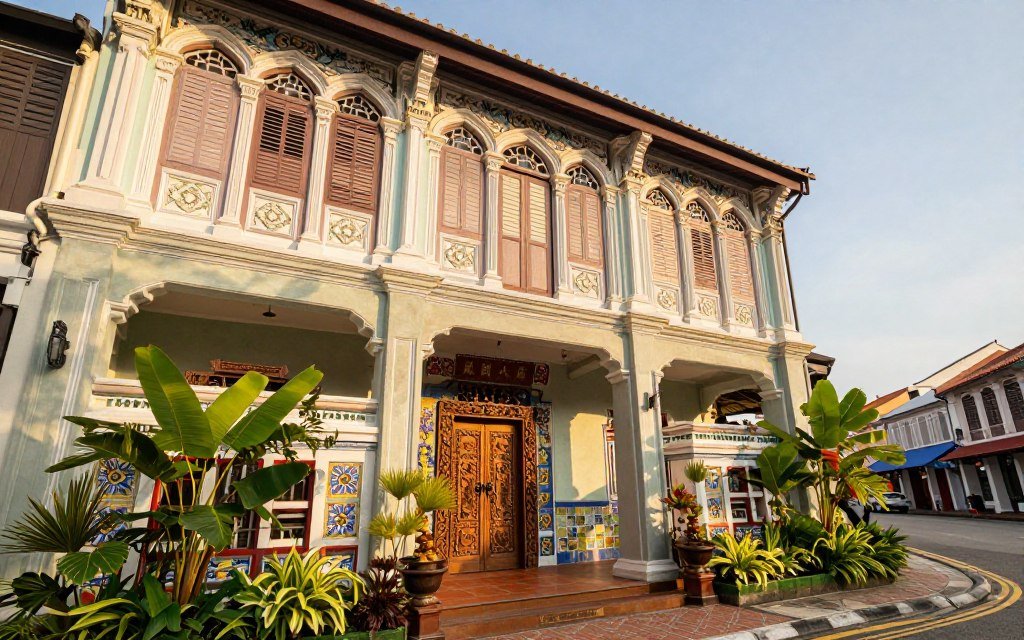
A visit here peels back the curtain on domestic life for a prosperous Peranakan family in the 19th century. The restored house is a compact museum with clear stories, not just pretty rooms.
What you’ll see inside
The mansion holds over 1,000 antiques. Expect ornate halls, carved timber, patterned tiles and family rooms arranged exactly as they once were.
You’ll find dining spaces, clothing and jewellery displays, and household objects that reveal daily routines. Each room builds a tight, museum-style narrative so you know what you’re looking at.
Why the Baba‑Nyonya story matters
Baba‑Nyonya (Peranakan) culture blends Chinese, Malay and European influences. Think hybrid food, clothing and home customs that reflect cross-cultural life.
“Seeing objects in context turns curiosities into clear stories about social rituals and family priorities.”
How it fits your George Town heritage walk
The mansion complements street-level history. After wandering lanes and façades, step inside to understand how people lived behind those shutters.
- Pacing tip: allow 45–60 minutes and pick 3–5 highlights to focus on.
- Roll this into a half-day with the Clan Jetties or a short waterfront stroll for a neat, time‑efficient loop.
- Accessibility note: older floors and stairs mean warmer indoor spaces — plan a cold drink after your visit.
Use this stop as a compact, friendly guide to the domestic side of george town heritage — it turns visual curiosity into clear cultural understanding. Pick a few key things to study and you’ll leave with a better sense of local life and place.
Clan Jetties and Chew Jetty Heritage Walk
Head to the jetties to see living neighbourhoods built on timber piles—this is daily life as much as it is history. The cluster began in the 19th century when Chinese immigrant clans built stilt houses along the water. Today residents still call these wooden lanes home.
How the jetties work (and why people still live here)
The original idea was practical: each jetty linked to a single clan or family group, so surnames became place markers. Families passed houses down generations and adapted to modern life while keeping community ties.
Chew Jetty: what to expect along the wooden walkways
Chew Jetty is the most visited and the easiest to reach from George Town. Expect narrow planks, small shrines, stalls selling keepsakes and pockets of quiet where residents live their daily routines.
Etiquette and respectful photography tips
Approach the jetties as a neighbourhood, not a theme park. Ask before photographing people, avoid peering into homes and keep voices low. Watch your step on uneven boards and keep kids close.
Quick plan: visit early for softer light and fewer crowds, then pair the walk with a nearby clan jetties guide and a waterfront café or sunset stroll for a relaxed half-day.
The TOP Penang at Komtar Tower for sky-high views
For an instant skyline win, head up Komtar Tower and watch the city fold out beneath you. It’s a fast, air‑conditioned place to grab sweeping views with minimal effort — perfect for a half‑day stop after a George Town walk. 🌇
Rainbow Skywalk vs Observatory Deck — which suits you?
Rainbow Skywalk (Level 68) is for thrill-seekers. The glass-floor sections give an adrenaline hit and bold photo ops if you’re comfortable with heights.
Observatory Deck (Level 65) is calmer and mostly indoor. Choose this if you prefer relaxed viewing, longer stays and clearer shelter from wind or rain.
Family-friendly add-ons and rainy-day rescue
Tech Dome sits nearby and makes Komtar a great family stop. It’s an indoor science centre that keeps kids engaged when the weather turns.
If rain washes out streets, Komtar still delivers big-picture views and climate-controlled comfort — a smart switch for a wet day.
Best time for sunset and night lights
Aim to arrive about an hour before sunset. You’ll get daylight, golden hour and the city lights flicking on — all in one short visit.
Practical note: opening hours are generally 10:00am–10:00pm, with earlier closing (7:00pm) on Tuesdays. Check times before you go so you don’t miss your window.
“Pair Komtar with a late-afternoon George Town loop, then walk straight to dinner nearby — easy evening flow without extra travel.”
- Quick tip: Rainbow Skywalk sits on Level 68; Observatory Deck is on Level 65.
- Pairing idea: do Komtar after street wandering for a smooth transition from lanes to skyline.
ESCAPE Penang for adrenaline, water and Guinness World Records
If you crave big adrenaline, this park stacks record-breaking water fun and jungle rides into one tidy day. It’s the best full-day thrill on the island when you want to swap temples for speed and splash. 💦
Waterplay highlights
The headline is the Guinness World Record longest tube water slide — a proper thrill that draws crowds. Plan early: queue for the big rides first, then return to family zones later.
Tip: aim for first hour after opening or late afternoon when queues dip. Use the lazy river as a mid-day reset.
Adventureplay and zip-coaster
The jungle course mixes canopy obstacles with the longest zip-coaster through rainforest. It’s a rush, but note height and fitness limits at booking.
Do a quick check at the gate — some lines require a minimum age or weight and sensible fitness for safety.
Practical tips: what to pack and how to pace your day
Pack quick-dry clothes, reef-safe sunscreen, a towel, water shoes, a spare change of clothes and a waterproof phone pouch. These small things save stress.
Pace your day by starting with must-do rides, then drift to kid zones and shaded rest areas once peak crowds arrive.
“Hydrate regularly, take shade breaks, and watch for sudden storms — safety keeps the fun going.”
| Activity | Best time | Notes |
|---|---|---|
| Record tube slide | Open / late afternoon | Queue early; thrilling but short duration |
| Zip-coaster | Morning / early afternoon | Height and weight limits apply; pre-check |
| Lazy river & kid zones | Midday | Great for resting and avoiding queues |
Transport note: confirm rideshare availability, book a return driver or add a tour if you prefer set transfers. This keeps your timing smooth and fuss-free.
Final quick take: treat ESCAPE as a single high-energy day and you’ll cover the top rides, rest well, and leave with a grin. It’s one of the best things to do when you want a fast, fun reset from heritage trails.
Entopia by Penang Butterfly Farm
If you need a colourful, weather-proof stop that teaches while it delights, this garden-and-gallery combo fits the bill.
Indoor discovery centre vs outdoor butterfly gardens
The indoor discovery centre uses hands-on displays and short films to explain life cycles and local ecology. It’s air‑conditioned and ideal when heat or showers cut your street plans short.
The outdoor butterfly gardens offer calm paths and free-flying wings. Move slowly and butterflies will often land when you’re still — great for gentle photos and quiet moments.
Why it’s a top pick for families and all‑weather fun
This is a high‑confidence option for a mixed-age group. Short walking distances make it easy for kids. Adults enjoy the learning stops and colourful scenes too.
- Timing: mid‑morning or early arvo breaks the heat and fits a full day plan.
- Photo tip: avoid flash when asked, use gentle movement and patience for the best shots.
- Comfort: bring water and a light layer for chilly indoor exhibits.
“An educational, colourful place that works rain or shine.”
Roll this stop into a north‑side loop — combine it with a national park walk or a beach pause. For details and bookings, check the Entopia official site. This short guide helps you decide if it’s the right place for your trip.
Batu Ferringhi Beach and the night market
Batu Ferringhi serves up long sandy stretches, resort energy and a lively night market once the sun dips. It’s a holiday‑style beach rather than untouched coral paradise, so set realistic expectations for your day. 🏖️
What the beach is actually like for swimming and water sports
Swimming here is generally warm and acceptable, but it isn’t always pristine. The shoreline can get busy and occasional jellyfish or floating rubbish do appear.
Common water options include jet skis, parasailing, banana boats and stand‑up paddle boards. Choose an operator who shows life jackets, posts clear pricing and runs safety briefings.
| Activity | When to try | Safety check |
|---|---|---|
| Jet ski & banana boat | Late afternoon | Visible life jackets; written price list |
| Parasailing | Morning / late afternoon | Regular gear checks; radio contact |
| Paddle board / kayaking | Early morning | Calm sea; reef-safe sunscreen |
Where to eat and shop once the stalls fire up at night
A simple perfect day: beach in the arvo, quick rinse at your resort, then head to the night market when the stalls open.
The night market is a main-road strip of stalls selling souvenirs, casual eats and clothes. It’s lively and bargaining is part of the fun.
Restaurants and beachfront cafés sit close by, so you can move from browsing to dinner without fuss. Choose a restaurant with covered seating if you want shade and a table away from the market buzz.
- Timing tip: go earlier for fewer crowds; stay later for cooler air and full market energy.
- Eating tip: sample stalls for quick snacks, then pick a restaurant if you want a sit-down meal.
Penang National Park for hikes, Turtle Beach and Monkey Beach
Make this your nature day when you want rainforest walking and beach time on the island in one tidy trip. Start early and you’ll beat the heat and get more quiet on the trail. 🥾
Best trail for first‑timers: Turtle Beach and the meromictic lake
The Turtle Beach route (Pantai Kerachut) is the top choice for first-timers. Expect about 1h30 one way for fit walkers; allow longer with kids or slow legs.
At the end you’ll find a rare meromictic lake — a calm, layered body of water that stays separate from the sea. It’s a unique place on the island and worth the walk.
The free turtle conservation centre sits nearby and is meaningful to visit. It adds purpose to the hike and helps you learn about local nesting programs.
Boat rides, beach time and keeping snacks safe from monkeys
Boats link Turtle Beach and Monkey Beach if you’d rather avoid a return walk. You can book a boat for the return or to hop between beaches — a simple local option if you’re short on time or prefer a mixed tour style day.
Monkeys are bold. Don’t wave food, keep snacks zipped well inside your bag and avoid eye contact if they get cheeky. Treat the area like a small, living neighbourhood and respect wildlife.
How much water to bring and how long to allow
Park hours run 8:00am–5:00pm year‑round, so plan to start early. Bring plenty of water — aim for at least 1.5–2 litres per person for the return hike in humid weather.
Allow extra time for breaks, photos and slow sections. Wear grippy shoes, use insect repellent and step slowly on rough paths — this is not a flip‑flop walk.
“Start early, pack water, and leave plenty of time to return before the park closes.”
Conclusion
Finish your planning with one simple rule: cluster days by area, pick three top priorities, then fill gaps with nearby places.
In one breath: george town’s heritage, street art and unbeatable street food; a hilltop rainforest reset; and a few high‑energy family options make the best of the island.
Try this split for a confident first-timer: 2 days based in george town, 1 day for Kek Lok Si and Penang Hill, and 1 day for the beach, ESCAPE or the national park.
Your next step: save this list, map your must‑dos, and book guided options only when they remove friction — think a food crawl or a hill combo day.
Go with curiosity — it’s friendly, flavour‑packed and full of small surprises if you slow down. 🇦🇺