Set clear expectations before you step ashore for a bergen cruise port day visit. This short guide shows a simple plan so you can see the highlights without stress, even if you’re in port for just part of the day.
You’ll get a quick planning checklist, smart packing tips and an easy loop: views → history → food. The layout is step‑by‑step. That means you can DIY your time in this walkable city and skip long excursions.
We’ll focus on three must‑dos: the big panorama on Fløibanen/Mount Fløyen, the heritage charm of Bryggen and a fuss‑free lunch at the Fish Market. Note two realities: changeable weather and queues at top sights. I’ll offer simple, practical workarounds. 😊
Save this page on your phone and use it like a checklist once you step off the ship.
Key Takeaways
- Use the short planning loop: views, history, food.
- Top three priorities: Fløibanen, Bryggen and the Fish Market.
- Pack layers for changeable weather and plan for queues.
- The main icons sit close to the cruise port, so you can DIY.
- Keep this page saved on your phone as a handy checklist.
Plan your bergen cruise port day visit around dock location, walking times and queues
Start by matching your dock location to a simple walking loop so you hit Bryggen, the harbourfront and the Fløibanen funicular with minimal fuss. A short plan keeps queues, costs and stress down. 😊
How close the cruise port is to Bryggen Wharf and the harbourfront
Bryggen sits just minutes from the terminal, making the historic wharf an easy first stop. The harbourfront cafes and stalls are the same short walk, so you can orient yourself quickly.
Best time to ride the Fløibanen funicular to beat the crowds
The Fløibanen funicular station is about a 12-minute walk from the main cruise port. Queues form fast, so go early or late afternoon when day-trippers thin out.
Quick budgeting tips for Norway’s higher food and drink prices
- Set a food cap: pick one splurge (seafood or a bakery treat) and keep the rest simple.
- Save walking time: plan your loop to avoid taxis—this place is very walkable.
- Queue-proof: check opening times, have tickets ready and aim to move 15–30 minutes after docking.
Dress for Bergen’s weather and pack smart for a port day
Pack for comfort, not fashion—this makes or breaks your time ashore. The local climate brings rain often, so quick swaps and sensible gear keep you exploring.
Rain-ready essentials for a famously wet place
Carry a lightweight waterproof jacket and a compact umbrella. Add a dry bag for your phone and tissues for wet benches. These simple items stop a shower from spoiling your plans.
Comfort-first footwear for cobbles, wharf walks and lookout paths
Pick shoes with grippy soles and quick-dry socks. Your feet matter—blisters will end a walking day fast. Layer with a light mid layer for quick temperature shifts as you climb toward the mountain lookout.
| Carry | Why | Leave onboard |
|---|---|---|
| Waterproof jacket | Keeps you dry and warm | Heavy coat |
| Grippy shoes | Safe on cobbles and trails | Slick dress shoes |
| Power bank & snack | Keeps energy and phone charged | Large cooler or excess baggage |
- Micro-checklist: jacket, dry bag, shoes, power bank, water bottle, small snack.
- Remember: mist and drizzle can make the views even moodier and more memorable. Enjoy the adventure! 😊
Kick off with panoramic views from Mount Fløyen via the Fløibanen funicular
Take the Fløibanen early and lock in the best views while the light is crisp and queues are short. The funicular gives quick payoff: a smooth, under‑ten‑minute ride up to about 320m above sea level. It’s a high‑impact stop even if your time ashore is tight.
What the ride feels like
The funicular is calm and roomy. You ascend the mountain in around eight minutes, watching the city shrink beneath you.
Top photo spots
At the top, step to the main platform for sweeping harbour and city panoramas. Turn slightly for glimpses of the norwegian fjords on clear days. If it’s foggy, the mist adds mood—photos still look dramatic.
Short walks, café and friendly goats
Choose a 20–30 minute forest loop for fresh air and carved troll details in the trees. Pause at the cosy café for a hot drink and watch goats grazing on the slopes—a fun mini adventure.
Walk down or ride back?
If you’re short on time, ride down to save energy and keep your schedule. A downhill walk suits cooler schedules and leisure travellers who have extra time to spare.
Time‑saver tip
Buy tickets online at floyen.no or via the Fløibanen app to skip queues. Head straight to the gate and you’ll be back toward Bryggen and lunch without wasting precious time on a busy cruise itinerary.
Soak up history and culture at Bryggen Wharf, a UNESCO World Heritage site
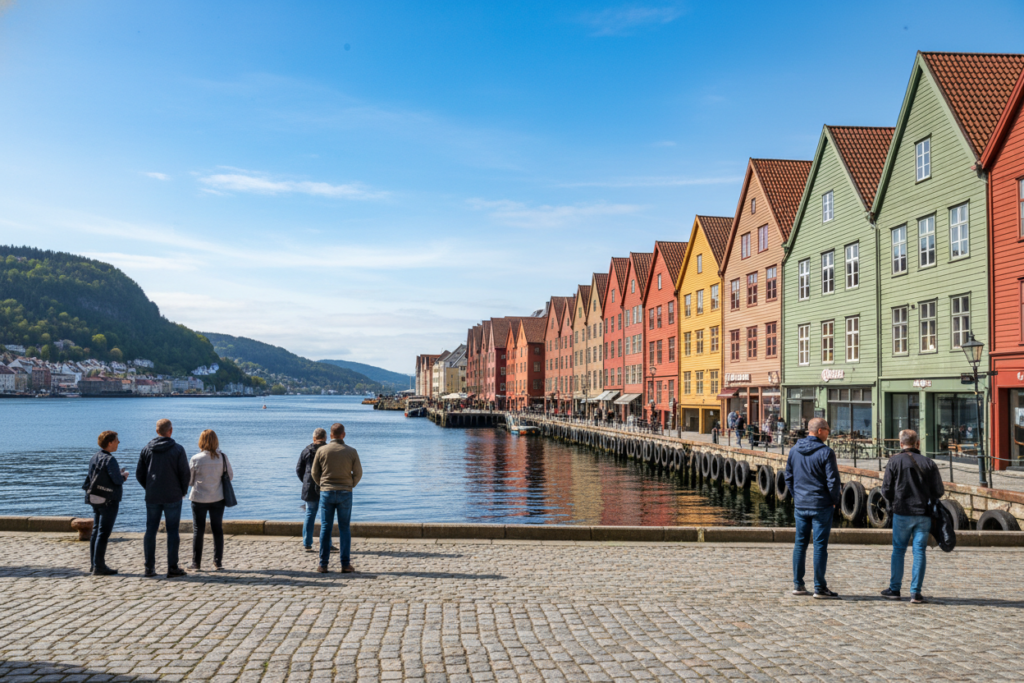
This compact area mixes living tradition, small shops and museums in a few easy streets. Stroll the front row of colourful timber and you’ll see why the postcard photos exist.
Why the wooden buildings are iconic: the stacked merchant houses face the water and form a striking façade. These timber buildings date to the Medieval Hanseatic trading era and are an instantly recognisable symbol of the old harbour.
Hanseatic history made simple
The Hanseatic League ran maritime trade across Northern Europe from the 14th to 17th centuries. That trade shaped local maritime life and left durable architecture you can touch. Because this is a protected World Heritage Site, you are walking through preserved history, not a staged set.
Where to wander and what to do
Start on the quay, then slip into narrow alleyways for quieter photos. Browse boutiques for crafts and small design finds without losing time in the busiest lanes.
Sweet pause near the wharf
Pop into a local bakery for a skillingsbolle and a coffee—perfect if the weather turns. Galleries and the Hanseatic Museum are nearby if you want a deeper cultural stop.
Today, the wharf blends locals and visitors, so you’ll catch everyday life alongside heritage. If you want guided options, check short tours and walks that fit tight schedules.
Eat your way through the Fish Market and Bergen’s best local flavours
Taste local life at the waterfront: the Fish Market is lively, quick and ideal when time is tight. Make it your easy lunch anchor so you stay close to the harbour and your schedule.
Top things to try
- Gravlax and smoked salmon — classic, clean flavours that show how fresh the fish is.
- Reker shrimp sandwich on rye — a simple, satisfying Norwegian snack.
How to order and avoid tourist traps
Many stalls use “3D menus” — plated displays you point to. Ask the price, check portion size and compare two stalls before you buy. If something seems tiny for the cost, walk on; similar stalls nearby often give better value.
Beyond seafood
Try raspeballer (potato dumplings), stockfish or a cod dish if you want a fuller taste of local cuisine. These options broaden the meal choices when seafood isn’t your pick.
Where to sit for harbour vibes and three restaurant picks
For a formal meal with fjord views book ahead. If you want a tasting menu, choose Cornelius (Strandgaten 203). For modern seasonal plates try Marg & Bein (Fosswinckelsgate 18). For something different and great veg options pick Horn of Africa (Strandgaten 212).
Quick tip: pair your bite with a warm coffee or a simple drink to stay cosy between sights. If you want a guided food stroll, consider a local food and culture guided walk to sample smartly without hunting down choices.
If you have extra time: mini fjord cruise and quieter city sights near the port
If your schedule has a spare few hours, you can choose a water‑based wow or a quiet neighbourhood amble. Pick by how much extra time you have: a longer boat trip or a few calm local places.
Mostraumen mini fjord cruise
The Mostraumen option is the top short taste of the fjords. It runs for about three hours from the harbour, showing waterfalls, cliffs and classic norwegian fjords. It fits many cruise port timetables but only if your all‑aboard window is relaxed.
History, quiet streets and art
Visit the Hanseatic Museum inside an original Bryggen merchant house for focused sights of trading life.
For calmer city vibes, stroll Nordnes Peninsula—colourful streets, parks and fewer crowds make slow walking a pleasure.
Lille Lungegårdsvannet and KODE offer an artsy, slower way to spend an hour or two. KODE holds works by Edvard Munch and Nikolai Astrup.
The Leprosy Museum at St. Jørgen’s Hospital is a moving sight that often stays with you long after the day.
- Decision rule: tight schedule = skip the boat; buffer = Mostraumen for big scenery.
- Expect multiple ships in the harbour—build in extra minutes to reach the right departure point.
- Always check distance back to the cruise port so extra places don’t become a sprint.
Conclusion
End your short stay with three easy stops: take in the top views on Fløyen, wander the timber streets of Bryggen, then refuel at the Fish Market. Simple, satisfying and efficient.
Protect a buffer time so you’re never stressed returning to the ship. Build in 30–45 minutes for unexpected queues or slow feet.
Choose your own adventure: add a fjord boat for big nature or pick Nordnes and a museum for calm local charm. Treat this walkable city as a series of short walks—small steps reveal the place.
Quick checklist before you head back: tickets, weather layer, meeting time and one last look at the harbour. For flexible options, check local Bergen shore excursions.
Bergen is a highlight on norwegian fjords itineraries, and with this guide your on‑shore day can feel unhurried and memorable. 🙂