
Simple care gives big gains. A clear, repeatable routine slows wear and keeps your footwear ready for more walks. Follow four rules: clean and dry after each trip, treat with a waterproofing compound, store in a dry place, and wear your boots regularly.
In Australia, heat, dust, coastal salt and Tassie mud speed up damage. Let grime sit and glue, leather and liners suffer. This guide shows a before, during, after and store flow so you know what to do and when.
Expect realistic results: fewer hot spots, fewer blowouts, better comfort and longer tread life. We cover leather, fabric and GORE-TEX-lined options so you can match care to your materials.
Watch the usual killers: grit grinding linings, dried mud pulling moisture from leather, and heat weakening glue and soles. Ready for a quick check? Ask yourself, “How often do you clean and dry your boots after a walk?” 😊
Key Takeaways
- Stick to four basic rules after every outing.
- Australia’s climate can speed wear, so clean often.
- Match care for leather, fabric and GORE-TEX gear.
- Prevent common killers: grit, dried mud and heat.
- Small, regular steps give better comfort and tread life.
Set your hiking boots up for a longer life before the first hike
Start with the right pair. New footwear that matches the terrain and the load will reduce flex, seam strain and early failures. Pick a lightweight walking shoe for hardpack tracks, a stiffer pair for rocky ranges, and a trekking category for heavy loads or multi-day trips.
Fit and support essentials
Wear the socks you’ll hike in when you try a pair. Fit the larger foot and allow room for swelling. Your toes should wiggle without hitting the front, and heel lift must be minimal.
Insoles and laces matter. Use activity-specific insoles (Superfeet and similar) for better support and less movement. Firm, staged lacing keeps your foot stable and reduces rubbing that wears linings.
Break-in process that prevents damage
Don’t take new leather on long walks straight away. Start with short wears, then short neighbourhood walks, then longer trips. Stop when pressure points disappear and the pair feels moulded.
“A properly broken-in pair shows no pressure, feels stable and hugs the heel.”
Materials: leather, fabric and waterproof membranes
Full-grain leather is durable and water resistant but needs more break-in and conditioning. Fabric is light and breathable but wears faster in abrasive terrain. GORE-TEX-lined models keep water out but rely on external care for breathability.
| Material | Strengths | Weaknesses |
|---|---|---|
| Full-grain leather | Durable, water-resistant, repairable | Stiffer break-in, needs conditioning |
| Fabric | Lightweight, breathable | Less durable on rock and scrub |
| GORE-TEX-lined | Waterproof, protective | Depends on external care for longevity |
Women’s fits: many styles have a narrower heel cup and different footbed. Getting sizing right prevents hot spots when feet swell on longer walks.
How to make hiking boots last longer on the trail
On the trail, tiny grit and trapped moisture are quieter enemies than you think. A two-minute habit each break keeps small debris from turning into big problems for your foot comfort and boot life. 😊
Keep rocks, sand and dirt out. Tip your boot, shake or remove the insole and sweep away grit. Tiny rock and gritty dirt act like sandpaper. They wear liners, abrade footbeds and create hot spots that ruin a walk.
Remove mud early. Fresh mud is easier to scrape and rinse. Let it dry and leather loses oils and water; breathability drops and cracking follows. On Aussie tracks, deal with mud at the first safe stop rather than letting it bake on.
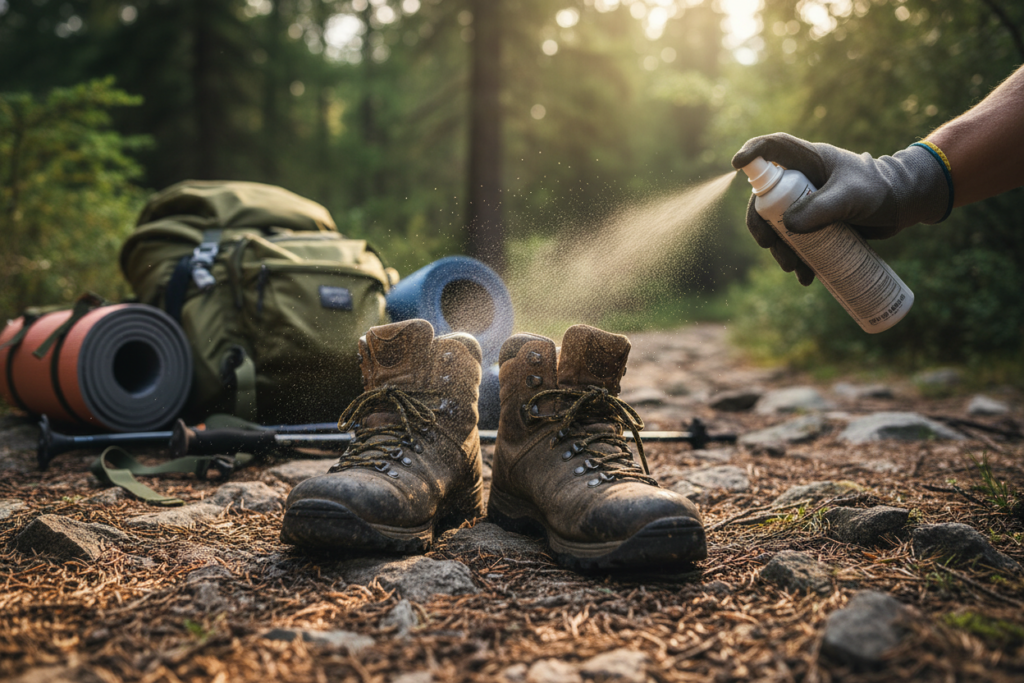
Air them out at camp
Loosen laces, open the tongue and pull out insoles. Place the pair where air can circulate, away from flames. This helps moisture escape overnight and slows odour and lining wear.
Carry light camp shoes
Bringing sandals or lightweight shoes gives your feet a rest and the boot a recovery period. Rotating shoes reduces continuous flex and boosts long-term performance of your gear.
“Quick grit checks and a good overnight air-out repay you with better comfort and fewer repairs.”
Clean hiking boots properly after every walk
A ten-minute tidy after each outing protects seams, soles and lining from hidden damage. Consistent care is simple and keeps your pair ready across a wide range of tracks.
Strip down first
Remove the laces and pull out the insoles. Wash laces separately and check for fraying.
Clear dirt and sand from under the footbed. Wipe the interior with a damp cloth to remove sweat and coastal salt. Salt crystals stiffen leather and fabric, so don’t skip this step.
Brush and rinse
Use a soft brush and running water for uppers. Focus on seams, stitching and eyelets where grit hides.
Work the tread with a small brush or pick to remove packed mud and stones. Clean the sole edges so your sole wears evenly on the next walk.
Choose the right cleaner
Use footwear-specific cleaners (Nikwax Footwear Cleaning Gel, Revivex Boot and Shoe Cleaner). They protect DWR and keep waterproofing effective.
Avoid household detergents that strip coatings. A repeatable after-walk maintenance routine like this saves time and gives your gear proper protection.
“Once clean, you’re set up to dry correctly and reapply protection.”
Dry boots without damaging leather, glue or soles
Patience pays off. After a wet day, give your pair a gentle, slow dry in a warm, well-ventilated area. Quick heat feels tempting, but it can shrink leather and weaken the glue that holds soles on. Be realistic — careful drying saves repair time later. 😊
Safe drying zones and airflow
Pick a warm, airy place. In summer, a shaded verandah works. In winter, place them near (not on) a gentle ducted heat outlet. Avoid direct sun, fires or fan heaters — these split leather and can trigger sole separation.
Simple setup that helps air move
Loosen laces, open the tongue and pull out insoles. Stand each boot upright so air can flow through the toe box and heel cup. This steady airflow cuts drying time without damage.
Newspaper and absorbent cloth technique
If the interior is very wet, remove the footbed and loosely stuff with crumpled newspaper or an absorbent cloth. Swap the stuffing after about an hour and repeat until damp stops migrating.
Check the common moisture traps — press the toe box and heel cup for cool damp spots before you store or treat the pair. Overheating can cause sudden glue failure where upper meets sole. Gentle care now means fewer surprises on the track.
dry leather boot guide — once clean and properly dry (or correctly damp for some treatments), you’re ready to restore protection.
Restore protection with waterproofing and conditioning
Don’t wait for weather to test your pair — check and restore protection first. A quick service after cleaning sets you up for better performance and fewer surprises on the track. Small acts now save repairs later.
Confirm waterproofing, then match the product
Check wetting-out (water soaking the outer) and top up factory treatments before a trip. Use wax for leather and a water-based proofer for fabric or GORE-TEX-lined models.
Timing and target zones
Remember the rule: damp for liquid treatments, dry for wax treatments. Apply product at toe flex points, the base of laces, seams and hardware where wear concentrates. Wax near metal rings also helps reduce rust.
Revive tired leather
If leather feels hard or dry, use a conditioner first to nourish and soften. Follow with a wax-based waterproofing for lasting protection and improved water resistance.
| Material | Best product | When to apply |
|---|---|---|
| Full-grain leather | Nikwax Wax for Leather / leather conditioner | Condition if dry, wax when fully dry |
| Fabric / GORE-TEX | Nikwax Fabric & Leather Proof (water-based) | Apply when damp after cleaning |
| Mixed uppers | Targeted treatment (wax on leather, proofer on fabric) | Follow material-specific timing |
Leather waterproofing guide — a short pre-trip check and the right product keep water out and performance high. 😊
Store and use your boots so they don’t fail over time
A sensible storage spot quietly protects your pair while they sit between trips. Pick a cool, dry, well-ventilated area out of direct sun. An airy shelf in a cupboard is better than a hot garage window ledge.
Smart storage checklist
- Cool, dry, ventilated area — avoid warmth and trapped humidity.
- Not in a sealed box if any dampness remains; boxes can hold moisture and heat.
- Give each pair a little space. Don’t squash or stack at the end of a season.
Wear them often enough
Use it, don’t shelve it. Some midsoles, especially PU, suffer hydrolysis. That’s a chemical breakdown when moisture and warmth sit against the sole over time. A short walk every few months — aim at least once every 6 months — helps keep the sole flexible and avoids surprise crumbling.
Post-dry routine and admin tip
Never pack away wet. Fully dry, lightly reproof if needed, then store in an airy place. Scan or copy your receipt and keep care instructions with the pair. That record saves hassle if you need repairs or a warranty claim at the end of a product’s range.
“A sensible spot and occasional use protect materials better than perfect shelving.”
Conclusion
Simple, regular care keeps your footwear ready and your feet protected on Australian trails.
Core routine: clean + dry after each trip, reapply waterproofing or conditioner as needed, store in a cool, ventilated place, and use the pair occasionally so soles stay flexible.
Quick checklist — before / on‑trail / after / store: set up fit and laces; shake out grit on the track; wash and air dry after the walk; reproof then shelve in a dry spot.
Focus on the high‑impact moves: keep grit out, strip mud early, avoid direct heat and harsh detergents. Do a fast trail check each day, a proper clean after every outing, and a protection top‑up before big trips.
If your hiking boots are cracking, leaking, or the sole feels spongy, revisit drying, conditioning and storage steps. For a step‑by‑step cleaning reference see our cleaning guide.
A little regular boot care now means more walks later — and fewer surprises mid‑track. 😊