Feeling like a juggling act? You’re not alone — planning a holiday with kids often means juggling time, expectations and money.
This short guide gives you six high‑impact, practical pointers that you can use on your next domestic getaway or when planning further afield. Each tip includes quick sub‑steps you can act on straight away. 🙂
Clarity matters. When you set clear limits for transport, accommodation, food and activities, you stress less and enjoy more. We’ll also flag the quiet leaks — fees, conversions and forgotten essentials — so those surprises don’t eat your savings.
Expect Australia‑relevant ideas: off‑season WA breaks, public transport hacks, loyalty points and simple packing lists. The aim is to keep the experience front and centre while trimming waste.
Ready to start? Before you book anything, start with Tip #1.
Key Takeaways
- Set clear limits for major costs to reduce stress and enjoy the trip.
- Book early and shop around to get better value on transport and stays.
- Use loyalty points and off‑season timing for savings on Australian breaks.
- Pack smart, bring snacks and check fees to avoid small money leaks.
- Treat souvenirs and activities as learning moments rather than expenses.
Start with a realistic holiday budget (and make it easier to stick to)
Begin with a simple money map so your trip matches real life. It keeps choices clear and stress low.
Include the big-ticket categories
Cover transport, accommodation, food, activities and insurance. Add common extras like baggage fees, parking, visas and souvenirs so small expenses don’t blow the plan.
Add a buffer for unexpected costs
Build a 10–15% buffer for medical runs, wet‑weather alternatives or last‑minute changes. This small cushion protects the rest of your numbers and your peace of mind.
Break it into a daily spend
Convert totals into a per‑day figure. A simple daily cap is easier to track while you’re out and about.
Try a two‑minute daily check‑in each evening. Quick review, one adjust, then move on — you save time and stay present.
- Must‑do vs nice‑to‑do: Protect key experiences your kids love.
- Use the table below to compare planned and actual spends at a glance.
| Category | Planned | Actual |
|---|---|---|
| Transport | $600 | $ |
| Accommodation | $700 | $ |
| Food & daily | $40 per day | $ |
| Activities + insurance | $300 | $ |
Final note: This method matches your real habits, not an idealised feed. It helps you enjoy the trip while saving money on what matters most.
Build your plan early to lock in lower costs
Locking in dates early often turns a good price into a great one. School breaks push demand up, so booking months ahead is one of the simplest ways to save money and buy yourself more choice.
How to make “early” work
Set 2–3 acceptable dates and locations first. That lets you act fast when fares fall.
Decide whether to lock accommodation or flights first based on your destination. For some trips you secure rooms, then watch fares. For others you book flights and hunt for stays later.
Compare like-for-like inclusions
Check what’s included: breakfast, linen, parking, Wi‑Fi, child policies and transfers. A cheap headline price can hide extra costs that erase savings.
- Track total trip costs, not just the ticket price.
- Set fare alerts (Google Flights, Skyscanner) so you catch sales without wasting time.
- Use a simple decision rule: book when the deal fits your money limits and schedule, not when it feels perfect.
This way you protect both your wallet and your peace of mind — a practical way to turn planning time into real savings.
budget family travel tips for choosing where and when to go
Choose where and when you go with your everyday life in mind, not just a picture‑perfect postcard. That keeps planning realistic and stops costs from creeping up.
Explore your own backyard
Staying in Australia often slashes flights, visas and transit time. You avoid passport hassles and long connections, which is kinder for kids and carers. Shorter trips mean less worn‑out people and more relaxed days.
Use off‑season months
Travel outside peak windows to find lower rates, quieter beaches and shorter queues. Off‑season stays can feel calmer and more memorable — and your money goes further on activities.
Swap big cities for better value places
Consider coastal towns, regional hubs or national‑park bases instead of CBD hotels. You’ll get space to roam and cheaper accommodation while keeping one paid highlight per trip.
- Check school‑holiday dates at home and at your destination.
- Pick free anchor activities first (beaches, hikes, parks), then add one paid experience.
- Ask: does your family want city buzz or open space?
Consider a WA-style budget break close to home
Opting for WA can give you big days out with small costs and plenty of open space to roam. This is a simple guide to shape a short break that keeps money in check while still feeling like a proper holiday.
Beach days, parks and outdoor wins
Make nature your base: beaches, national parks and walks let kids burn energy for free. Plan your main activities around parks, then add one or two paid highlights each day.
Markets and picnic food that save money
Shop local markets for seasonal produce and build picnic lunches. Eating by the coast or in a botanic garden cuts restaurant bills and keeps days flexible.
WA places worth budgeting for
- Kings Park and Botanic Garden (free) and Swan River bike rides.
- Rottnest Island, Perth Zoo, Caversham Wildlife Park and Fremantle Prison as paid highlights.
- Scitech, AQWA and the Margaret River Chocolate Company for small‑spend joy.
- Stay in holiday parks, caravan parks or go camping for cooking facilities and space.
Quick idea: build an itinerary around nature first, pick a couple of paid activities, then use markets and picnic meals to stretch your money further.
Make transport choices that protect your budget
Small transport choices can quietly swell into a big chunk of your total trip spend. Recognising that early helps you choose the most sensible option for your plans.
Use public transport and research passes first
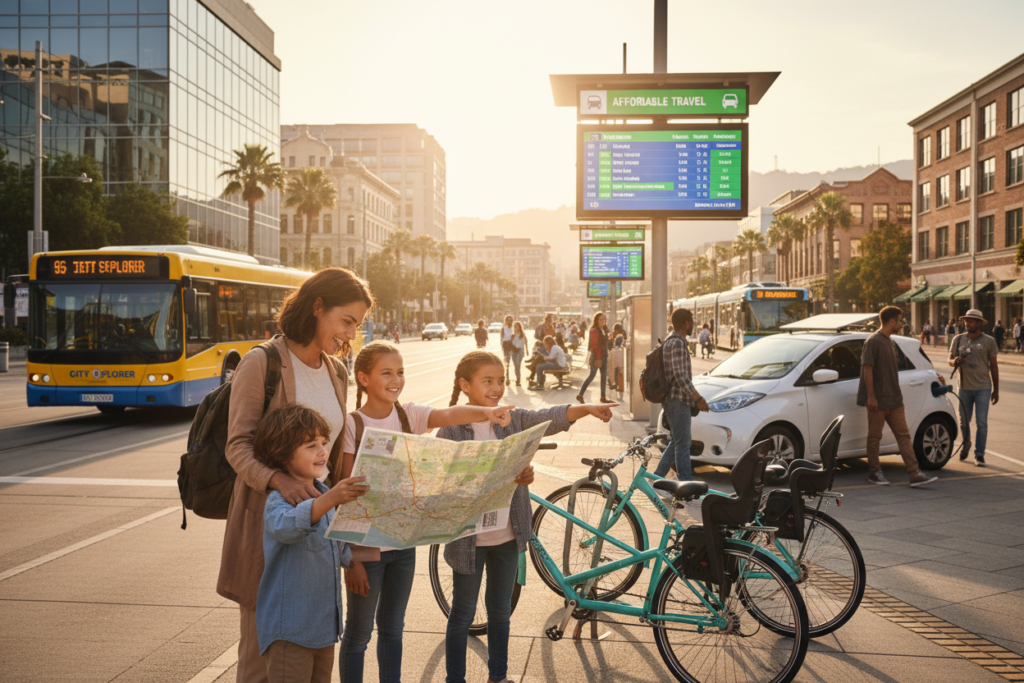
Public networks often beat taxis for daily getting‑around costs. Research city passes (think Paris Visite or local multi‑day cards) before you arrive.
Quick check: ask, “What does it cost for all of us?” That simple question shows when single fares add up and where a pass saves money.
Road trips and caravan/RV as a cost-effective road option
Road and RV options can cut accommodation and meal spending when you combine driving, sleeping and cooking. For many families this becomes the smarter option.
Plan fuel, tolls, parking and how many days you want on the move versus relaxing. Add a small daily buffer to cover unexpected costs.
When ride-share beats public transport
For larger groups, shared rides can be cheaper and faster than public services — a real win when people arrive late or schedules don’t match.
Map a few walkable days into the itinerary so you reduce paid transport without feeling restricted. Practical choices here buy you more time to enjoy the place. 😊
Save on flights without sacrificing the experience
Smart flying choices can shave hundreds off your overall trip without cutting the fun. Use simple levers that reduce costs for everyone and keep your plans flexible.
Lap infants: Many airlines allow children under two to fly as a lap infant. That often means a free or reduced fare instead of a full seat. It can sharply lower ticket costs, though comfort and safety are factors you’ll need to weigh.
Fare alerts and a simple routine
Set alerts on Google Flights, Skyscanner or airline apps. Pick two acceptable date windows and one price you’ll accept.
- Check alerts twice a day and act when price hits your target.
- Save time: use one device for alerts and one for booking to avoid price refresh issues.
Budget carriers and baggage planning
Don’t dismiss low‑cost airlines. They often offer lower headline fares if you plan for seat selection and baggage fees upfront.
| Savings lever | Why it helps | Quick action |
|---|---|---|
| Lap infant rule | Reduces or removes extra seat cost | Check airline infant policy before booking |
| Fare alerts | Catch sales without constant searching | Set alerts on two platforms; act fast |
| Pack light | Avoid checked‑bag fees that add up | Use carry-on lists and shared gear |
Compare total costs for everyone, not just the single fare. When you plan seats, baggage and timing, you’ll save money and still have a great experience. 😊
Stretch accommodation further with smarter stays
Where you stay can be the single biggest lever to stretch your holiday dollars. Pick options that give you space to cook, sleep and relax — that choice directly cuts daily expenses and protects the experience.
Make a kitchen your first filter
A room with a kitchenette or full kitchen lets you do simple breakfasts, packed lunches and one or two cooked dinners. That routine will save money fast and keep days flexible.
Choose camping, caravan or holiday parks
Camping and caravan parks are a low-cost option that adds outdoor fun and shared facilities like kitchens and BBQs. For many people, this is the best way to bond, unwind and reduce nightly costs.
Try swaps, free stays and locations just outside town
House swaps or verified free-stay platforms are a high-impact way to cut accommodation bills on longer trips when you’re comfortable with the exchange.
Choosing a place slightly outside the centre often drops nightly rates. Drive or use public transport for one or two in-town days.
Flexible sleeping and a quick booking list
- Flexible sleeping: kids sharing a room can let you book a smaller, cheaper home.
- Must-have list: laundry, fridge, safe parking, and nearby transport.
“Smarter stays don’t reduce the experience — they protect it.”
Cut food costs every day (without feeling like you’re missing out)
A few simple food choices every day can protect your wallet and keep meals enjoyable. Small habits stop constant snacking and pricey convenience buys from becoming a big part of your trip expenses.
BYO snacks and refill water bottles
Pack a “snack and water” baseline: fruit, nuts, muesli bars and refillable bottles. Refill at parks, visitor centres or cafés to avoid high convenience store prices.
Eat out strategically
Choose lunch specials and local eateries rather than peak-time restaurants. Share meals family-style where portions are large — it keeps everyone happy and reduces spending money on repeat dishes.
Use markets and supermarkets
Markets and local supermarkets give fresh, quick meals you can eat on the go or in a kitchenette. Cooking one or two nights saves money and usually tastes better than cheap takeaway.
Keep restaurant bills down
Skip bottled drinks; ask for tap water. Hunt for kids’ deals and “kids eat free” nights. Plan one or two food highlight meals and keep the rest simple so you still feel like you’re treating yourselves.
“You’re not missing out — you’re spending where it counts.”
| Action | Why it helps | Quick step |
|---|---|---|
| BYO snacks & water | Stops convenience costs on long days | Pack a small cooler or snack bag for outings |
| Lunch specials | Cheaper than dinner with same quality | Search local menus or ask hosts for lunchtime suggestions |
| Markets & supermarkets | Fresh, low-cost meals and picnic options | Buy local produce for quick meals or salads |
Micro‑prompt: make sure you include a small snack fund for airports and long drives; prices spike and it’s easy to overspend. For extra help on planning meals to stretch your food spend, see this quick guide to stretch your food.
Plan activities that deliver the best value for families
Aim for a mix of lively outings and quiet pockets so each day feels like progress, not a sprint. That balance helps everyone enjoy the trip and keeps costs sensible.
Spot the value trap
Booking lots of paid attractions sounds fun, but it can waste money if your kids melt down or you run out of steam. One paid highlight per day (max) is a simple rule that protects time and energy.
Lean on free and low‑cost wins
Beaches, hikes, parks, gardens, river walks and playground crawls deliver big joy for little spend. These activities stretch your money and often create the best memories.
Use local knowledge
Ask locals, check council pages, visitor centres and library‑pass schemes for hidden gems that don’t appear in guidebooks. Local forums are a great way to find quiet lookouts and seasonal free events.
Plan by area to save time
Map nearby activities so you reduce travel time and keep the day flowing. This way you fit more calm pockets into each day and avoid paying for rushed or duplicate experiences.
There are plenty of memorable experiences that don’t cost much—choose slow, choose simple, and everyone enjoys the day more. 😊
Maximise loyalty points and credit card rewards to save money
Loyalty points can turn everyday spending into large savings for flights and hotel nights.
Earn where you already spend: use groceries, bills and regular purchases to collect points. Add your frequent‑flyer or loyalty membership number to every booking so you don’t miss out.
Redeem smartly. Use points for peak‑season flights or pricey hotel nights — that’s where they make the biggest dent in your costs. Consider programs like Flight Centre’s World360 Rewards as an example of earning on bookings.
Be disciplined with any credit card. Pay the balance in full each month. Interest quickly erases the value of rewards, so don’t carry a balance to chase points.
- Avoid extra spending just to collect points — only earn on purchases you already planned.
- Make sure your membership number is attached to bookings every time.
- Let points work for you, not become another admin task.
| Action | Why it helps | Quick step |
|---|---|---|
| Earn on everyday spend | Builds a steady points balance | Link cards to grocery and bill payments |
| Redeem for flights/hotels | Big savings on high‑cost items | Use points for peak dates or expensive nights |
| Pay cards in full | Prevents interest wiping rewards | Set up auto‑payments each month |
credit card points guide — read this if you want a practical starter on earning and redeeming.
“Points should reduce your costs, not add complexity.”
Manage money on the road: exchange rates, cards and small fees
Managing your cash and cards is one easy way to keep daily costs under control. Small conversion charges and ATM fees add up faster than you think on international travel.
Pay in local currency and avoid airport exchanges unless it’s an emergency
Always choose to pay in the local currency when a terminal asks. Dynamic currency conversion (the “Pay in AUD?” prompt) usually gives a poor rate and extra fees.
Avoid airport exchange booths unless you need a tiny amount on arrival. Their rates are worse than banks and ATMs.
Compare bank card fees before you leave
Look up ATM withdrawal charges and foreign transaction fees for each card. Small per‑withdrawal costs can become large expenses over several withdrawals.
Notify your bank and set PINs before you go. Take two cards from different providers as a backup.
Consider a prepaid travel money card to control spending
A prepaid card can lock an exchange rate and limit how much you spend. It’s a simple way to turn daily spending into a predictable plan.
- Check fees and top‑up options.
- Keep one card for daily use and one in a safe place as backup.
- Make sure you have contact numbers for lost cards.
“You don’t need to optimise everything — just avoid the biggest traps and enjoy the trip.”
Pack with purpose to avoid spending money on forgotten essentials
What you pack before you leave often decides how much you’ll pay on the road.
Packing is a practical budget tool. Forgotten items lead to higher on‑the‑spot expenses. A short plan stops impulse buys and keeps the day calm for you and the kids.
Use a simple list system and a night‑before check
Keep one master list in your notes app or a printable sheet. Tick off high‑cost things first so you don’t replace them later.
Night before: make sure passports, bookings, chargers and medicines are in one bag so your trip starts smooth.
Bring the right basics (and camping extras)
- Swimwear, sunscreen and broad‑brim hats — costly on beaches.
- Travel first‑aid, required medications and comfort items for kids.
- For camping: insect repellent, torches, reusable water bottles and simple meal gear.
Pack light, but protect the priciest things
Sometimes one checked bag is cheaper than several carry‑ons. Prioritise high‑cost items (chargers, shoes, sun protection) so you don’t spend cash replacing them.
| Option | Cost example (AU$) | When it helps |
|---|---|---|
| Multiple carry‑ons | $0–$80 | Short stays; no checked baggage needed |
| One checked bag | $60–$120 | Longer trips or lots of kids’ gear |
| Shared large suitcase | $60–$120 (split) | Saves per‑person baggage fees and replaces lost items |
“A short packing system saves money and stress — and keeps the fun in the holiday.”
Get the kids involved so you spend on what matters most
Give children a real say and you’ll avoid paying for activities no one enjoys. Letting kids choose priorities makes the day calmer and the outcomes clearer. It’s a simple way to protect your money and your mood. 😊
Let children help choose priorities
Try a quick “top 3 picks” game. Each child names three favourite things. Look for overlaps and build your plan around them.
This reduces conflict and stops you from spending money on filler activities that don’t deliver joy.
Make souvenir buying a learning moment
Give each child a fixed souvenir envelope or set a small budget. They decide when and how to use it. This teaches choice and value without spoiling the fun.
Use experience-focused rewards instead of more things
Swap extra toys for one shared experience — a special day trip, a guided outing or adding to a future trip fund. Experiences create longer‑lasting memories and better return on your money.
| Child | Top pick | How it saves money |
|---|---|---|
| Sam | Beach day | Free activity; one paid highlight |
| Maya | Zoo visit | Pick one enclosure or a keeper talk |
| Liam | Boat ride | Choose one short cruise instead of multiple outings |
“Involve kids early — they learn choice and you fund what matters.”
For a useful classroom-style exercise on teaching kids about money, see this vacation money lesson for kids.
Protect your budget with travel insurance
One small purchase before you go can protect you from very large, unexpected costs.
Insurance is simple: it guards your money against expensive surprises you didn’t plan for. Think of it as protection for major risks rather than an optional extra.
What it covers and why it matters
Medical emergencies abroad can be crippling. A good policy also covers cancellations, delays and lost or stolen items. These are the things that turn a small problem into big expenses.
Buy cover early. Get insurance when you start booking and paying deposits, not the night before you fly. That timing matters for cancellation and pre-existing condition rules.
- Read inclusions closely: excess amounts, pre-existing condition clauses and kids’ coverage.
- Check what counts as a valid claim and any reporting timeframes.
- Pick a cover level that matches the cost of your trip and your comfort with risk.
“You’re not hoping to use it — you’re hoping to avoid major costs and enjoy your holiday with more peace of mind.”
Conclusion
Finish strong: focus on a few levers that make your trip feel like a win.
Recap the six core moves: set a realistic daily plan with a buffer, book early and compare deals, pick value timing and places, cut everyday food and transport costs, use loyalty points smartly, and pack with a checklist. These steps help your money work harder and protect the experience.
Start with one action today — set your trip total, shortlist destinations or set fare alerts — and momentum builds fast. Small habits stack over time: fewer fees, fewer impulse buys, smarter bookings. The best family holiday moments are often simple — beaches, picnics, walks and laughs. 😊
Pick a destination, map must-do activities, then build accommodation and transport around that plan. Save this guide for your next booking session so you don’t miss the easy wins.