
Quick guide: you’ll get a simple, practical summary of Brickendon Estate Tasmania — what it is, why it matters, and how to plan a smooth visit today.
Why go? It’s a living farm and a World Heritage site. You won’t just see displays. You’ll meet historic cottages, convict-built buildings and gardens that still bustle with real farm life.
The property is still run by the Archer family after seven generations. That gives the place an authentic, working-estate feel that most heritage sites can’t match.
This content is for curious travellers, photographers, gardeners, families and people road‑tripping the Northern Midlands. Expect clear, practical tips on pricing, access, facilities and nearby accommodation so you can decide and book with confidence.
Key Takeaways
- It’s a live, UNESCO-listed farm village, not a static museum.
- Convict-built buildings, QR-code stories and friendly animals bring history to life.
- Still family-run after seven generations — a rare working estate experience.
- Suitable for families, history lovers, photographers and gardeners.
- This guide gives practical info on tickets, access and facilities to plan your visit.
Brickendon Estate Tasmania and its UNESCO World Heritage story
Imagine walking a landscape laid out in 1824 and still managed by the same family line. You can see how a working historic farm grew from a single land grant into a living farm village that still runs day to day.
From William Archer’s 1824 land grant to a seventh-generation Archer family farm
William Archer arrived in Van Diemen’s Land in 1824 and was granted 465 hectares. He developed mixed cropping and livestock systems that shaped the property layout you see today.
The site remains in Archer family hands into the seventh generation. That continuity keeps the place active rather than a frozen museum.
Why it’s on the Australian Convict Sites World Heritage listing
This site is part of the Australian Convict Sites because it shows how convict labour helped form rural settlement and farming. It sits alongside major places like Port Arthur and Fremantle Prison in the national story of convict-driven development.
Pairing with Woolmers Estate on the Norfolk Plains
Woolmers Estate is the neighbour you should pair with on a visit. Together they show the scale and influence of the Archer family across the Norfolk Plains.
| Feature | Why it matters | Visitor takeaway |
|---|---|---|
| 1824 land grant (William Archer) | Origins of the farm layout and operations | See original paddocks and surviving buildings |
| Archer family continuity | Living tradition of farming and stewardship | Experience a working heritage site |
| UNESCO World Heritage listing | Recognises convict contribution to colonial Australia | Connect this place to Port Arthur and Fremantle Prison |
| Woolmers Estate nearby | Complements the story on the Norfolk Plains | Combine visits for a fuller picture |
What to see and do at Brickendon Historic Farm and Convict Village
Start your visit where work still shows in every beam and field: the farm village is a living story of daily life.
Do this first: walk the yards and note the convict-built buildings, then scan QR codes for human stories, time your visit for the 10.15 am animal feeding, and finish with a slow garden wander 🌹.
Must-see buildings and farm highlights
Look for the small Gothic chapel, Sussex barns, blacksmith shop, cookhouse, poultry shed and shearing shed. Each building shows a different side of working farm life.
Connect with the people who lived here
Use the QR codes to read short, personal stories of convicts assigned to the Archer family. The codes link buildings to the real people who built and ran them.
Animals, gardens and the wider walk
Friendly farm animals are fed daily at 10.15 am — or buy a bag of feed and make the kids the stars of the day.
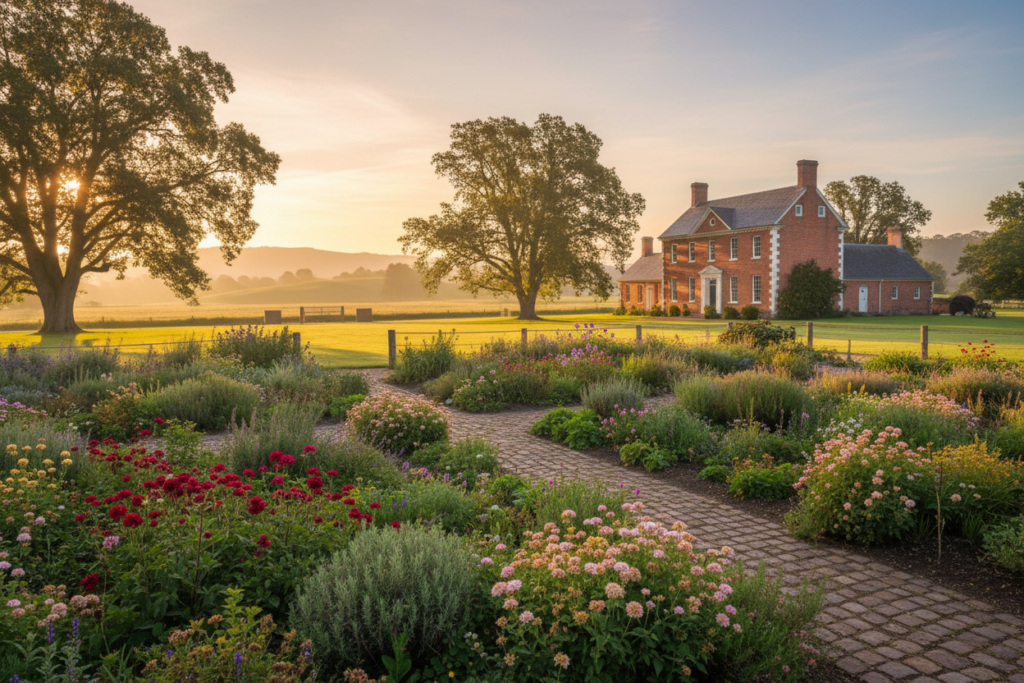
The four-hectare garden around the Georgian house contains garden rooms, old-fashioned roses and perennials. Look up: 1830s English and exotic trees (oaks, elms, cedars and pines) frame the home.
“Wander slowly — the gardens and trees reveal more the longer you stay.”
If you want more, follow the Convict Walk that links this site with Woolmers Estate for a connected heritage walk and a fuller sense of place.
| What to see | Why it matters | Tip |
|---|---|---|
| Gothic chapel & buildings | Shows convict craftsmanship and daily work | Start here to set the scene |
| QR-code stories | Connects structures to real people | Scan slowly for short readings |
| Animal feeding (10.15 am) | Interactive, family-friendly moment | Arrive early with kids |
| Four-hectare garden & 1830s trees | Historic plantings, roses and garden rooms | Leave time to wander |
Plan your visit today: tickets, location, facilities and staying on-site
Ready to visit today? This quick plan covers address, travel times, tickets and where to sleep on site so you can book with confidence.
Where to go: 236 Wellington Street, Longford, Tasmania 7301 — roughly 15–20 minutes from Launceston and about 15 minutes from Launceston Airport. For maps, search “236 wellington”.
Tickets, bookings and prices
Entry sits around $18.50–$20.00 for most visitors. Book online if you can, or check availability on the official pages before you arrive.
Facilities checklist
- Parking (including coach parking), public toilets and picnic areas
- Barbeque spots, food and refreshments, and a small shop
- Gallery/museum spaces, lawns and family-friendly areas
Access and inclusion
The site actively welcomes people with access needs — support for hearing loss, allergies/intolerances, and balance fixtures for those who can manage a few steps.
Stay on site: cottages and farm cottages
Six self-contained cottages — Coachman’s, Gardener’s, Old Farm, Pumpkin, Sweetcorn and Pea in a Pod — range from historic cottage stays to cosy farm cottages. Prices sit between $165 and $240. Check-in 2:00 pm; check-out 10:00 am.
What’s included: hearty continental breakfast provisions, linen, cooking facilities and free entry to the grounds. Historic farm comforts include open fires or wood heaters plus electric heating and electric blankets.
Pets are welcome by enquiry — not every cottage suits every pet, so ring ahead.
Contact: call 0437 525 890 or email information@brickendon.com.au for bookings, access questions or group visits. For stay options see stay options and consider a paired visit via the nearby pairing guide.
Conclusion
For a compact, story-rich day that’s both historic and pastoral, this site fits the bill.
It’s a living Archer family farm where convict-built buildings, active gardens and daily animal feeding combine into one visit. The result is museum-level history with a working‑farm feel.
Decide how you want to visit: a quick day trip, a slow garden wander, or an overnight cottage stay. Each gives a different pace and perspective.
If you want more context, pair your visit with nearby Woolmers and follow Longford planning notes like the Longford Academy updates for deeper heritage events.
Final tip: check opening times, book if needed, wear comfy shoes and bring a charged phone for QR stories — then allow time to soak it in 🙂.