Quick answer: yes—sometimes. If you’re buying the wellness add-on like a savvy traveller, this review will tell you when it pays off and when it doesn’t.
What makes a thermal suite different from just the spa? It’s a focused spa experience with saunas, steam rooms, heated loungers and often cold or snow rooms. Lines sell day passes or whole-voyage access, and booking ahead usually saves you money.
We’ll look at what’s inside, typical costs, which line does it best right now and whether it suits Aussie cruisers heading to the sea. I’ll explain access rules, limited spots and why timing matters if you want in.
Expect real examples — think Norwegian Escape pricing and that famous snow room — so you get practical comparisons, not vague claims. Stay tuned and we’ll help you decide if the upgrade fits your budget and relaxation goals. 😊
Key Takeaways
- Thermal areas add focused relaxation beyond the main spa.
- Passes can be day-based or for the whole voyage; book early for discounts.
- Costs vary widely; value depends on how much you’ll use it.
- Some lines, like Norwegian Escape, offer standout features (snow rooms).
- If you value wellness time, the upgrade often makes sense for Aussie travellers.
What a thermal suite is and how it fits into your cruise spa experience
Think of a thermal suite as the self-guided wellness circuit inside a spa. You move between heat, steam, cold and quiet areas at your own pace. No appointment is needed for the loop itself — it’s about relaxing, not a therapist’s time.
Thermal suite vs full spa treatment menu
Paying for a treatment buys therapist time — a massage, facial or body therapy. A pass to the thermal suite buys access to rooms, lounges and pools, not hands-on services unless the bundle says so.
Common access rules at sea
Most lines offer a day pass or a cruise-long pass. Sea days are busiest, so availability can sell out. Some cabin categories include access, so check inclusions before paying twice.
- What you’re actually buying: use of rooms, heated loungers, steam and contrast pools — not treatments.
- Booking tip: pre-book online where possible; passes often cost less before embarkation.
- Aussie decision note: if you love slow sea days, this circuit can become your daily ritual; if you’re ashore most days, skip it.
What you get inside cruise ship thermal suites
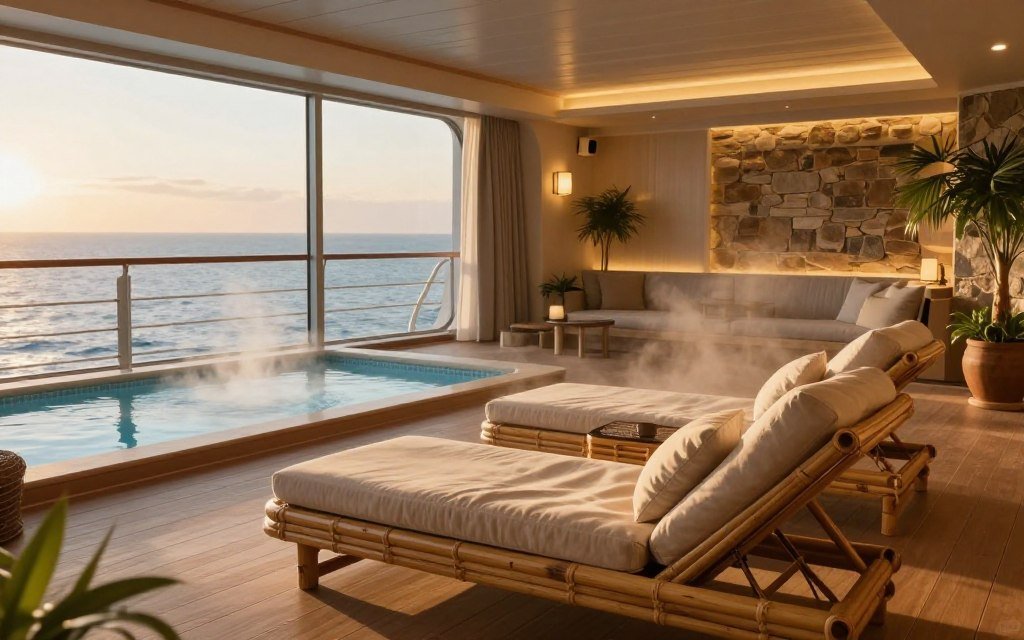
Step in and follow a simple loop: warm up, breathe steam, cool down, then rest by the water. The circuit is designed so you can move at your pace and leave feeling lighter.
Heat therapy zones
Saunas range from traditional Finnish heat to gentler sanariums. Infrared rooms use radiant warmth for deeper muscle heat with lower air temperature. Try each for short stints to gauge comfort.
Steam and aromatic experiences
Steam rooms deliver humid heat and scented vapours. Expect slippery floors and strong humidity. Move slowly and sip water between visits.
Hydrotherapy and pools
Thermal pools differ from a standard hot tub. Look for jets, waterfall features and sit-in ledges. Some pools have individually controlled jets so you can aim pressure where your body needs it most.
Cold therapy and contrast cycles
Cold rooms and snow rooms are trending. The hot‑then‑cold cycle (sauna → snow room → relax) boosts circulation. Yes, some lines even make it snow inside the room.
Relaxation and specialty spaces
Heated stone loungers soothe tired muscles while padded loungers offer cushioned rest. Specialty rooms — salt caves, hammams and experience showers — can be fun to try but may feel mild for some guests.
Comfort extras and etiquette
Complimentary towels, fluffy robes, teas and infused water lift the whole experience. Be quiet, rinse before pools and avoid leaving loungers “reserved” for hours.
How much a thermal suite pass costs and when it’s good value
Ready for real numbers? Let’s compare week-long passes and single-day options so you know what to expect.
Real pricing examples
Norwegian Escape reported a 7‑day pass at US$219 per person — roughly US$31 per day. A very limited port‑day day pass was sold at around US$54 from the spa on port mornings.
When to book
Pre-booking often offers discounts. Embarkation or early‑cruise specials can also appear as lines try to fill capacity.
The simple value test
Use this formula: total pass cost ÷ realistic days you will use it. Be honest — count the days you’ll actually visit, not the ones you hope to.
| Option | Typical cost (USD) | Estimated cost per use |
|---|---|---|
| 7‑day pass (Norwegian) | 219 | US$31/day (if used every day) |
| Port‑day day pass | 54 | Higher per day but fewer people |
| Single treatment + day access | Varies (treatment price) | Good if you want one therapist session |
Usage scenarios matter. Twice daily on sea days makes a week pass great value. A quick post‑gym visit favours pay‑as‑you‑go. One curiosity visit does not.
Watch budget pitfalls: couples buying two passes, extra treatments, and last‑minute peak pricing. Ask onboard whether a treatment includes day access — some packages guarantee it (like Cunard). That question will save you time and money. 😊
Which cruise line does it best right now
Different operators aim at different guests; below I match each brand to the type of wellness fan who’ll love it. Pick what matters most — variety, scale, romance or quiet luxury.
https://www.youtube.com/watch?v=xMxUyMa-uXM
Norwegian
Benchmark for variety: many saunas, steam, a real snow room and a large pool with oceanview loungers. Passes sell out fast — book early. Best for you if you love a daily circuit and contrast therapy (hot‑cold).
Celebrity
Multi‑environment spa: Sea Suite (eight experiences) and Persian Garden variants. AquaClass/Aqua Sky guests often get unlimited access. Best for you if you want choice and included perks.
Disney, Virgin and others
Disney: Rainforest Room scores on aesthetics and a couples vibe, plus outdoor hot tubs.
Virgin Voyages: Smaller area, solid but divisive — great if you prefer casual style over grand spa rituals.
| Line | Standout feature | Best for |
|---|---|---|
| Norwegian | Multiple saunas + snow room + large pool | Wellness fans who use it daily |
| Celebrity | Multi-room circuit + AquaClass perk | Variety seekers and AquaClass guests |
| Cunard / MSC / Viking / Explora | Mareel ritual & Aqua Therapy / adults-only hydrotherapy / snow grotto / salt cave & ice fall | Scale and ritual (Cunard); no-fuss reset (MSC); Nordic contrast (Viking); boutique calm (Explora) |
For a broader look at world spa offerings, see a curated list of the best cruise-ship spas. Choose the line that matches how you like to unwind. 🙂
Are cruise ship thermal suites worth it for Aussie cruisers?
If you’ve flown a long way, a simple spa upgrade can make the vessel feel like a proper resort. It’s the easiest luxury add-on that pays back in calm sea days and quiet reset time. 😊
Best fit
You’ll love it if you plan slow sea days, want a quiet escape from busy decks, and enjoy the sauna → steam → cold cycle as a ritual.
When to skip it
- Short itineraries with packed port calls.
- Trips where you only want one treatment — book a massage instead.
- If most days are ashore, the pass rarely pays back.
How to choose
Day pass is ideal for curiosity or one dedicated reset day. Cruise-long pass suits routine users (morning heat, afternoon loungers).
Package works when it bundles a treatment you already want plus access perks.
Practical tips
- Tour the areas on embarkation day, ask about remaining passes and port-day pricing, then decide.
- Bring swimmers, thongs and a hair tie. Robes and towels are usually included.
- Pace your body in heat/cold cycles and hydrate.
Recommendation framework: if you crave routine wellness on board, buy the pass. If you’re mostly ashore or only after one therapist session, skip it and save the money.
Conclusion
Quick verdict: treat the spa upgrade as a routine, not a one-off. If you plan to use the thermal suite several times, it often repays the price. If you’ll be ashore most days, skip it.
Buyer cues: love long sea days, crave quiet away from busy decks and enjoy hot→cold cycles — then say yes. Prefer packed port days or one treatment only — say no and book a massage instead.
Top-line comparisons: Norwegian often leads for variety and features, Disney wins for couple‑friendly style, and Celebrity shines when access is bundled (AquaClass type perks).
Leaning toward yes? Book early or ask on embarkation — passes are limited. You now know what you’ll pay for, what you’ll get, and how to buy the right access for your trip. 🙂 For detailed Norwegian options, see the Norwegian Thermal Suite guide.