Ready for a family trip that mixes gentle adventure with smart planning? This guide sets clear expectations so you can pick the right tour, not just the prettiest photo. We compare options, flag risks and help you match a trip to your kids’ ages and your comfort with water and weather.
Big choices you’ll make include where to paddle, whether to go guided or self-guided, what’s included, and which operators meet safety and value-for-money standards in Norway.
If you only read one thing: pick a trip with clear safety rules, kid-friendly kit, and flexible cancel options. That one filter will cut overwhelm and help you shortlist fast. 🙂
Calm arms-on paddling can be a brilliant family experience. But it still needs smart planning: watch weather, respect cold water, and choose an operator who explains risks plainly. You don’t need to be an elite paddler — just the right information and a trusted guide.
Key Takeaways
- Choose a trip with explicit child-friendly policies and kit.
- Compare guided vs self-guided options for safety and ease.
- Look for clear safety standards and flexible cancellation.
- Shortlist tours that match your kids’ ages and confidence.
- Plan for weather and cold water — simple prep goes a long way.
Who this family kayak trip is best for
Start by matching the trip to real-life habits — snack timing, attention span and how your kids handle wind. That quick check will steer you toward the right tour and save stress on day one.
Best ages and stages for kids on the water
Young children often do best riding in a double kayak with an adult. Older kids (about 8–12+) can paddle short legs on their own with supervision.
There’s no one magic age. Watch for willingness to wear a PFD, sit for 20–40 minutes, and follow simple instructions.
What “family-friendly” really means in the fjords
Family-friendly tours use sheltered routes, short paddling blocks and warm-up stops. They plan snack breaks, loo stops and a flexible pace so people stay happy—not exhausted.
Guides who enjoy kids will adjust the day around moods and energy, not just distance or speed.
Signs a tour is too hard for your crew
- Long open-water crossings or tight schedules.
- Minimal bailout points and big group sizes.
- Vague “no experience needed” claims with no safety detail.
Quick self-check: if a windy beach day at home stresses your crew, choose calmer water and higher supervision ratios for your trip.
Choosing the right fjord for your kayaking experience
Pick a fjord that fits how your kids travel, rest and refill energy—not just the photo op. That helps you balance epic views with paddling that builds confidence and fun.
Classic scenery vs calmer waters
Iconic cliffs and waterfalls deliver those wow moments. But dramatic scenery can push stronger winds and choppier waters.
If your priority is short, sheltered legs for nervous paddlers, choose a quieter inlet over the most photographed route. Safety and stops beat a viral shot every time. 😊
Access from key places and travel time trade‑offs
Closer launch points save time and lower car‑sick risk. Yet a longer transfer of a few hours can put you in glassy water and better landing spots.
Think practical: early starts tire kids, so weigh transfer time against the energy you need for the paddling journey.
- Check wind funnels and exposure — the same fjord can change by the hour.
- Match your trip dates to daylight patterns so you don’t cram too much into one day.
- Shortlisting rule: pick the fjord where you can stop often, not the one with the biggest online reputation.
norwegian fjords kayaking: guided tours vs self-guided rentals
Choosing the right format—guide-led or self-guided—shapes the whole family experience.
For parents, the difference is less about distance and more about judgement, supervision and stress.
When a guided tour is the safer, smarter buy with kids
Guides read conditions, adjust routes and manage spacing for groups. They carry rescue kit and towing systems and make quicker safety calls when weather turns. A guide also keeps kids engaged and confident, which matters more than extra kilometres. 🙂
What you can realistically do self-guided as a family
Choose short, sheltered paddles only. Stick to conservative routes with easy landings.
Rentals suit families who can manage cold-water risks, navigation and basic rescues. If that’s not you, book a tour.
How local tide and current information affects your plan
Timing is everything. Outfitters often supply detailed tide & current information — and that data can make or break a day on the water.
If you’re travelling from Australia with limited time, a guided option reduces the chance you lose days to poor planning.
- Parent lens: supervision, local knowledge, and decision fatigue.
- Smart buy: you’re buying judgement and family comfort, not just distance.
| Factor | Guided tour | Self-guided rental |
|---|---|---|
| Supervision | High — guide manages kids and groups | Parent-led; variable |
| Local knowledge | Provided (routes, tides, currents) | Needs pre-trip research |
| Weather response | Guide alters plan instantly | Depends on your decision-making |
| Cost | Higher, includes safety systems | Lower, but higher responsibility |
Do you need a Wet Card or certification to kayak in Norway?
You’ll hear talk of a Wet Card — here’s a plain answer that saves time and money.
What the Wet Card is: a short sea‑kayak course some providers promote as a credential. It teaches basic skills and beach rescues.
Do you need it for your family trip? No. Many reputable operators do not insist on the Wet Card. It is not a legal rental requirement and insurers generally do not demand it. Kayak More Tomorrow notes they ran self‑guided groups nine years before the Wet Card existed and still recommend correct local information over paperwork.
What quality companies look for instead
- Honesty about experience and comfort in water.
- Ability to follow a guide’s instructions and safety briefings.
- Basic paddle control and calm behaviour in stress.
- Willingness to wear appropriate safety gear.
Skills-over-paperwork checklist (parent friendly): basic paddle strokes, listening skills, staying calm, and wearing a PFD. Ask operators specific questions about tides, currents, wind plans and bailout points — that information matters more than a certificate.
| Requirement | Wet Card | What good operators want |
|---|---|---|
| Legal necessity | No — not required | Not required; operator judgement |
| Insurance | Not generally required | Operator confirms cover and risk briefing |
| Useful for beginners? | Can help skills, but often oversold | Local info, short on‑water checks, and a good guide |
| Practical buyer tip | Avoid automatic upsells | Choose a company that asks about real experience and shares clear information |
How to assess a kayaking company before you book
A sensible way to vet a tour is to focus on people, process and kit — in that order. Ask targeted questions and require clear answers before you pay, especially when booking from Australia. A reliable company shows evidence, not just promises.
Guide qualifications and safety culture
Look for qualified guides who are paid, vetted and trained. Good operators refuse to hire inexperienced staff and share tide & current information. A strong safety culture means conservative decisions, clear briefings and real rescue gear.
Group size and supervision ratios
Smaller groups mean faster help and more child attention. Ask for max group sizes and adult-to-child ratios. If kids will paddle, confirm quick bailout options and warm-up stops.
Equipment standards and local knowledge
Expect well-fitting kids’ PFDs, stable kayaks, child-sized paddles and appropriate spray decks. Local experts should know sheltered landing spots, typical weather windows and how plans change with conditions.
Reading reviews — a parent’s checklist
Scan reviews for mentions of patience with children, snack breaks, and how guides handled nervous paddlers. Then copy-paste this quick vetting list when you call or email:
- Are your guides certified and regularly assessed?
- What are your max group sizes and ratios?
- Do children get properly sized PFDs and paddles?
- How do you use tide/current information to plan trips?
What a typical day on a fjord kayak tour looks like
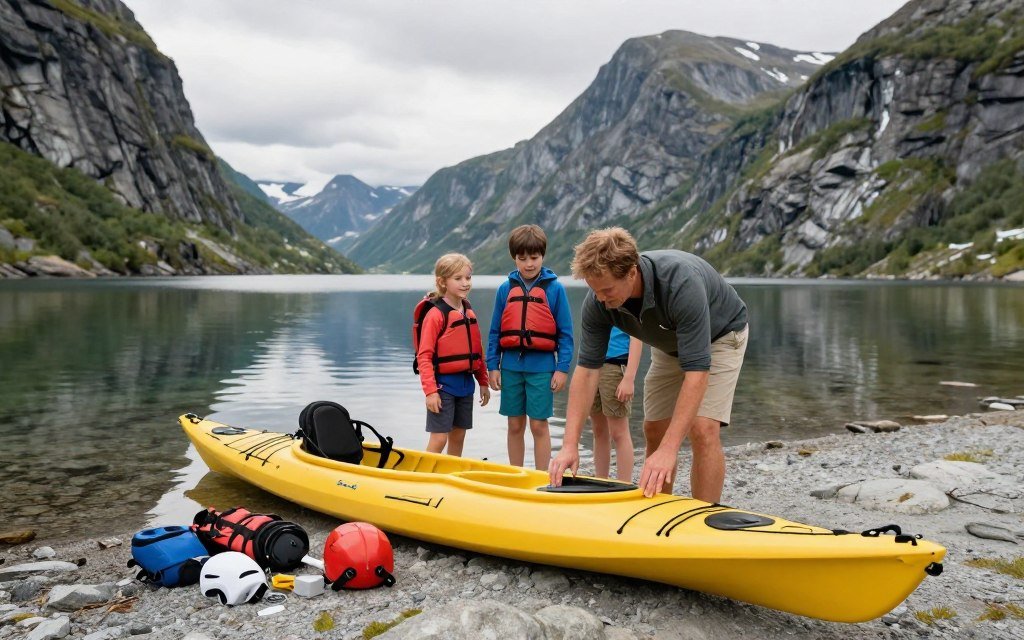
Expect a steady rhythm: quick safety checks, short paddling sections, then purposeful breaks for play and snacks.
Safety briefing, paddling basics, and getting kids comfortable
Before you launch the guide fits PFDs, runs a capsize plan and shows simple signals. Kids learn how to call for help and where to sit for balance.
Practice close to shore — gentle drills, short paddle strokes and playful cues make learning fast and low-pressure.
“We keep first minutes slow: two minutes of basics, five minutes of guided tries, then a reward stop.”
Lunch breaks, warm-up stops, and managing energy
Guides plan several short stops. These breaks are for meals, changing layers and morale checks. They reset body temperature and moods.
- Micro-goals: aim for a small beach or rock as a mini win.
- Snack timing: quick bites before energy dips, not after kids crash.
- Layer checks: warm layers on land, lighter gear on the water.
At tour end, expect a calm debrief and a final check of people and kit. This creates a positive trip memory and helps you judge if the next day will suit your family rhythm. 🙂
Sample itinerary snapshot from Ålesund to Trandal
Meet your guide in Ålesund and use the transfer time to settle the kids. The road journey to the launch takes around 2–3 hours, so pack snacks, plan toilet stops and keep energy for the first paddle. 😊
Meeting and the transfer
On arrival you get a short briefing and a safety demo. This hands‑on moment covers packing the kayak and simple capsize drills — an excellent learning moment for first‑timers.
Paddling and lunch
You paddle into Norangsfjord with short legs. A lunch stop near the small harbour of Leknes breaks the day and gives little legs time to run.
Turning into Hjørundfjord and Trandal
After lunch you turn into Hjørundfjord and head to Trandal, a roadless village only reachable by boat. “Roadless” means quiet logistics and no car backup — guides plan contingencies.
Overnight farm stay
Families sleep on a local farm with warm beds and big views of the Sunnmøre Alps. It’s a comforting end to the day and a great story for kids after a full trip.
| Segment | What to expect | Parent tips |
|---|---|---|
| Transfer | 2–3 hours by road | Snacks, toilet stops, quiet toys |
| Paddle | Norangsfjord then Hjørundfjord | Short legs, guided support |
| Lunch | Leknes harbour stop | Stretch legs, refuel, layer check |
| Overnight | Farm stay with fjord views | Warm food, dry gear, good sleep |
When to go: summer conditions, daylight, and water temperature
Summer brings the friendliest conditions for family trips—long days, warmer air and more room to slow the pace. That combination makes planning easier and gives you wiggle room if a day needs to be short or changed. 😊
Why summer is the sweet spot for families
Choose summer weeks for longer daylight and milder temps. Kids handle shorter paddles and frequent stops better when the light lasts and you can stretch the day.
Practical tip: align your trip with Australian school holidays and book early—peak dates fill fast.
How conditions change across dates and regions
Even in summer, water stays cool. Treat immersion as a real risk and pack for quick warm-ups.
- Conditions shift by region and by date — the same route can feel harder in early June than late July.
- Add buffer days so weather doesn’t hijack your whole adventure.
- Choose your week by prioritising stable weather and daylight over the cheapest dates.
Safety essentials for kayaking with kids in fjords
Safety starts with small, practical rules you can use the first minute on the water. These keep things calm, clear and predictable for kids and adults alike.
Cold water risks and how tours manage them
Cold immersion cools the body fast. If someone capsizes, numbing happens within minutes.
Reputable operators reduce risk by using short paddling legs, frequent stops and dry layers on shore. Guides carry thermal blankets, spare clothing and quick rescue kit.
Weather windows, wind, and decision-making on the day
Weather window means a safe time slot when wind and swell are lowest. Conditions can shift quickly in narrow inlets, so expect plans to change.
Good guides make conservative calls: they will reroute, finish early or cancel a leg without ego. That protects energy and mood for the rest of the day.
Communication, towing, and what to do if a child panics
Agree simple signals before launch: stop, help, warm up. Use check-ins every 20–30 minutes so kids feel heard.
Towing is a low-speed pull where the guide uses a towline to move a tired kayak. It looks secure and lets a child rest while the group keeps moving.
If a child panics: stop, stabilise the kayak, warm them, then simplify the task. Let the guide take over rescues while you stay calm and reassuring. 🙂
| Risk | How guides manage it | Parent action |
|---|---|---|
| Cold immersion | Short legs, thermal kit, recovery plan | Layer children, pack spare dry clothes |
| Sudden wind | Weather window checks, conservative routes | Trust guide calls; prepare to end the day early |
| Child fatigue/panic | Towing, close supervision, quick warm-ups | Stay calm, offer simple help signals |
Final tip: Ask the operator for clear information about rescue plans, group size and on‑water comms before you book. For practical parent-focused prep, see these kayak-friendly tips.
What’s usually included: meals, accommodation, and support
Clear inclusions—meals, kit and transfers—turn a good trip into an easy family memory. Knowing what is included helps you compare price and avoid surprise costs.
Meals and snacks that work for children on long paddling days
Expect simple, reliable food. Operators usually provide breakfast and lunch, plus kid-friendly snacks like fruit, sandwiches and biscuits.
If you have allergies, tell the company in advance. Good guides keep extra snacks on hand and will adapt meals without drama.
Accommodation styles: farm stays, cabins, and camping options
Farm stays offer warmth, solid beds and a friendly end to busy days. Cabins are simple and private. Camping gives full nature immersion, but needs extra planning for wet‑weather gear.
Support logistics: dry bags, transfers, and backup plans
Look for included dry bags, luggage transfers and clear contingency plans if weather cancels a day. That support saves money and stress.
| Item | Farm stay | Cabin | Camping |
|---|---|---|---|
| Comfort | High — warm beds | Moderate — private space | Variable — sleep system essential |
| Child-friendly | Excellent — toys, space to run | Good — cosy and simple | Depends — needs planning |
| What’s usually included | Meals, bedding, transfers | Basic meals or self-cater | Site pitch; you carry cooking kit |
| Weather risk | Low | Medium | High — wet gear management |
Quick questions to ask before you book:
- Who carries the group safety kit and tow lines?
- Are meals included each day and how are dietary needs handled?
- If a day is cancelled, what is the backup plan or refund policy?
- Do transfers and dry bags come with the tour or cost extra?
For a family-friendly cabin option, check this hike, kayak and cabin trip to compare what’s included and how it matches your money priorities.
What to pack for a Norwegian fjords kayaking trip with kids
Pack with purpose: smart layers and small comforts make family paddling days far easier. Start with a simple clothing system you can add to or strip off as the weather changes.
Clothing system that handles variable weather
Base layer: quick‑dry tops and leggings, not cotton.
Middle layer: fleece or light insulated jacket for warmth on stops.
Shell layer: waterproof, breathable jacket and spray trousers for wind and splash.
Kid-specific comfort items that actually help
- Spare warm layer and cosy beanie — tiny heads lose heat fast.
- One small comfort toy or familiar scarf for calming moments.
- Snack pouches that survive squashing (muesli bars, dried fruit).
Waterproofing: phones, cameras and spare layers
Use a 5–10L dry bag for valuables and a 20–30L dry bag for spare clothes. Double‑bag phones and cameras if you expect heavy spray.
Keep essential items on your body in a small waterproof pouch: phone, cards, and a light windproof layer.
| Need | Suggested size | Why it matters |
|---|---|---|
| Phone & wallet | Small waterproof pouch | Quick access, stays dry on your person |
| Spare clothes | 20–30L dry bag | Warm changes after stops or capsizes |
| Group kit | Large dry bag / kit bag | Towels, thermal blankets, extra snacks |
Common mistakes: packing cotton, assuming “summer” means warm, and not bringing extra warm items for short stops.
Camping nights — quick tips: keep sleeping bags in sealed liners, rotate wet kit to the largest dry bag, and set a simple morning routine: warm drink, dry layers, small breakfast.
Pack the night before — quick checklist: dry bags packed, kids’ extra layer, beanie, snacks, pouch with phone and cash, and waterproof pouch on your body. ✅
Budgeting and value: price ranges, what drives costs, and money tips
A clear money plan helps you pick trips that protect kids, time and energy — not just the cheapest price. Start by accepting that price can climb quickly once you add transfers, guided days and comfortable accommodation.
Why costs add up and where you’ll feel them most
Norway is routinely called one of the world’s most expensive travel spots. Expect higher prices for food, local transfers and overnight stays near launch points.
Guides, good kit and small group ratios push the per‑person price up, but they also reduce risk and hassle — which matters for family trips.
What true value looks like for families
Good value isn’t the lowest price. It is a tour that includes planning, trained guides, safety systems and reliable transfers.
Paying more for a company that cushions weather delays and uses quality kit protects your time and creates better memories.
Hidden costs and smart money tips
Watch for extra days if weather delays your trip, long transfers to remote starts, and accommodation before or after paddling days.
- Compare inclusions line-by-line — cheaper prices often hide transfer or meal fees.
- Choose shorter, high-quality tours when travelling from Australia to limit unexpected costs.
- Travel just off-peak edges and add a buffer day so you don’t pay for rushed changes.
Final tip: treat this trip as a memory investment. Spend where it matters most — guides, safety and comfort — and use practical budget travel tips like these and the budget travel tips to keep surprises low.
Booking advice for Australians: timing, breaks, and travel planning
Start your journey with easy wins—short walks, ferry rides and a quiet shore to reset after travel. After a long flight, a gentle first day protects energy and mood for the whole trip.
How far in advance to book popular dates
For peak summer dates, book early. Families need specific rooms, small groups and preferred start places.
Rule of thumb: book 6–9 months ahead for peak weeks. If you travel in school holidays, aim for 9–12 months to lock family rooms and smaller group spots.
Planning rest days and kid-friendly breaks
Build a simple pacing plan: paddle blocks separated by a rest break or low-effort day so kids stay keen.
- Keep the first full day easy—short local outings and naps.
- Mix paddle days with short walks, playground time or a calm ferry ride.
- Minimise accommodation hopping and avoid late-night transfers with children.
Two-week Norway template: paddle block + rest day + culture day + paddle block. This gives breathing room and makes the whole booking process simpler. 😊
| When | What to book | Why |
|---|---|---|
| 6–12 months advance | Family rooms, preferred dates | Secures space and smaller groups |
| 2–4 weeks before | Local transfers, gear requests | Final logistics and comfort |
| On arrival | Easy first day plan | Protects energy for the tour |
Sustainability and net-zero claims: what to look for
Look beyond green logos—real sustainability shows up in clear numbers and verified partnerships. You want plain information about what is measured, what’s offset, and what still needs work.
Net‑Zero partnerships and what they cover
This trip achieves net‑zero through a partnership with the World Land Trust. That link matters: third‑party partners add credibility beyond marketing copy.
They fund long‑term projects, such as the Buy an Acre programme, which helps communities protect habitat in perpetuity.
Understanding the 39kg CO2 per person figure
39kg CO2 per person covers local transport, accommodation, food, activities, guides, staff and office operations. Flights and travel to the country are excluded.
To make this real: driving 1,000 miles emits about 281kg CO2 per car (~140.5kg per person with two people). A return economy flight London–New York is ~1,619kg per person. Ten trees remove roughly 250kg CO2 over 5–10 years.
How Buy an Acre supports habitats
Buy an Acre secures land and funds community stewardship. Ask operators how many acres your booking helps protect and for proof of impact over years.
- Buyer checklist: what’s measured, what’s excluded (flights), partner verification, acres protected, and follow‑up reporting.
Making the trip memorable: culture, history, and wildlife on the water
A slow, curious day on the water often becomes the memory kids talk about for years. Keep the pace gentle and pick one meaningful stop each day instead of racing a checklist.
Spotting eagles and other fjord wildlife responsibly
Watch wildlife quietly and at a distance. Let the guide set the approach and reduce noise.
Key rules: no sudden moves, no feeding, and avoid crowding nesting sites. This keeps eagles calm and protects the whole experience for everyone.
Adding local culture and history without overloading the itinerary
Sprinkle short storytelling moments into your day. Share one clear fact, a local snack, or a simple question like, “What do you think people did here 200 years ago?”
Let kids lead a tiny part of the tour—pick the lunch spot or name a highlight. Capture a daily snapshot and ask each child for their top moment. These small rituals turn views into lasting memories.
“Unhurried days, warm breaks and curious questions make the best family adventures.”
Conclusion
Wrap up your planning by choosing comfort over spectacle. Short launches, sheltered routes and a patient guide make the difference between a stressed day and a happy family memory.
Use this buying framework: pick the right fjord for small legs, decide guided vs self‑guided, vet operators for kit and ratios, and align dates with summer conditions and kid energy.
Ready to book? Check group size, child PFD fit, route shelter, weather plan, inclusions and cancellation flexibility. Shortlist 2–3 tours, ask clear questions, then choose the operator that makes you feel calm and confident. 😊
For extra prep tips, see this short fjords guide. With the right tour, norwegian fjords kayaking can become one of those rare family trips your kids talk about for years.