You’re here to taste kopi luwak bali — and to cut through the marketing. ☕
Expect a luxury tasting and buying guide that tells you what’s real, what’s hype, and how to buy from Australia with confidence.
You’ll learn the civet-to-cup process, the real flavour profile, and quick ethics checks. We’ll also unpack seller claims like Quality Guaranteed, 100% Arabica, 100% Bio, Imported Straight From Bali and Free Shipping Worldwide, and translate them into what they mean for you.
Price anchor upfront: these tastings and online offers often start from €54 (Rp. 930.000). That helps you spot deals that are too cheap to be true.
Many vendors bundle other products. We’ll show how to use those bundles without losing focus on coffee quality and how to judge the actual products you receive.
Key Takeaways
- You’ll leave knowing what to ask when buying from Australia.
- Look for clear provenance and honest roast details.
- Price and claims matter — €54 is a useful anchor.
- Check ethics and authenticity before you pay premium.
- Use bundles wisely; keep your focus on coffee quality.
Why Kopi Luwak Tasting in Bali Still Attracts Coffee Lovers
A visit to farm tasting stops lets you judge claims in person and savour the setting that shapes the cup.
What makes it a luxury
The label rests on rarity, an unusual origin story involving the luwak, and a connoisseur-focused experience. That mix of scarcity and story positions the drink as a premium tasting, not an everyday brew.
What you’ll see at tasting stops
In places like Penebel and Tabanan highlands you’ll find guided pours, multiple small cups, and clear demos of traditional methods. Shops often display other products like teas and spices alongside the beans.
Quality in practice means clean handling, traceable origin, honest answers about animal welfare, and a fresh roast you can smell.
- Ask about origin and handling.
- Compare aroma and aftertaste, not just “smooth”.
- Avoid high-pressure sales; take notes.
| Feature | What to expect | Question to ask |
|---|---|---|
| Rarity | Limited batches | How often is this roasted? |
| Process | Traditional + sustainable methods | Is the origin traceable? |
| Tasting | Guided pours, small samples | Can I compare roast levels? |
From Civet to Cup: The Kopi Luwak Process Explained (and What It Changes)
Let’s walk the real steps from fruit to cup so you can spot fact from flourish at every tasting. 🔎
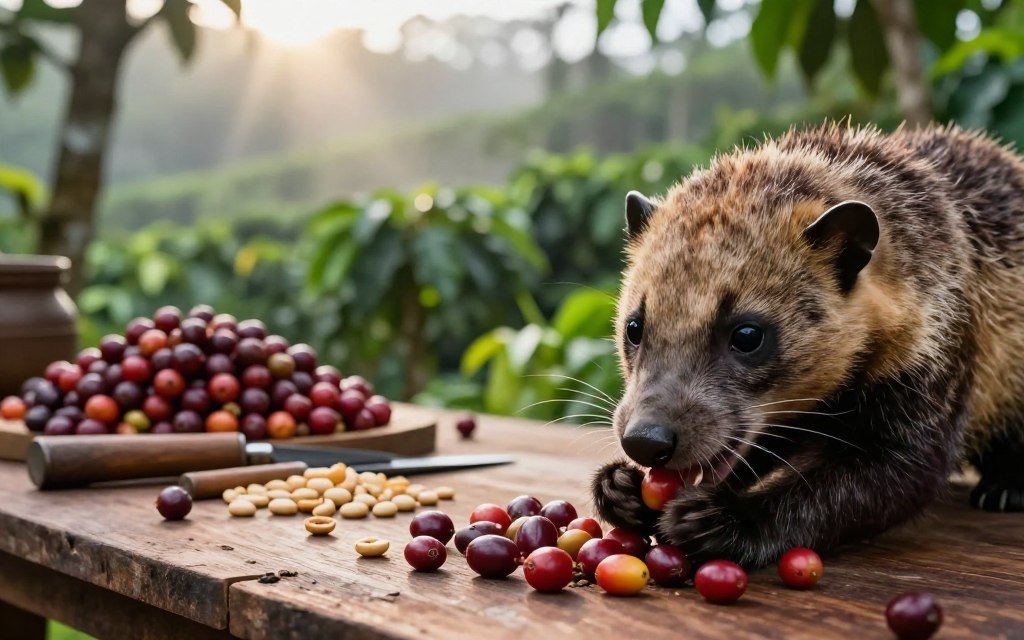
How Asian palm civets select ripe coffee cherries
Wild civets favour ripe cherries. They naturally pick the sweetest fruit, which can improve batch consistency.
This selection is helpful, but it is not a magic guarantee. Natural choice can reduce underripe beans, yet it doesn’t replace clear sourcing or handling.
Natural fermentation in the digestive tract
Beans pass mostly intact while the outer fruit is digested. Enzymes and gastric juices alter bean compounds.
The result: some bitterness drops and the cup often feels smoother and less acidic.
What “100% Arabica” means for body and aroma
100% Arabica usually gives more aroma complexity and a softer mouthfeel than Robusta blends.
But aroma and body still depend more on roast and freshness than on the label alone.
How roasting and freshness affect final flavour
Even high-quality beans lose lift if roasted too dark or stored too long.
Look for roast dates and buy recently roasted batches. Freshness is a quality lever you can control.
“Natural selection and digestion change the bean chemistry — but proof of ethical production is a separate check.”
- Know each step in the process so you can question fast claims.
- Ask for roast dates and origin when buying.
- Demand transparency in production to link flavour with responsible practice.
| Stage | What changes | Buyer check |
|---|---|---|
| Selection | Ripe cherries picked by civets | Ask if civets are wild or farmed |
| Digestion | Enzymatic fermentation reduces bitterness | Confirm processing and cleaning steps |
| Roast & storage | Defines final flavour and aroma | Request roast date and storage info |
kopi luwak bali Flavour Profile: What You Should Taste (Not Just What You’re Told)
A proper sip reveals more about quality than any marketing line ever will. Start with clear targets: balance, sweetness and a clean finish. ☕
Expected tasting notes
Chocolate, caramel and syrupy sweetness are the common descriptors. When beans are fresh and roasted well, these notes linger without harsh bitterness.
Body and acidity
Expect a medium-to-full mouthfeel and a lower-acid finish. The enzymatic changes during processing often make the sip smoother than many bright specialty coffees.
How to taste for authenticity
Try this quick routine: smell first for aroma clarity, then sip and hold to check balance, and finish by judging aftertaste for cleanliness.
- Set a realistic flavour target: balance over novelty.
- Red flags: smoky or charred notes (over-roast), papery stale smell, or a thin watery body.
- Compare fairly: taste alongside a local Arabica from the same region in bali — a genuine product should stand up without hype.
| Element | What to expect | Quick check |
|---|---|---|
| Flavour | Chocolate, caramel, syrupy sweetness | Does sweetness linger without bitterness? |
| Body | Medium–full | Is the mouthfeel dense and satisfying? |
| Acidity | Lower finish | Is the aftertaste clean or ashy? |
Note: If you want to be thorough, ask for a small pour of coffee luwak and a standard roast side-by-side. That comparison often tells the story faster than any label.
Authenticity and Ethics: How to Spot High-Quality, Responsibly Produced Kopi Luwak
A quick checklist will save you money and help you choose responsibly produced beans. ✅
Wild vs farmed civets — what to ask:
- Where do the beans come from? (look for Penebel or Tabanan specifics)
- Are the animals wild or kept on-site? Ask about living conditions.
- How is collection done and cleaned after extraction?
- What volume do you produce per week or month?
Translate claims into proof: “Quality guaranteed” should mean a named farm, clear handling steps, and a roast date. “100% Bio” needs specifics — inputs, certifications, or consistent staff answers.
| Claim | Practical proof | Quick check |
|---|---|---|
| Quality guaranteed | Named origin, roast date, storage details | Ask for origin and sample |
| 100% Bio | List of farming inputs or certification | Request evidence or consistent story |
| Direct from farm | Fewer middlemen, on-site tours available | Confirm visit options and handling |
“Traceability is your strongest signal — if they welcome a tour or show production steps, trust rises.”
If you want a deeper check, read a trusted comparison on real vs fake luwak coffee.
Buying Guide for Australians: Products, Pricing, and Free Shipping from Bali
A smart purchase starts with understanding typical prices and what “free shipping” actually covers. Use the €54 starter as your budget anchor — anything far below that warrants a pause and a verification question. 💸
Choose the right product: pick roasted beans to test freshness, or a small sealed bag if you want to sample first. Larger bags suit regular drinkers but only if you trust the roast date.
Shipping to Australia: “Free shipping worldwide” can mean slow dispatch or minimum spend. Confirm dispatch timing, tracking and carrier, and check for taxes or duties.
Value checklist before checkout
- Roast date and a clear freshness window.
- Quality guarantee with refund or return terms.
- Storage advice and visible packaging seals for gifting 🎁.
- Compare prices across listed products and weigh rarity vs handling costs.
| What to check | Why it matters | Quick ask |
|---|---|---|
| Price anchor (€54) | Flags suspiciously cheap offers | Is this the smallest batch price? |
| Free shipping claim | May hide slower delivery or minimums | What is the dispatch time? |
| Bundles (teas, spices) | Good value if coffee quality is confirmed | Add only after you verify roast date |
“If you’re paying for international shipping, add a trusted tea or spice to the order — but only after you lock in the coffee quality.”
For regional product context and buying tips, see a detailed guide on Bali coffee products.
Conclusion
Close your visit or order by asking for traceable origin, clear handling steps and a fresh roast date. Keep these simple checks as your truth filter: understand the civet story, verify ethics and traceability, and judge the cup on aroma, balance and a clean finish.
What good flavour looks like: smooth, sweet-leaning, low-acid and satisfying — not burnt or bitter. That baseline helps you separate novelty from genuine quality.
If you’re tasting on-site, ask the wild‑vs‑farmed question and request origin details. If you’re ordering to Australia, compare products, check roast/freshness signals and get shipping terms in writing before you pay. ✉️ Contact: info@luwakcoffee-bali.com
Enjoy the highland beauty and let transparency and cup quality guide each purchase. For a deeper check on provenance, see our real origin guide.