Planning a trip with kids can feel tricky, but it gets easier when you match energy levels, ages and your tolerance for travel admin. This short guide helps you pick a place that fits your crew — toddlers, tweens or teens — without fuss.
Australia is a big country, so travel time changes everything. We balance effort with what you’ll actually do once you arrive. Each pick has a quick note on what it’s like with kids, plus low-energy ideas and practical accommodation tips.
Here’s a preview of the five picks: theme parks and beaches on the Gold Coast, easy coastal living on the Sunshine Coast, classic seaside vibes at Merimbula/Pambula, cool-climate nature in Tasmania, and a cultural wow at Uluru.
Inside each section you’ll find where to base yourself, simple things to do on rest days, and what room layouts or facilities matter with children. You’ll also get a compact checklist at the end to turn inspiration into a real plan. 😊
Key Takeaways
- Choose a place that matches ages and energy levels.
- Factor travel time — it changes the trip vibe.
- Look for accommodation with kitchen, laundry and safe layout.
- Plan low-energy days into your schedule.
- Each pick includes child-friendly tips and where to base yourself.
How to choose the best family holiday destinations australia for your crew
Start by asking three simple questions about any place you’re thinking of. These quick checks save you time and headspace when you’ve got kids in tow. 😊
Use the three Ps: proximity, price and particulars
Proximity: how close is it to home and how much actual travel will it take?
Price: can you afford the total trip cost — flights, gear hire and daily basics?
Particulars: will there be enough for everyone to enjoy, from toddlers to teens?
Factor in true door-to-door travel time
A 2-hour flight can turn into a 5–6 hour day once you add the drive to the airport, check-in, waits and transfers. That true time affects naps, meals and moods.
Fly vs drive: a simple decision guide
If you want to save days and energy, flying is the right option. If you need gear, flexibility and easier staging for naps, driving wins. For long drives, leave early, plan park stops and treat the drive as part of the trip.
Timing tips and realistic expectations
Morning departures often help babies and toddlers sleep through transfers and the flight. Pack a small activity bag, breakfast-on-the-go, fruit and water bottles for the car.
“Arrive safely—that is all.” Let that be the goal and everything else becomes a bonus.
Gold Coast, Queensland for beaches, parks and theme park thrills
Think wide beach stretches, playgrounds steps from the sand and theme parks a short drive away. This place works because it bundles easy wins: surf, shade and on-site basics so you don’t overplan. 😊
Where to base yourselves: Broadbeach for access and amenities
Broadbeach gives you direct access to the sand, an adjacent park and supermarkets within a short walk. That means quick snack runs, easy nappies swaps and predictable naps on the go.
Theme parks made simple
Buy flexible passes and hire a car. A car lets you do parks in short bursts — go early, leave for a nap and come back if the kids feel up to it.
“Touristy? Yes — and that’s the appeal: less planning, more play.”
Playground-to-beach convenience
The strip near Broadbeach works for toddlers and small kids because you can swap sand for shaded play equipment without a long trek. One stop gives you sand, shade, picnic spots and shops.
Accommodation pointers for families
Look for apartments or resorts with kitchen and laundry. Check balcony locks, lift access and room to spread out. Apartments offer self-catering; resorts bring on-site pools and childcare — choose the option that matches your routine.
| Need | Good option | Why it helps |
|---|---|---|
| Easy beach access | Broadbeach base | Walkable sand, park and shops nearby |
| Flexible park days | Hire car + flexible passes | Short bursts for naps and weather changes |
| Safe rooms | Low-rise or secured high-rise | Check balcony locks, room layout and lifts |
Sunshine Coast, Queensland for laid-back coastal family time
If you want to slow the pace without losing the fun, the Sunshine Coast is your breathing space. Less hustle, more easy days — perfect when you want sand, short drives and gentle rhythms.
Mooloolaba’s beach, park, boardwalk and surf club in one easy precinct
Mooloolaba is a simple, all-in-one place: a safe beach for swims, a nearby park for post-sand play and a pram-friendly boardwalk lined with cafes. The modern Surf Life Saving Club means an easy meal with a view.
This layout works brilliantly with children. Fewer car trips and fewer transitions mean more time actually enjoying the beach and less time packing and unpacking gear.
Noosa for river swims, national park walks and Hastings Street downtime
Noosa is the slightly more polished option. You can balance a river swim with a short national park walk when energy is high, then reset on Hastings Street for slow shopping and food.
It’s also great when you don’t want full days out — there are always low-effort things nearby like markets, short walks and gentle water time.
Easy side trips kids actually love
- Australia Zoo — hands-on animal attractions that excite kids.
- The Ginger Factory — short tours, rides and snacks.
- The Big Pineapple — an easy, nostalgic outing away from the beach.
“Plan one bigger outing every second day so you keep that laid-back feel and avoid the overtired spiral.”
Which vibe are you — Mooloolaba easy-mode or Noosa river + national park? Pick your place, plan a relaxed pace, and you’ll find plenty of simple wins for children and adults alike. 😊
Merimbula and Pambula, New South Wales for a classic beach holiday with kids
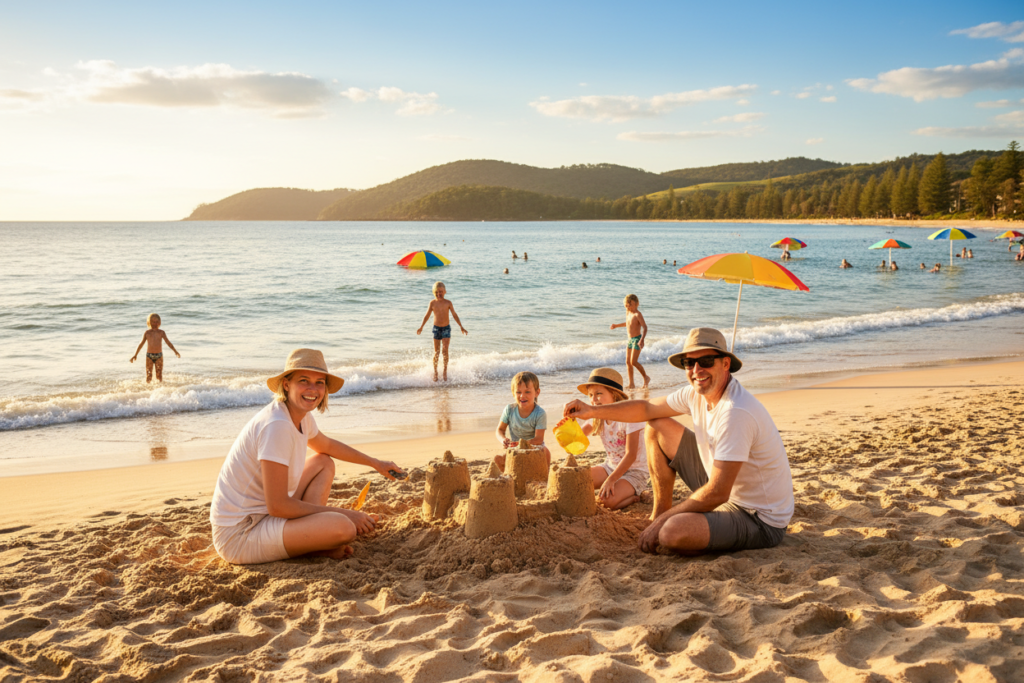
On the NSW South Coast, Merimbula and Pambula deliver classic beach rhythms and low-stress days for parents and kids. This place is built for repeatable routines: sand in the morning, a short outing in the afternoon and simple meals you can lean on. Easy wins matter when you’re travelling with little ones. 😊
Best beaches for families
Bar Beach is a standout spot. The water is calmer, setup is quick and a kiosk nearby means you don’t have to pack a full picnic. That makes it one of the easiest spots to keep children fed, shaded and happy.
Where to stay
Compare two solid options: holiday parks with direct beach access or a base on the Fishpen peninsula near the bridge into town.
- Holiday parks (NRMA/Big4 style): direct sand access, on-site facilities and cabins that suit longer stays.
- Fishpen peninsula: more central for shops, short drives and evening strolls by the bridge.
Accommodation check tips
Look for parking close to your cabin, safe outdoor play space and a kitchen plus laundry if you plan a longer stay. These practical features save time and keep routines steady.
Timing, sample day and local attractions
If swimming is your main goal, summer is worth the extra crowds. Shoulder seasons are milder but cooler in the water.
Try this simple day: morning beach, kiosk lunch, an afternoon nap or quiet time, then a short visit to a playground or local park. Use Magic Mountain or other small attractions as a windy-day change-up.
“It’s the kind of place you return to because it’s easy, not flashy.”
Tasmania for a cooler-climate family adventure packed with history and nature
If you want nature, history and easy drives in one slice of island life, Tasmania fits the bill. It’s a cooler-climate reset that still feels like proper adventure for the whole family. 😊
Getting there with the car: what the Spirit of Tasmania changes
Bring the car and you bring comfort. The Spirit of Tasmania lets you pack freely, avoid rental hassles and keep gear for spontaneous stops.
Easy stops and what they offer
- Stanley — a compact coastal village with short walks and a giant nut-shaped rock to explore.
- Brickendon Heritage Farm — hands-on history tours that suit curious children and slower paces.
- Bicheno — coast, penguin viewing and a relaxed food scene for a simple foodie tour.
Beyond the beach: walks, sites and foodie experiences
Mix short walks, historic sites and a single foodie tour into your plan. Keep activity days short and snacks handy so everyone stays happy.
“Avoid back-to-back long drives — plan slow mornings after travel and one flexible day for weather.”
Accommodation tip: favour self-contained places with heating, laundry and easy parking so early bedtimes and routines are simple. Choose a single-region base for less movement, or a loop if your children handle change well.
Uluru, Northern Territory for a powerful cultural experience in the heart of Australia
A trip to Uluru gives older kids a memorable mix of wonder and learning. It’s less about ticking boxes and more about shared moments—sunrise colour, quiet walks and real stories from Traditional Owners.
Why it suits school-aged kids, tweens and teens
Big landscapes spark curiosity. Tweens and teens can handle longer walks and deeper conversations about culture and history.
They often remember guided stories and tactile activities better than passive sightseeing. That makes Uluru a strong choice if you want meaningful experiences with your children.
Indigenous culture experiences you can do together
Choose guided experiences that teach dot painting, spear-throwing basics and storytelling in safe, family-friendly formats.
Interactive workshops keep kids engaged and provide context that brings the sites to life.
Respectful travel basics: what not to do and why it matters
Do not climb Uluru. This is a core respectful rule. For Traditional Owners, climbing is deeply disrespectful. Follow signage, listen to guides and ask before photographing sensitive sites.
“Respectful travel keeps this place meaningful for generations.”
Accommodation options across a useful range
Accommodation runs from campgrounds to lodges and resorts like Sails in the Desert. Each option suits different budgets and comfort levels.
Campgrounds are practical for active kids. Resorts give more comfort and organised tours. Pick the option that fits your routine and energy levels.
Practical tips and tours
Start early, carry plenty of water, and plan relaxed afternoons. A guided tour can turn raw scenery into a layered learning experience for kids.
For official information and organised activities see the official Uluru resources.
Quick planning checklist for a smoother family holiday in Australia
A short, practical checklist helps you lock in details without overthinking — perfect the night before you book. Save a screenshot and use it again the week before you leave. ✅
Choosing the right accommodation
Prioritise self-contained space for meals and naps. Look for interconnecting rooms if you need separate sleeping areas.
Check safety—balcony locks, ground-floor options and a clear room layout matter. Laundry and parking are handy extras.
Getting around
Book direct flights when less stress and saved nap time outweigh cost. Choose a hire car for gear, day trips and flexibility.
Keep everyone happy
- Plan each day with one main thing, one easy thing and protected rest time.
- Mix beaches + parks + attractions + downtime for rhythm, not constant stimulation.
Weather and seasonality
Aim for dry-season windows where relevant and lock key bookings early if you travel in peak times. Cities suit museums and zoos; regional spots often make early bedtimes and beach days easier.
You’ll find your sweet spot — the plan that fits your pace matters more than internet rules.
For a sample 10-day itinerary option and extra tips, check this compact guide before you pack.
Conclusion
Pick a style first — beach and parks, island nature and history, cool-climate walks, or a cultural city experience — then choose the place that matches your crew’s energy.
Quick recap: Gold Coast, Sunshine Coast, Merimbula/Pambula, Tasmania (island), Uluru. Use that list to narrow your holiday destinations in seconds.
Plan around one or two non-negotiables: swimming, theme parks, cultural sites or relaxed downtime. That keeps days simple and moods steady. 😊
Save the checklist, share it with co-parents, and pencil in dates for the next school holidays. With one well-paced trip, you can start a tradition that sticks.