
This is your go-to guide to a Norway cruise—built for quick mobile reading and real planning value. If you want big scenery with small hassle, we’ll show you why a cruise is a smart way to see more of the country.
Expect a simple path through five clear reasons: stunning fjords, rare natural phenomena, lively ports, hands-on excursions and relaxed onboard comfort. You can pick classic fjord routes, Northern Lights trips or expedition-style voyages further north.
We’ll preview the top natural wonders you can reach by sea—majestic fjords, Arctic light and a dramatic coastline—so you can set sail with confidence. This guide also outlines the best time to go, key ports like Oslo or Bergen, shore excursions, ship choices and how to score deals.
Read on and you’ll know exactly what a cruise norway adventure offers. Short, practical, and packed with what you need to plan and enjoy the trip. Ready to set sail? ⚓
Key Takeaways
- A cruise shows the country’s beauty with less travel hassle.
- Five reasons guide your choices: scenery, phenomena, ports, excursions, comfort.
- Options range from fjord-focused trips to Northern Lights voyages.
- Common departures include Oslo or Bergen for easy access.
- We cover timing, ports, excursions, ships and how to find deals.
Why a Norway cruise is one of the best ways to experience the country
A sea voyage here pairs dramatic natural backdrops with lively harbourside culture—making every day a new discovery.
Nature-meets-city cruising: fjords, mountains and vibrant waterfront cities
One moment you’re gliding past steep fjords and snow-dusted mountains. The next, you’re wandering cobbled quays in a colourful city, sampling local food and galleries.
The route blends metropolitan style with nature-focused exploration. Harbourside towns and architecture-rich cities sit close to wild, scenic stretches of coastline.
Less packing, more seeing: waking up to a new view and new port
Unpack once and let the ship be your moving base. You’ll wake to a fresh view most days and step ashore into a new place without repacking every second day.
Expect a mix of port-heavy days and full-on scenic sailing days where the journey is the headline.
- Who this suits: first-timers to norway, photographers, food-lovers, families and expedition fans.
- Why it works: efficient sampling of multiple cities and smaller places in a single holiday.
Cruising Norway for next-level fjords and coastal landscapes
Stand on deck and watch sheer rock walls, tumbling waterfalls and wide skies reshape how you see landscapes. Summer days bring long light, which makes fjords and falls especially clear for viewing and photos.
Iconic fjords, waterfalls and mountain ranges
You’ll see fjords carved deep into the land, waterfalls spilling down steep slopes and mountain ranges that feel close enough to touch. These scenes are best experienced from a moving vantage point where the scale stays intact.
Coastline cruising versus inland travel
On a ship the best views come to you. That means fewer transfers, less weather stress and more time to enjoy the panorama. Coastal routes thread tiny harbours and remote towns into every day of the trip.
Photography moments and quick tips
- Stand on the outer deck at dawn for golden light and calm reflections in sheltered fjords.
- Shoot harbourside towns as you approach — the view is often more photogenic from the water.
- Choose your style: classic fjords beauty or a tougher expedition vibe for wilder landscapes and true adventure.
Practical tip: plan at least one scenic sailing day to soak up the views — a short lens and patience reward every snap. Ready to pick your next cruise?
Northern Lights and Midnight Sun: natural phenomena you can cruise to
Set your sights on two sky shows that shape the seasons: the dancing aurora in winter and endless golden evenings in summer. Each offers a very different feel and a clear choice for your next voyage. ✨
Northern Lights trips: why longer winter nights matter
Winter (Dec–Feb) brings long nights and shorter days, which boosts your chance to see the northern lights. Darkness is the simple advantage: the more night hours, the more windows for display.
Note: the aurora is weather-dependent. Choose a route with clear-sky odds and flexible shore options to improve your odds.
Midnight Sun in summer: extended days for sightseeing
From June to August the midnight sun means the sun barely sets. Days stretch on and evening sails feel like golden magic.
This extra daylight gives you more time to explore ports, take hikes and enjoy late-night photo sessions without rushing.
- Pick winter for aurora hunting and night-sky drama.
- Pick summer for long days, relaxed sightseeing and surreal sunsets.
- Australian travellers: expect disrupted sleep patterns — pack an eye mask for summer and use light exposure to reset in winter.
| Feature | Winter (Dec–Feb) | Summer (Jun–Aug) |
|---|---|---|
| Main draw | Northern lights visibility | Midnight sun, long daylight |
| Best time for photos | Night-sky shots | Golden-hour anywhere, anytime |
| Travel vibe | Cozy, dramatic | Active, endless days |
Why this matters: Norway is one of the best places in the world to chase these natural wonders by sea. Decide your vibe, then pick dates and routes that match the experience you want.
Best time for cruising norway: seasons, weather and the vibe onboard
Timing shapes the whole trip: sunlit summer days, aurora-fed winter nights, spring thaw or autumn savings. Use this short season guide to match weather, crowds and budget to the vibe you want for your voyage.
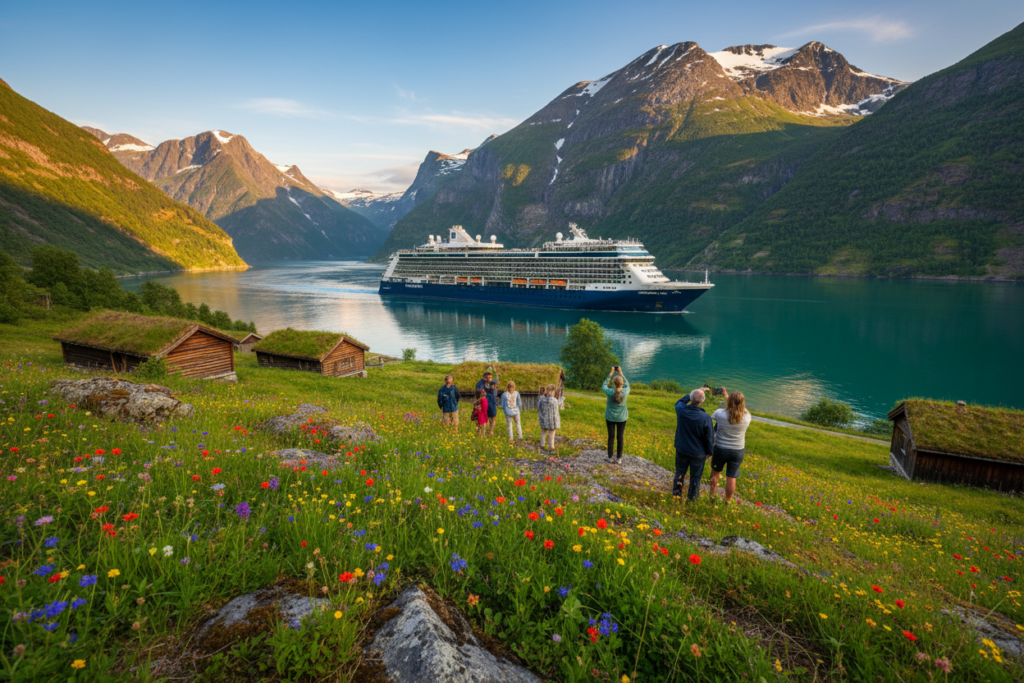
Summer: peak season, mild weather and long daylight hours
Summer (Jun–Aug) brings mild temperatures and long, golden days. You get extra time ashore and superb light for fjords and waterfall photos.
Best for: families and photographers who want long days and easy shore access.
Winter: Aurora Borealis potential and snow-covered towns
Winter (Dec–Feb) is colder and darker, but it’s when the aurora shines. Snow makes towns feel postcard-perfect and adds atmosphere onboard.
Best for: Northern Lights hunters and cosy, dramatic nights. Pick northbound routes for a higher chance on a norway cruise.
Spring: landscapes in bloom and waterfalls fed by melted snow
Spring (Mar–May) is a fresh shoulder season. Landscapes wake up, waterfalls run high and festivals pop up in ports.
Best for: photographers and walkers who want lively scenery without peak crowds.
Autumn: fewer crowds, cooler days and better value
Autumn (Sep–Nov) offers quieter harbours and lower prices. If you want deals and savings, flexible travellers will find the best options then.
Best for: budget travellers and those who prefer calm days ashore during a cruise norway voyage.
- Quick tip: decide the experience you want first—then pick dates to match weather, light and cost.
Ports of call worth building your itinerary around
Your itinerary lives or dies by the ports you choose; pick a mix that balances culture, nature and adventure. Think in terms of destinations, not just price — the right towns turn short stops into full memories.
Oslo: museums, nightlife and Nordic culture
Oslo is a compact city packed with culture and history. Visit the Nobel Peace Center and the Viking Ship Museum for rich context.
Evening: lively restaurants and a surprisingly good nightlife scene make it a great first or last port.
Bergen: UNESCO charm and the fish market
Bergen feels like postcard Norway with colourful wooden houses and UNESCO-listed streets. The fish market is ideal for a casual, tasty wander.
Tromsø: gateway to Arctic adventure
Tromsø is your launchpad for Arctic tours and strong northern lights chances. Museums like Polaria and the Arctic Cathedral add local flavour.
Try: dog sledding or guided aurora trips if your schedule allows.
Ålesund: Art Nouveau streets and quick fjord access
Ålesund’s architecture is charming and compact. It also gives fast access to standout fjords like Geirangerfjord and Hjørundfjord on a day tour.
Spitsbergen (Svalbard): remote wilderness upgrade
For true adventure, Spitsbergen delivers glaciers, tundra and rare wildlife. Expect polar bears, reindeer and walruses where permitted and guided.
Note: port time varies by ship size. Match your must-see ports to docking hours when you book a norway cruise or cruise norway itinerary.
- Tip: plan by ports, not just price — it’s the mix of towns and sights that defines the trip.
Shore excursions and adventures that make the journey unforgettable
Shore time turns a good itinerary into a personal adventure you’ll remember long after the trip ends. The ship gets you between destinations, but your chosen excursions shape the trip.
Arctic experiences in Tromsø
In Tromsø you can book dog sledding for an authentic Arctic feel. These tours often include short hikes, warm shelters and local storytelling.
Tip: pick a small-group tour for a hands-on experience that feels less touristy and more true to place.
Scenic tours from Ålesund
Ålesund is a handy base for fjords and UNESCO-listed views. Choose a panoramic drive, a lookout walk or a guided boat tour to reach nearby towns and dramatic lookouts.
Wildlife watching in the far north
Far-north wildlife trips can show reindeer, walruses and, where permitted, polar bears. Sightings vary by season and rules, so book with a licensed operator.
- How to choose excursions: match activity level, check weather backup plans and note how long you’ll be off-ship.
- Photography tip: excursions often give the best elevated view; sailing gives the wide-angle views—use both.
“Good shore days turn stops into stories.”
Culture, history and food: what you’ll discover beyond the scenery
Each port offers a short, sharp lesson in history, culture and food—perfect for a day ashore. You’ll shift focus from pretty views to museums, markets and meals that make a place feel lived-in.
Viking history and modern museums in Oslo
In Oslo you can build a half-day plan around Viking artefacts and the Nobel Peace Center. Start at a major museum for Viking history, then add a quick modern exhibition if time allows.
Practical tip: pick one standout museum to match short docking windows so you still have time for a market snack.
Bergen’s working harbour and market life
Bergen feels alive at the water’s edge. The working harbour and fish market serve fresh seafood and local character in equal measure.
Wander the stalls, grab a seafood snack and soak up that laid-back local life before returning to your ship—your home between ports.
Norway’s dining scene: from seafood to standout restaurants
Fresh seafood is the hero, but the restaurants scene also includes modern kitchens worth booking for a big night out.
- Taste the city: market snack → casual seafood lunch → booked dinner.
- Plan smart: prioritise one cultural highlight and one food stop per port.
“You return to your ship full of stories, not just photos.”
For a relaxed preview of places and ports, watch a short guide to the region on this regional travel video—it helps you pick must-sees before you step ashore. ⚓
Choosing cruise lines and ship styles for Norway’s coastline
Your ship choice decides how close you get to fjords, wildlife and remote harbours. Start by naming the experience you want: wide scenic views, Arctic light, or true wilderness access.
Why the market is growing and what that means for you
The market is expanding, so more cruise lines now offer dedicated routes. That brings variety across mainstream lines and smaller specialist operators.
Result: more choice to match budgets and trip style, from big-ship comfort to expedition access.
Small-ship and expedition options made simple
Small-ship and expedition means fewer passengers, flexible timetables and closer access to remote destinations. Expect more time ashore and tailored landings.
If you prize wildlife or narrow fjords, a smaller ship often delivers the best access.
Fjords cruises versus Northern Lights-focused voyages
Classic fjords cruises put scenery first and suit broad appeal. Northern lights trips prioritise timing, nighttime hours and clear skies over warmth.
| Focus | Ship type | What to compare |
|---|---|---|
| Fjords | Mid-size to large | Port times, overnight stays |
| Northern Lights | Small to expedition | Night sail windows, included excursions |
| Expedition | Small-ship | Landing permits, leader expertise |
Quick checklist — compare port hours, overnight stays, included excursions and onboard amenities. Decide: are you chasing fjords, Arctic light, or far-north wildlife? And how much onboard comfort matters versus access?
For route ideas and a deeper look at dedicated itineraries, read our expert guide to Norwegian coastal. It helps you match lines and ships to the voyage you want. ⚓
Life onboard: how your ship can elevate the Norway experience
A ship becomes your floating home between ports. Calm mornings on deck bring wide views, and relaxed nights after dinner round out the day. Your time onboard supports the whole journey—especially on scenic sailing days when the view outside is the main event.
Evening entertainment and social vibes
Days are for the coastline and cameras. Evenings are casual: a long dinner, a bar chat and low-key shows. Australians will recognise the easy rhythm—laid-back daytime watching, then friendly night-time options that don’t demand formal dress. Meeting others on longer sailings often adds stories to your voyage.
Onboard casino options — fun if you want it, ignorable if you don’t
- Roulette
- Blackjack
- Slot machines
- Bingo
- Group tournaments and lessons from staff or seasoned guests
Responsible note: treat gaming as entertainment. Set a budget and know your limits, especially if using onboard credit. Keep track of spending and avoid relying on extra credit lines.
| Amenity | Why it matters | Typical offering |
|---|---|---|
| Comfortable cabins | Your private base between ports | Daily service, storage, ensuite |
| Public decks | Best place for views and photos | Seating, telescopes, quiet zones |
| Evening venues | Social life without pressure | Bars, shows, casino, lounges |
Tip: check organised onboard events and book popular activities early. For a quick look at typical onboard events, see onboard events.
“The ship is more than transport — it’s part of the trip.”
Planning tips for Australians cruising to Norway
Smart timing, light packing and one good hotel night can transform a long-haul voyage into a smooth journey. You’ll handle jet lag better and have a calm start when you arrive in a gateway city.
What to pack: dress in layers for fast-changing temperatures
Dress with layers in mind. Temperatures can swing from warm to near-freezing in a single day. Start with a breathable base, add an insulating mid layer and finish with a waterproof shell.
Quick extras: a warm beanie, light gloves and a compact rain jacket. These save space and keep you ready for sudden weather changes.
Managing daylight and sleep: long summer days and winter darkness
Summer brings very long days; you may still have light late into the evening. Use an eye mask and blackout curtains in a hotel to reset sleep quickly.
In winter, darker days can make you feel sleepy earlier. Plan brief outdoor exposure in daylight to reset your body clock and stay active onshore for better sleep.
Pre- and post-cruise stays: using Oslo or Bergen as your gateway city
Book a pre-cruise hotel in Oslo or Bergen to buffer flight delays and start relaxed. A night in a central hotel gives you time to explore a little and get your first proper view of the city.
Pros: easy transfers, calmer embarkation and a chance to adapt to local time. Cons: extra hotel nights add cost—but they often save stress.
- Embarkation day checklist: passports, printed boarding docs, arrival timing (aim to reach port early), a small day bag with layers, and a quick plan for your first view as you set sail.
“Plan for a relaxed first day — it makes the whole journey feel easier.”
How to find deals, value and trusted advice for your voyage
Finding real value isn’t about the lowest fare — it’s about what’s included and who stands behind the booking. Start by learning where genuine deals appear in today’s market.
Where savings actually come from
Suppliers have buying power and occasional overcapacity. That creates discounted, sometimes unadvertised rates. Travel agents with strong supplier ties can access these offers.
Judge value, not just price
Check inclusions, port intensity, ship quality and how much scenic sailing is scheduled. A cheaper fare can cost more if you pay for many extras later.
Why expert advisors matter
Advisors (200+ years combined experience) match timing and itinerary to your priorities. They help avoid costly timing mistakes like a mis-timed Northern Lights window.
- Perks to ask for: repeat guest savings and referral discounts.
- Confidence checks: 27 years in business, CLIA membership, bonded partners and direct secure payments.
Practical money note: understand onboard spending and credit policies so your final bill doesn’t surprise you.
Conclusion
Finish with a simple promise: this trip puts towering fjords, bright northern lights and storybook towns within easy reach.
Three big reasons people book remain unchanged: unreal views on sailing days, bucket-list natural phenomena, and ports where history and culture meet wild landscapes. Pick the vibe — long summer daylight for fjords or winter nights if the aurora is your priority.
Match ship style to your goals: classic comfort, small-ship access for tighter waterways, or expedition-level adventure for remote wildlife and rugged coastline. Shortlist itineraries, compare inclusions and then hunt for genuine deals and savings at the right moment.
For context on how the market and ports are evolving, see this overview of recent trends.
Ready? Book with your priorities in mind, savour the views and enjoy a voyage that mixes landscapes, history and that once-in-a-lifetime feeling of seeing a new country from the sea. ⚓