Save this quick guide to eight real-world picks that work with kids — not just on paper. You’ll get hands-on learning, outdoor runarounds, retro thrills and foodie stops to match your vibe. 🙂
Choose your vibe: museum monsters, science play, laneway art, riverside strolls or old-school carnival energy. Each pick notes if it’s free, needs bookings, how long to plan and wet‑weather options.
We cover the CBD and a couple of easy add-ons so you can build a full day or a relaxed weekend without overplanning. Expect big kid-winners like dinosaurs at Melbourne Museum, hands-on exhibits at Scienceworks and the grin-worthy Luna Park rides.
This is your save-to-notes guide for quick planning. Which one would your kids pick first? Check a starter itinerary at this quick post and tailor it to your trip.
Key Takeaways
- Eight tested picks that work with kids, from museums to carnival fun.
- Clear notes on cost, bookings and typical visit length.
- Options for wet weather and easy add-on stops.
- Mix of hands-on learning, outdoor play and foodie treats.
- Pack this short guide to plan a day or a weekend without stress.
Why Melbourne is a top pick for a family getaway in Australia
Melbourne’s layout makes planning for children simple. You can weave short museum visits, laneway snacks and big-park play without long transfers.
What makes it easy with kids
Walkable precincts mean less time travelling and more time exploring. The CBD has a Free Tram Zone, which is a real budget win.
Mix of paid and free options: ACMI entry is free, while Melbourne Museum and Scienceworks charge adults (~$15) and let kids enter free. That pattern saves money and keeps days flexible.
Best ages for each experience
- Toddlers: playgrounds and under‑5 museum zones — fast wins and safe space.
- Primary schoolers: hands‑on exhibits and science zones that spark big questions.
- Teens: sport/tech displays and street art tours that feel cooler and more grown up.
| Age | Top place | Cost cue | Why it works |
|---|---|---|---|
| Toddlers | Inner‑city parks | Free | Big open space to run |
| Primary | Scienceworks | Adults ~$15, kids free | Interactive, high energy |
| Teens | Laneways & sport tech | Mostly free | Street art and gadgets |
You’ll thank yourself later if you alternate high‑energy stops with calm breaks. The city has plenty of spots to pause, so a full day stays doable and fun.
Before you go: getting around with public transport (and keeping it kid-friendly)
Turn short rides and quick transfers into mini-adventures that set the tone for the day. A calm start helps everyone enjoy what comes next.
How to use the Free Tram Zone in the CBD
The Free Tram Zone covers the CBD, so you can hop between sights without tickets. Stay inside the zone and you pay nothing — easy for quick stops and snack breaks.
Tip: double-check tram routes before you step on so you avoid wandering off the free area.
When to avoid peak crowds and school groups
Arrive earlier for calmer galleries. Mid‑day, especially mid‑week, often brings large school groups to museums and science centres.
Look for noisy queues or busy interactive zones; if a spot feels overwhelmed, pivot to a quieter gallery or a park nearby.
Making the journey part of the fun
Consider a river cruise to Scienceworks so the commute becomes an activity. It changes a dull transfer into a highlight.
Keep a kid-friendly transport mindset: one stop at a time, small goals, and lots of praise for good travel behaviour.
- Quick checklist: snacks, spare clothes, a toilet stop plan, and a simple rule: “one stop at a time.”
- Bring a small game or a map to make the journey feel like discovery.
- Check the PT website and attraction hours before you go to avoid last-minute surprises.
| Issue | What to watch for | Quick fix |
|---|---|---|
| School group rush | Noise, long queues, crowded interactives | Switch times or visit calmer galleries first |
| Tram ticket confusion | Leaving the Free Tram Zone unknowingly | Plan route and note zone boundaries on the PT website |
| Young kids’ energy | Restlessness on longer transfers | Choose a river cruise or short tram hops; schedule a park stop |
Family activities in melbourne that are hands-on and educational
Make museums your go-to for short, high-value learning bursts. These three Museums Victoria venues form a learn-by-doing backbone that keeps curious kids busy and parents relaxed. 😊
Melbourne Museum: dinosaurs, interactive exhibits and the kids’ area
Melbourne Museum delivers big “wow” moments with dinosaur skeletons and lively interactive zones. The under‑5s area runs timed sessions (~50 minutes), so book if you have toddlers who need structure.
Scienceworks: sport, robotics, technology and the planetarium option
Scienceworks suits different temperaments. Sportsworks challenges reaction time; robotics and tech displays pull in curious kids. Add a planetarium show (~45 minutes) or a hands-on science show (≈35 minutes) to extend the visit.
Immigration Museum: multicultural stories best for older kids
The Immigration Museum offers powerful displays and human stories. It’s a clearer hit for ages ~12+, so consider it when you want deeper history rather than touch-based play.
Booking tips, ticket pricing cues and how long to allow
Adult entry at both Melbourne Museum and Scienceworks is commonly around $15, with kids often free. Planetarium and some shows carry extra fees (~$10). Allow half a day per venue if your group likes to touch, test and repeat — that keeps the pace relaxed and fun.
“Choose one major stop per half day — it’s a simple choice that saves energy and keeps curiosity high.”
Melbourne Museum highlights your kids will talk about afterwards
Step into a gallery where giant bones and living stories turn a quick visit into a lasting memory. Start with the loud “wow” and let curiosity carry the rest. 😊
Dinosaur Walk — big “wow” moments
Huge skeletons are staged to look like a migration. That sense of movement makes the display feel alive, not static.
Children often react with big gasps and long looks. It’s a perfect high-energy opener.
Melbourne Story & Little Lon — immersive city history
Melbourne Story is visual and layered. You can dip in without reading every label, so mixed-age groups stay engaged.
Little Lon feels uncanny: replica slum rooms, staged scenes, and resident soundbites. It’s a short, powerful step back in time.
- Do Dinosaur Walk early when excitement is highest.
- Follow with Melbourne Story or Little Lon for quieter listening and looking.
- Play a mini-game: “spot the strangest object” or ask each child to teach one thing later.
“Big dinosaurs first, then quieter rooms — that simple pacing keeps energy balanced and attention high.”
| Spot | Why it works | Suggested time |
|---|---|---|
| Dinosaur Walk | Showstopper skeletons that suggest movement | 20–30 minutes |
| Melbourne Story | Visual, layered history for all ages | 15–25 minutes |
| Little Lon | Immersive rooms and soundbites for atmosphere | 10–20 minutes |
Remember: the kids’ area and other exhibits can soak up time fast. Plan a snack break and a calm pause so the day stays fun and relaxed.
Scienceworks for high-energy learners (and sporty kids)
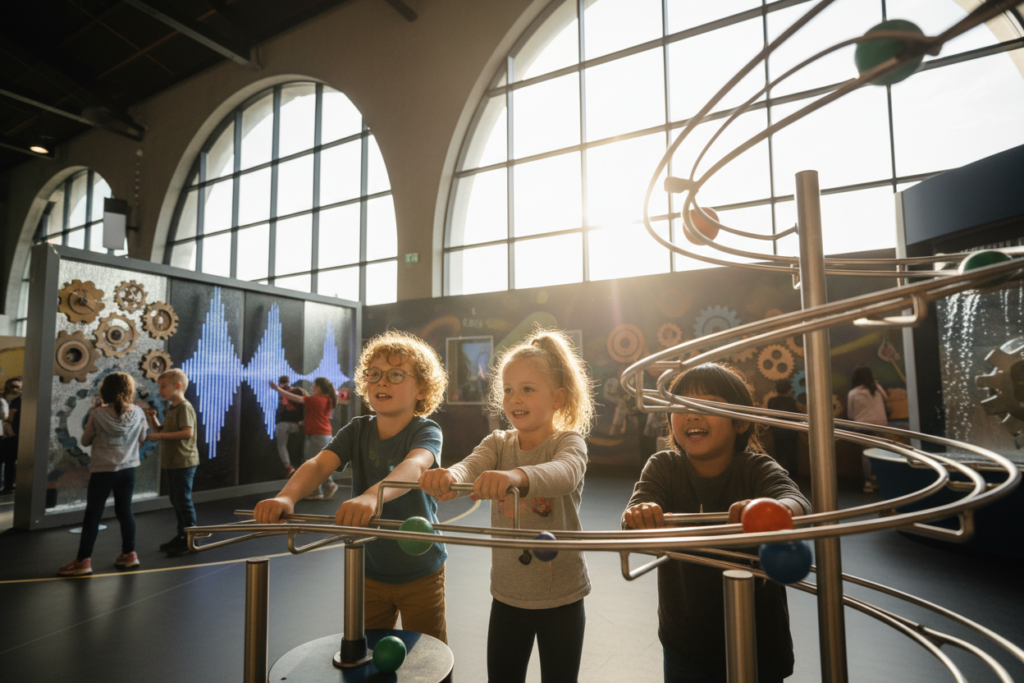
For high-energy learners who love to move, press buttons and race the clock, Scienceworks fits the bill. It’s the centre you pick when your kids need to touch, test and compete while they learn.
Sportsworks challenges and reaction-time testing
Sportsworks is part science, part sport, part game. Kids can race a Cathy Freeman benchmark, test reaction time, try balance and measure strength and flexibility.
The layout answers the classic question: “how do I stack up?” Quick, repeatable challenges keep older kids hooked and curious.
Nitty Gritty Super City for younger children
Nitty Gritty Super City is a role-play, build-and-explore zone for younger kids. There are ropes to pull, objects to investigate and lots of small-scale repeat play.
Access controls sometimes make it feel calmer, so younger visitors get more hands-on time with less queuing.
- Practical tip: arrive earlier, do must-dos first, then loop back once crowds shift.
- Try a 20‑minute “swap roles” moment: let your child lead the route and choose the next thing to try.
“Scienceworks is the place you go when kids need to move, touch, compete and experiment — and you want them to learn while they do it.”
Free fun on tracks: ride the trams like a local
A tram trip turns short travel between stops into a small adventure everyone remembers. Use the Free Tram Zone to move quickly and keep the day simple while the city unfolds outside the window.
Easy tram routes to link attractions
Pick a straight route that runs past your main stops to avoid backtracking. Ride along Swanston or Bourke streets to stitch museums, laneways and riverside spots together.
Make the ride part of the plan
Kids love the ding, the view and the stop-to-stop rhythm. That small routine gives them a sense of being local and keeps energy calm between busy exhibits.
- Sit front or by a window so little ones can watch the street and point out buildings.
- Try a simple tram-spotting game: count stops, name artworks or pick your favourite building.
- If a tram is full, hop off, grab a quick snack and wait for the next — it cuts stress and keeps the day flexible.
“Let the tram be more than transport — make it a short, cheap highlight that ties your city stops together.”
Laneways and street art: seeing Melbourne through a kid-friendly lens
Laneways pack a quick, colourful hit that shows the city’s creative side without tickets or long queues. They work as a short stop when attention spans need a win. 😊
Where to go for colourful photos (including Hosier Lane)
Start at Hosier Lane for the classic, bright photos. It’s a quick wow and a real things melbourne spot that kids remember.
Turn the visit into a scavenger hunt: pick a favourite colour, find a character, then choose the best photo spot.
How to handle “rude” graffiti moments with children
You may see artists and other people making content. Model respectful space and quick photo etiquette so everyone feels ok.
- Fast script: “Yep — that’s rude. Let’s look for something funny instead.”
- Redirect quickly and keep the moment small so it doesn’t become the main event.
- Pair laneways with nearby arcades or shops for a smooth transition once kids are done (10–20 minutes).
Laneways are one of the easiest things melbourne kids tuck into their memory — surprising, lively and a little grown-up.
Southbank strolls for skyline views, buskers and night-time buzz
Southbank packs big visual payoff — skyline, sculptures and performers — into a short, strollable route. It’s flexible, free to wander and easy to fit after a museum stop. Turn it into a reward walk: a bit of movement and fresh air can reset moods quickly.
Best time of day to visit (and why night feels like an event)
Daytime is calm and pram-friendly, with room to pause and point at the river. Evening time brings lights, performers and the Crown towers lighting up — that warm glow makes the whole place feel like an event.
What kids tend to love: sculptures, bridges and people-watching
Kids often latch onto sculptures they can touch, bridges to run across and street performers to watch for a few minutes. People-watching is a simple, low-cost thrill — spotting musicians, dancers or quirky outfits keeps attention high.
- Easy yes: no booking, no pressure — wander as long as you like.
- Safety note: keep visits early-evening, pack a warm layer in winter and set a clear meeting point.
- Wrap it up: stop for a quick gelati at a nearby spot to end on a high.
“Short, scenic and lively — Southbank is a great place to add a bit of fun to your city day.”
Old-school thrills at Luna Park for all ages
If you want one big-ticket highlight that covers all ages, Luna Park delivers retro charm and ride variety in one place.
What to expect: a vintage carnival vibe, classic rides and a carousel that dates to 1910 — a real photo moment and a piece of park history that delights kids and adults alike.
What the retro rides and carousel feel like
The overall mood is playful and nostalgic. Wooden carriages, bright lights and creaky mechanics add character.
Teens often act cool until the first drop. Little ones usually love the carousel and slower rides.
Quick tips for timing your visit and managing queues
- Go early or late to avoid peak weekend middays.
- Pick must-do rides first and use shorter waits to grab snacks or dip at the foreshore.
- Comfort plan: water, small snacks and a quiet spot for a break if stimulation gets high.
- Turn the stop into an opportunity day: pair the park with St Kilda beach and make a longer outing of it.
“The carousel from 1910 is more than decoration — it’s a living slice of history that makes the visit feel special.”
| Feature | Why it works | Practical tip |
|---|---|---|
| Retro rides | Unique vibe that appeals across ages | Ride early to avoid long queues |
| 1910 carousel | Historic photo moment and gentle ride for small kids | Visit mid-visit as a calming timeout |
| St Kilda link | Makes the stop a full-day outing | Combine with beach time and a casual walk |
For background on the park’s past, see Luna Park history.
Parks and playgrounds when kids need to run free
When kids hit the wall, a quick park stop is the simplest reset you can plan. Parks are your secret weapon: fresh air, loose rules and room to decompress between structured stops.
Fitzroy Gardens: calm, shade and a colour hunt
Fitzroy Gardens is a shady city option with fountains, easy loops and a free kids’ colour hunt. During school holidays there’s a small $7 version with a prize. The fairy tree is a lovely spot for quiet play.
Birrarung Marr playground: climb, roll and quick access
Birrarung Marr is the classic climb-and-roll place near ACMI and NGV. Rocks, mini‑hills and open lawn make it a perfect quick play break close to big attractions.
CERES, Darebin Parklands, Merri Creek and Royal Park
CERES (Brunswick East) feels like a mini escape — Terra Wonder nature play, a café and market gardens for a half‑day visit.
Darebin Parklands and the Merri Creek Trail offer paved paths, small hills and stepping stones for bikes and short adventures. The trail runs about 21km if you want a longer ride.
Royal Park Nature Play is an award‑winning big space built for safe risk‑taking — ideal when kids need more than a standard playground.
“Pair one park with a nearby attraction to avoid zig‑zagging across the city.”
- Quick tip: pack snacks and set a 20–30 minute play window to keep your day on track.
Indoor options for rainy days (or a break from the heat)
When the forecast turns grey, you can still have a great day. Pick one creative place and one movement centre and the day stays balanced, calm and fun. 😊
ACMI: hands-on screen culture that teaches
ACMI is free to enter and is perfect if you limit screens at home. It frames how moving images are made, not just how they look.
Kids love the collectible cardboard disc and code system. They can save a favourite exhibit and revisit clips online later — a neat take-home choice.
Indoor play for younger children: Chipmunks
Chipmunks suits ages 1–11 with a dedicated under‑5 area and an on-site café for parents. Off‑peak entry is often around $11, so it’s a budget-friendly rainy-day option.
It’s a safe place to climb, slide and recharge with snacks between play bursts.
Big-energy centres: trampolines and SuperPark
Trampoline parks like Bounce Inc. and Rush HQ are the go-to when kids need to burn off energy. Book sessions ahead and remember special grip socks are usually required.
SuperPark Highpoint offers 15+ indoor challenge zones — SuperJump, SuperMove and obstacle-style areas — so there’s lots to try in one visit.
- Pick one educational spot (ACMI) + one movement spot (trampoline or SuperPark).
- Book sessions and check sock rules before you go.
- Mix a quieter exhibit with a high-energy centre to keep moods steady and the day ticking along.
“Choose one hands-on museum and one movement centre — it keeps children curious and gives them a good physical outlet on wet days.”
Sweet treats worth the stop: gelati and ice cream in Melbourne
A well-timed scoop can turn a tired group into a happy crew for the next stop. Gelati is a simple parenting move that buys goodwill and a burst of energy. 😊
Where to fit a gelati break into your city day
After laneways is a natural choice — it rewards a short wander and makes photos feel earned. It also works well after a museum session, when kids need a calm, tasty pause.
Southbank makes a lovely night finish: lights, river views and a gelati to stroll with. Treat stops are also handy when you’re waiting for timed shows or juggling queues.
- Mini reset routine: bathroom first, gelati second, then a relaxed stroll. That sequence keeps things tidy and calm.
- Let the kids choose flavours; you pick the seat or spot. It’s a small trade that keeps decision fatigue low.
- No need to hunt for the perfect shop — the city has plenty of great places close to major attractions.
“Use a scoop as a short, practical pause — it keeps moods bright and the day on track.”
Make it a “big day”: markets, shows and seasonal events
Turn a single standout stop into the day’s anchor. Markets, winter light trails or a ticketed exhibition give you a clear start time and a natural rhythm. Pick one main thing, then layer a couple of short, flexible stops nearby.
Queen Victoria Market: browse, snack and move on
Queen Victoria Market is ideal for quick browsing and easy snacks. It usually wraps by 3pm, which makes lunchtime planning simple and gives you a natural exit point when attention fades.
Stalls let you nibble as you go, so you can stretch the visit or leave early without losing the vibe.
Winter picks: Firelight Festival and Lightscape
Firelight Festival runs across a few winter evenings at Docklands and mixes fire, music and food for a lively night out.
Lightscape at the Royal Botanic Gardens starts around 5:30pm and follows a ~2km illuminated trail with food and drink options. It’s a magical after-dark opportunity that pairs well with an earlier market stop.
Check what’s on before you lock plans
Events, theatre and special exhibitions can become the surprise highlight of your trip. Check trusted roundups and a reliable what’s on page to spot seasonal shows and school‑holiday ideas without doom‑scrolling.
“Pick one headline event and let the rest stay flexible — it saves time and makes the day feel effortless.”
If you’re planning multiple Aussie trips, you might also bookmark a guide port douglas post for future inspiration. The planning approach is the same: choose one anchor, add light extras, enjoy the day. 😊
Easy family day trips from Melbourne when you want more than the CBD
When the city feels full, short coastal or wildlife trips reset the day without changing base plans. Pick one direction and keep the pace gentle — one or two stops is plenty. 😊
Phillip Island: animals and awe at dusk
Phillip Island is the go-to for close-up wildlife moments. The Penguin Parade at dusk is the highlight — little penguins waddle ashore and delight kids of all ages.
Visit the Koala Conservation Reserve and Churchill Island for short walks and hands-on conservation learning that still feels playful. Start early and book the parade if it’s high season.
Mornington Peninsula: beaches, lookouts and playground stops
Mornington Peninsula suits a more flexible outdoor day. Arthur’s Seat summit offers short lookouts and easy bush walks for quick views.
Drop into Seawinds Gardens playground for the Roolympics-style fun where kids can compare themselves to echidnas, wallabies and kangaroos. Finish at Flinders Pier or the chocolaterie for a sweet end.
- Pacing tip: start early, choose two highlights, and protect a quiet nap or car time for younger kids.
- Food strategy: pack a beach lunch, then wrap with ice cream or a stop at the Mornington Peninsula Chocolaterie & Ice Creamery.
- Pick by mood: wildlife-led day for animals and learning; peninsula for sand, views and short walks.
| Feature | Phillip Island | Mornington Peninsula |
|---|---|---|
| Main draw | Penguin Parade, koalas, conservation | Beaches, Arthur’s Seat lookouts, playgrounds |
| Best for | kids who love animals and evening wonder | kids who prefer beaches, short hikes and play |
| Pacing | One key timed event + one short stop | Flexible stops; easy to swap bays and play areas |
“Both trips are doable as a day return from the city — no need to change where you stay. Pick one anchor and keep the rest relaxed.”
For route ideas and drive-time estimates, see trusted day-trip roundups such as these day-trip options to plan your timing and stops with confidence.
Conclusion
Build your perfect day by pairing a single anchor stop with a few low‑effort extras. Pick one paid highlight and add easy wins like trams, parks and a gelati break.
Keep choices simple. You don’t need to do everything. Match stops to your kids’ ages, energy and mood, then leave room for a detour.
If your kids are high‑energy, choose a movement hub or Luna Park. For curious learners, pick a museum or Scienceworks. Toddlers do best with short play stops; teens like laneways and sport tech.
Save or bookmark this guide so you can pick on the go. Which would your crew rate highest — dinosaurs, street art, trams or Luna Park? 🙂
If you enjoyed this planning style, try a quick guide port douglas read for another Aussie escape.