
Imagine a steaming bowl of pasta dropped into a hollowed-out cheese wheel and tossed until glossy and creamy. It looks theatrical, smells amazing and has become a social sensation with millions watching the trend online.
You’ll learn why this method works: starch meets fat to make a silky emulsion. We’ll also show a practical at-home method that gives the same restaurant-level finish without needing a full wheel.
This guide is for curious cooks who love comfort with a side of theatre. Expect clear tips on choosing the right pasta shapes, keeping everything hot, avoiding clumps and getting that smooth, glossy sauce every time.
We’ll keep it local to Australia, too — realistic buying and substitution advice so you can enjoy the dish without stretching your budget. Plus, we’ll tease popular twists like pepper-forward versions to spark ideas for your next dinner.
Key Takeaways
- You’ll see why the method creates a silky sauce and how to replicate it at home.
- Practical swaps mean you don’t need a full wheel to get big flavour.
- Heat control and pasta choice are the two keys to success.
- Local sourcing tips help keep costs sensible across Australia.
- Simple variations let you make the dish your own.
What is pasta alla ruota and why everyone wants the tableside experience
Tableside service turns a simple bowl into a small theatrical moment that people love. You combine steaming hot pasta with a splash of starchy cooking water inside a hollowed cheese bowl and swirl until the sauce goes glossy and clingy.
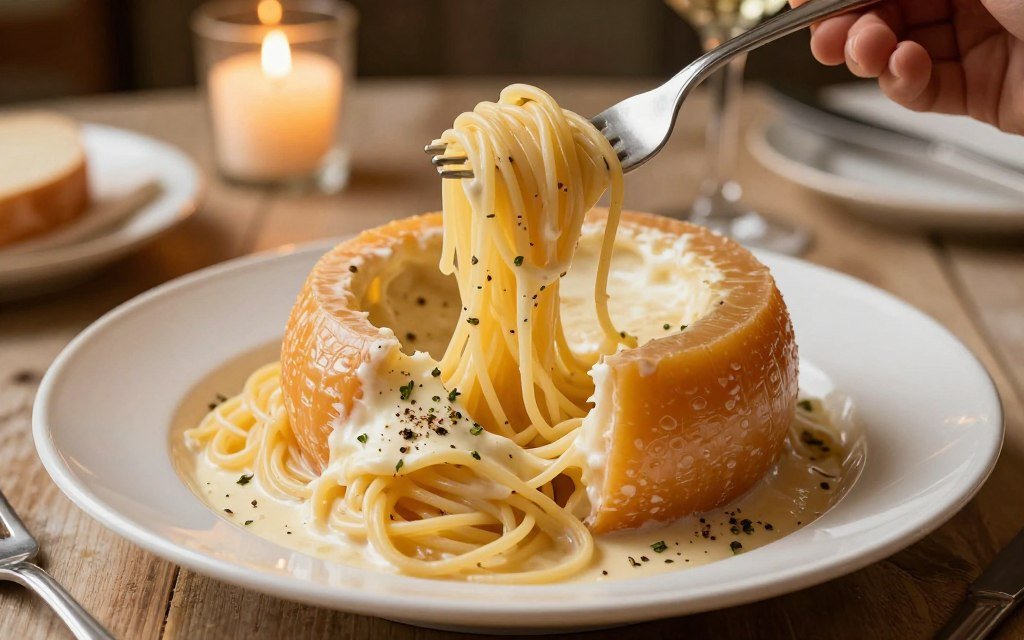
Why it gets velvety: the starch in the water helps the cheese fat emulsify. That creates a silky coating instead of greasy clumps. Heat is the key — very hot pasta does the heavy lifting.
The name story
In Italy the method is often called mantecata nella forma. Viola Buitoni notes that forma is the proper Italian word for a whole cheese form. English speakers started saying alla ruota after a direct translation — and the name stuck.
Why people love it now
Restaurants serve it for theatre. A chef scrapes fresh Parmigiano Reggiano or Pecorino Romano and tosses the hot mix in front of diners. It looks impressive and tastes fresh.
“Serving in an opened wheel is a showpiece,” — Dino Borri, Eataly
Cheese choices that shape the flavour
- Parmigiano Reggiano — nutty depth, great melt.
- Pecorino Romano — sharper, salt-forward punch.
- Grana Padano — milder, reliable texture.
Many iconic forms are DOP, which matters for authentic flavour and consistent results when you chase that restaurant finish. The social buzz is real: #cheesewheelpasta has 232.8M views, and that popularity keeps people booking tables just to watch the moment.
Cheese wheel pasta at home: what you need before you start
Before you start, set up a simple station so the final toss is fast and hot. A calm prep makes the tableside finish feel effortless. Gather tools, pick shapes and sort heat control first.
Picking shapes that coat well
Long strands like fettuccine are ideal — they wrap and hold sauce when you swirl in a bowl or hollowed form. Short ridged shapes also grab the emulsion if you prefer forks over tongs.
Choosing a hardy form and using the rind
Look for a hard, dense wheel you can carve without collapse. Keep the rind on the outer sides for structure and save off‑cuts. The rind is edible and great for boosting stews and sauces later.
Size, budget and Australian sourcing
Full wheels can be pricey — a 90‑pound example can cost $2,000+. At home, expect a few serves per session rather than endless reuse. Ask your cheesemonger about off‑cuts, partial wheels or hollowed forms to save money.
Tools, timing and the no‑wheel trick
Use a wide pan, sturdy tongs and a heat‑proof bowl or the wheel cavity. Keep everything hot so the starchy water emulsifies quickly.
No wheel? Toss freshly shredded cheese off heat with a splash of starchy water and rapid stirring to mimic that tableside finish. Speed and heat are the real secret to the dish.
Ingredients and prep tips for a restaurant-style cheese wheel dish
Gathering the right ingredients first makes the whole show smoother and tastier. Lay out your lineup so you can move fast when the bowl is hot.
Core ingredients for a creamy finish
Must-haves: wide noodles, fresh Parmesan Reggiano, white wine, butter, heavy cream and minced garlic.
Why they work: butter and cream give fat and silk, wine adds acidity, and garlic gives gentle savoury depth before the hard cheese joins the sauce.
Season like a chef
Build cracked pepper for warmth, then taste for salt — hard, aged cheese is already salty. Balance the parmesan bite with a splash of cream or a squeeze of lemon if needed.
For inspiration and service ideas, try a trusted tableside recipe or read why the presentation matters in this feature on wheel service.
Prep that prevents clumps
- Shred hard cheese fresh — it melts smoother than pre‑grated.
- Keep liquids warm and the bowl or cavity warmed so the sauce emulsifies quickly.
- Add cheese gradually while stirring; use a ladle of starchy cooking water to loosen a grainy batch.
Quick prep checklist: shred cheese first, measure liquids, warm the serving bowl, and have tongs ready. Control heat, add cheese slowly, and you’ll finish with a glossy, clump‑free sauce that lifts the whole dish.
Step-by-step method for cheese wheel pasta alla ruota
Start with timing and texture: get the noodles just shy of tender so the starch works for you. Salt the water well and cook to just‑al‑dente. Reserve at least one cup of starchy cooking water — it is your emulsifier.
Cook for maximum starch
Boil in plenty of salted water. Stir early to prevent sticking. Test one strand a minute before the lower time on the packet.
Keep the water; small splashes loosen a tightening sauce as you toss.
Build the sauce, then finish in the form
Gently melt butter, add white wine and a touch of cream, then garlic for aroma. Reduce slightly so the sauce clings.
Add grated hard aged dairy gradually while stirring. If using a warmed wheel or bowl, transfer the pan base there and add the noodles directly for that fresh‑scraped flavour.
Tossing technique
Use tongs and a steady wrist. Swirl and lift to aerate the sauce so starch and fat bind into a glossy coating.
Add tiny water splashes rather than a single pour to avoid splitting the emulsion.
Serving, garnishes and variations
- Serve with prosciutto shards, sliced green onions and cracked black pepper for balance.
- Showstopper 1: Cacio e pepe in a Pecorino form — heavy on cracked pepper, light on cream.
- Showstopper 2: A truffle‑style flambé finish, inspired by Florence tableside service, for bold theatre.
Storage and smart leftovers
Cool quickly and store in an airtight container. Reheat gently with a splash of reserved cooking water or stock.
“Super hot noodles and a little water are what make the emulsion sing.” — Viola Buitoni
Conclusion
With the right heat and technique you’ll turn simple ingredients into a glossy, memorable plate. The real win is texture: hot noodles, starchy water and aged hard cheese create that velvety coat chefs chase.
The three pillars are clear: pick a shape that holds sauce, keep everything very hot, and use reserved starchy water to bind the mix into a smooth sauce.
The physical wheel is optional. You can replicate the flavour and finish at home without full kit, though a warmed form makes the moment special for guests.
Experiment with different hard cheeses and pepper levels to find your favourite. Save this guide and try it for your next dinner — or read extra tableside tips in this tableside service tips. Enjoy and make it your own 🙂