Why this matters: Every voyage has its own vocabulary. Learning a few key words makes your first trip calm and confident.
This short guide is a glossy, quick-reference glossary you can use on the move. It skips fluff and focuses on clear, handy definitions.
Even long-time travellers mix up labels. That’s normal — different lines use different names. We’ll help you spot the differences so you don’t feel lost.
The article is organised by practical sections: directions, cabins, dining, booking, ports, safety, cruise types and ship tech. Jump to the bit you need fast.
Read this first: if you learn five words today, start with port, starboard, aft, muster station and cruise card. These make life on board much simpler.
For Australians, watch for gratuities and fare inclusions. Service charges and what’s included can differ, so check details before you pay. 😊
Key Takeaways
- Learning a few core words reduces stress and boosts confidence.
- This is a quick, glossary-style guide for easy look-up.
- Different lines use different names — mix-ups are common.
- Article sections let you jump to directions, dining, safety and more.
- Essential words: port, starboard, aft, muster station, cruise card.
- Australians should note gratuities, service charges and fare inclusions.
Cruise ship lingo essentials for first-time cruisers
Different operators use different names — and that’s normal. Lines build tradition, keep safety clear and use branded terms (think Centrum versus Atrium).
Why cruise lines use their own terms onboard
Names help crews give quick directions and reinforce a brand feel. They also keep safety announcements short and consistent across the vessel.
Quick cheat-sheet for embarkation day and your cruise card
Simple checklist for boarding day:
- Check-in online, note your boarding window.
- Collect your cruise card at embarkation — it’s your ID on board.
- Link a payment method or pre-pay so purchases post to your account.
What your cruise card does: it opens your room, lets you re-board at ports and charges drinks, dining upgrades and activities with a swipe.
Common mix-ups made easy
Words often mean the same thing. A cabin and a stateroom are identical in layout and purpose.
Oceanview = outside (a window or porthole). Balcony and veranda both mean a private outdoor space off your room.
Deck plans are your best friend — remember deck = floor. And a quick tip: always read the category notes (for example, “obstructed view”) rather than relying on the label alone. That will save you surprises on embarkation day. 😊
Ship directions and navigation terms you’ll actually use
Orientation quick tip: face the bow (the front) and then port is left, starboard is the right side. Use this to follow deck signs, lifts and crew directions without pausing to think.
Forward, aft, bow and stern
Forward means the front; aft is the rear. Announcements often say, “walk aft for the buffet” or “your cabin is forward on Deck 9.”
The bow is the very front; the stern is the very back. Once you know these, deck plans and directions make instant sense.
Midship and motion
Midship means the middle location of the vessel. It’s the calmest spot if you feel motion. Pick a midship cabin to reduce roll.
Speed, distance and wind
Speed is given in knots (1 knot ≈ 1.15 mph). Distance uses nautical miles (1,852 metres). Bearing is a compass direction in degrees.
- Windward: faces the wind.
- Leeward: sheltered from wind.
“Roll is side-to-side movement; wake is the trail of waves at the stern.”
| Term | Meaning | When you’ll hear it | Practical tip |
|---|---|---|---|
| Port | Left when facing forward | Directions, deck signs | Face bow to orient quickly |
| Starboard | Right side when facing forward | Safety, docking calls | Use for cabin directions |
| Knot / Nautical mile | Speed and distance at sea | Captain updates | 1 knot ≈ 1.15 mph; 1 NM = 1,852 m |
| Roll / Wake | Side movement / stern waves | When the ocean picks up | Midship reduces roll; watch stern for wake |
Onboard areas and what you’ll find there
Find the public hubs first and you’ll save time and stress onboard. These areas act like city blocks on a floating hotel, so learn a few to move around with confidence.
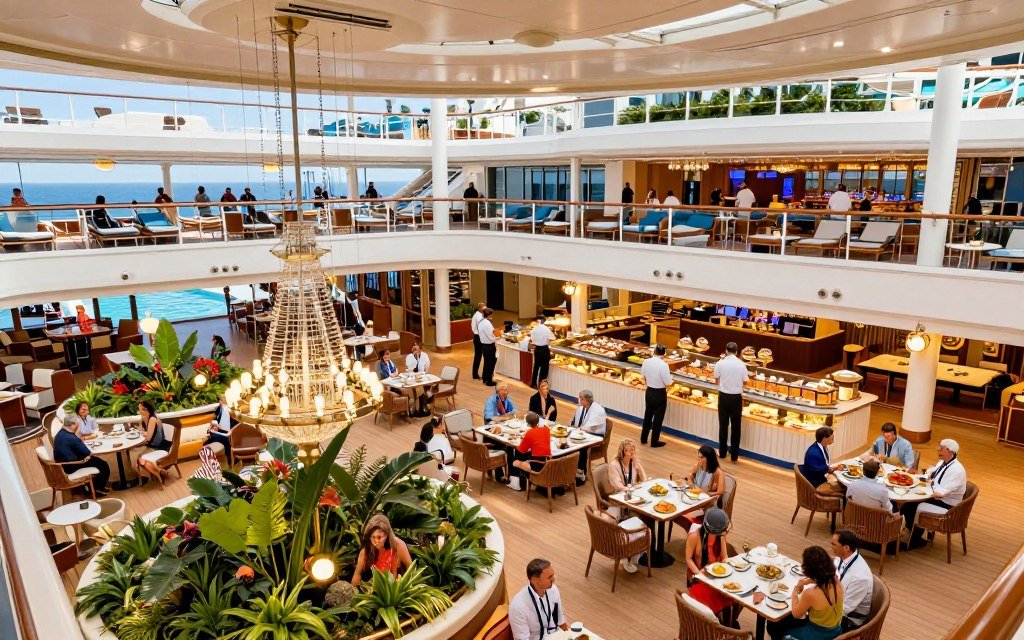
The central hub: Atrium / Centrum
The atrium (often called the Centrum) is the vessel’s hotel lobby. You’ll see reception, daily notices and meet-up points here.
Why it helps: it’s the easiest landmark for meeting friends, finding the desk for lost items, or checking activities for the day.
Lido deck and pool areas
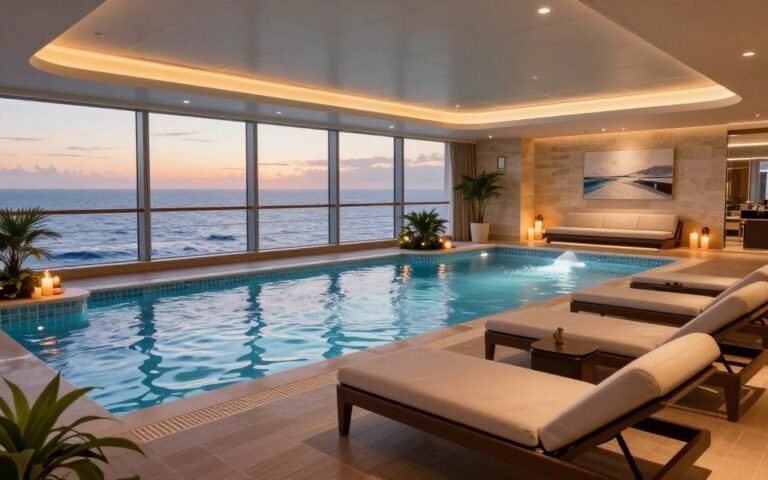
The Lido deck is the open pool area with sunbeds and casual dining. Expect it to be busiest on sea days and during good weather.
Tip: book loungers early on popular days and check the casual menus near the pool.
Bridge, helm and funnel — what to spot
The bridge is where the captain and officers steer and navigate. The helm is the wheel; the funnel is the smokestack you see above the decks.
On a tour, the bridge is a highlight. Respect restricted access and enjoy the view from outside.
Galley, purser and guest services
The galley is the behind-the-scenes kitchen. Galley tours are popular because they show how thousands of meals are made.
The purser runs guest accounts and cash services. Guest services desks handle billing, cards and shore questions.
| Need | Where to go | Why |
|---|---|---|
| Lost item | Atrium / Guest services | Central lost & found, easy to check |
| Billing issue | Purser / Guest services | They manage accounts and payments |
| Pool, sun or casual food | Lido deck | Open-air dining, pools and loungers |
| Want a tour or view of navigation | Bridge (on organised tour) | See helm, controls and operations |
- Quick map tip: find the atrium, Lido deck and guest services on your deck plan first.
- If you need help, head to guest services — they sort most queries fast.
Cabins, beds and accommodation lingo
Picking the right cabin and bed means fewer surprises and better sleep. Think about light, air and how many people share the room.
Inside stateroom — no window. Budget-friendly and quiet. Oceanview cabin has a porthole or window for daylight. A balcony cabin gives private outdoor space for morning coffee.
French (Juliette) balcony and berths
A French or Juliette balcony is a door or large window that opens. It gives fresh air but not a sit-out ledge. Don’t expect chairs outside.
Berth can mean your bed inside the room. It also means where the vessel ties up in port. Context tells you which one.
Family set-ups, Pullman beds and suites
Pullman beds fold down from the wall to add sleeping space. Family cabins may use sofas, bunks or pull-downs so four people fit comfortably.
Owners Suite is a premium stateroom with extra space and perks — you don’t actually own it, but it behaves like a small apartment onboard.
| Type | Who it suits | Key feature |
|---|---|---|
| Inside stateroom | Budget travellers | No window, quieter |
| Oceanview cabin | Those who want daylight | Window or porthole |
| Balcony cabin | Couples and sun-lovers | Private outdoor space |
| Obstructed view | Value seekers | Partial or full blockage (lifeboat, rail) |
Booking tip: always check the cabin number and deck plan before you finalise. Location often matters more than the label.
Dining and drinks terms on cruise ships
Dinner options onboard can shape your whole holiday mood, so it helps to know the terms you’ll hear at mealtimes. This short guide explains the common systems and what’s usually included.
Main dining room, maître d’ and assigned seating
The main dining room is the formal evening venue. The maître d’ runs the floor, seats guests and manages service flow.
Assigned seating means a fixed table and often a set time each night. It’s great if you like a routine and the same dining companions.
Open seating and flexible systems
Open seating lets you book or walk in each night with no set table. Some lines call this flexible dining.
Freestyle systems removed strict times entirely, so you eat when it suits you. It works well if you plan late returns from shore.
Alternative restaurants and cover charges
Alternative or speciality restaurants offer premium menus. Expect a cover charge — a set fee per person for the extra experience.
Cover charges usually cover the meal, not drinks or tips. Check menus and prices before you book a table.
All‑inclusive vs drinks packages
“All‑inclusive” can mean different things. On some fares it covers speciality dining, drinks and gratuities. On others it only covers basics.
Drinks packages let you buy beverage access separately. Tip: always read the fine print so you know if specialty venues, tipping or premium drinks are included.
Menu words you’ll actually see
Canapés are small savoury bites served at cocktail events. Petit fours are tiny sweets or savoury nibbles often brought with coffee or dessert service.
“Plan dining around port days — book earlier if you must be back for a set seating.”
| Term | What it means | Quick tip |
|---|---|---|
| Main dining room | Formal nightly service | Ask about assigned or open seating |
| Cover charge | Extra fee for speciality restaurants | Check if drinks and tips are extra |
| Drinks package | Prepaid beverage access | Compare likely spend vs package cost |
- Australian tip: on port days, avoid late set seatings unless you’ve allowed time to return — ferries and transfers can run late.
Booking, pricing and promotions explained in plain English
Booking offers look simple, but the fine print usually decides what you actually pay.
Onboard credit (OBC) is virtual spending money loaded to your account. You can use it at the bar, spa, gift shop and for excursions. Heads up: OBC often excludes gratuities and some third‑party fees, so plan cash or card for tips.
Double occupancy vs solo travel: fares are usually quoted per person for two adults. Solo travellers may pay a single supplement to cover the extra cost of an unused berth.
Guaranteed (GTY) bookings mean you book a category, not a cabin number. You might get an upgrade — or an awkward location or obstructed view. It’s a gamble that sometimes saves money.
NDA’s are non-discountable amounts like taxes, port fees and fuel surcharges. Your total price = fare + taxes + NDAs. Promos usually discount the fare only.
Deals and rules: BOGOHO (Buy One Get One Half Off) typically applies to the fare of the second guest only. Anti‑rebating keeps advertised prices uniform across agents, so advertised savings may look the same everywhere.
Australian tip: gratuities or hotel service charges may be added daily or prepaid. Check your booking terms so you know if those services are already covered or still on your card at the end of travel.
Ports, getting ashore and shore excursions
Getting ashore smoothly starts with a few simple words and a plan. Know the difference between your home port, gateway city and ports of call so flights and transfers match your itinerary.
Docking and getting on/off
Gangway is your walkway to shore. When the vessel is alongside it sits at the pier; to moor means lines hold it in place at a berth.
Tender ports made simple
At a tender port the vessel anchors offshore and uses small boats to ferry people. Expect queues and possible timed groups. Bring your card, ID and a small bag for quick disembarkation.
Shore excursions and timing
Shore excursions (shorex) can be booked pre-departure or onsite. Book early for popular tours — they sell out fast. Booking onboard is flexible but riskier.
Read your itinerary notes for “all aboard” times and port-day windows. Allow buffer time to return; ferries and transfers can run late. For more terms, see our ocean terms glossary.
“Plan to carry your card, passport and sunscreen for shore calls — small choices save time.”
Safety, health and ship operations you should know
Your first duty on board is to know where to go and how to stay safe. The opening safety drill is brief, clear and mandatory for all passengers. It’s not optional, even if you’ve sailed before.
Muster drill and finding your assembly point
At muster you’ll hear instructions, see a lifejacket demo and be shown your muster station. You must attend; it’s how crew confirm everyone knows the routine.
Find your muster station on your card, the app or deck signage. Bring your card, wear comfortable shoes and have a light layer for wind or spray. That keeps the process quick and calm.
Health basics: norovirus and hand hygiene
Norovirus is unpleasant but manageable. Frequent handwashing and using sanitiser reduce risk for you and others.
Quick tips:
- Wash hands before eating and after bathroom use.
- Use hand sanitiser at buffet entrances and high-traffic areas.
- Stay in your cabin if you feel unwell and report symptoms immediately.
What Code Orange and Code Red mean
Some lines use informal terms to describe outbreak responses. Code Orange often means early measures — for example, items served by crew rather than self‑service. Code Red signals wider action: venue closures, extra cleaning and stricter limits on gatherings.
Dry-dock, refurbishment and why it matters
Dry-dock is when a vessel is taken out of the water for maintenance. Refurbishment can add new venues, updated decor or improved services.
Practical check: if you’re choosing sailings, check refurbishment dates. A recent refit usually means fresher public areas and cabins.
“Muster drills save lives. Take five minutes on day one to know your station.”
For a deeper look at onboard emergency codes, see this emergency codes guide.
Cruise types, itineraries and cruising styles
Pick a sailing style that matches what you want from holiday time — rest, discovery or value. Choose the format that fits your energy, budget and how much time you have.
Expedition and Zodiac-style exploring
Expedition voyages focus on wild places: Antarctica, the Galápagos or Svalbard. These trips use Zodiacs for close-up wildlife, shore landings, kayaking and guided hikes.
Best for: agile, curious travellers who want raw nature and active days.
Cruisetour and combined land-sea itineraries
A cruisetour links a sea voyage with an organised land extension. You might fly in for a coach tour, then board for the sailing leg. Logistics are bundled, so your transfers and hotels are handled.
Repositioning, short runs and adult-only options
Repositioning (repo) sailings move vessels between regions. They often cost less and have long sea days — great value for Australians avoiding extra flights.
Short “cruise to nowhere” or party-focused runs last 1–3 days and suit social groups. Adult-only sailings skip family activities for a quieter vibe.
Back-to-back, maiden sails and practical notes
Back-to-back bookings string voyages together. You keep your cabin, but plan for laundry and any visa or flight changes. Maiden or inaugural sailings celebrate a new vessel — exciting, but expect early tweaks.
“Match the style to your goals: rest, discovery, value or celebration.”
| Type | Typical length | Who it suits | Key tip |
|---|---|---|---|
| Expedition | 7–20+ days | Active nature lovers | Book early; expect Zodiac outings |
| Cruisetour | 7–14+ days | Those who want land + sea | Check included transfers and hotels |
| Repositioning | 10–30 days | Value seekers, long-sea fans | One-way routes can save flights |
| Short / adult-only | 1–5 days | Party groups or quiet adults | Know the onboard vibe before booking |
Ship size, service levels and onboard tech terms
Size affects everything from queues to quiet corners. Bigger vessels mean more venues, more people and more choices. Small vessels feel calmer; megaships feel busier but offer variety.
Megaship and passenger capacity
A megaship typically carries 4,000+ passengers. That number often grows when pull-down beds and sofa beds are counted.
Double occupancy is the common booking metric — two adults per cabin. Maximum capacity adds temporary berths, so the same vessel can show two different capacity figures.
Passenger‑crew ratio and what it tells you
The passenger-crew ratio hints at service style. Industry average is about 2.5 passengers per crew member.
Lower ratios (fewer passengers per crew) usually mean more personalised service. Luxury lines aim for low ratios; big mainstream vessels sit closer to the average.
Passenger‑space ratio and GRT explained
Passenger-space ratio = GRT divided by passenger number. It’s a quick way to judge roominess.
Remember: GRT measures enclosed volume, not weight. Higher GRT per person feels more spacious onboard and in public areas.
GPS, Mbps and staying connected at sea
GPS is satellite navigation — it keeps the vessel on track and helps timetables. Mbps measures internet speed.
Below ~3–5 Mbps you’ll notice slow browsing or poor video calls. Speeds vary with location, weather and how many people use the network. Set expectations before you board. 😊
“Use capacity, ratios and GRT together — they reveal whether a sailing will feel roomy or crowded.”
| Metric | What it measures | Typical number | Why it matters |
|---|---|---|---|
| Megaship | Passenger capacity threshold | 4,000+ passengers | More venues and choice; busier public areas |
| Capacity (double vs max) | Booked vs possible passengers | Double occupancy / Maximum occupancy | Explains different advertised numbers |
| Passenger‑crew ratio | Staffing level | ~2.5 pax per crew (avg) | Lower ratio = more personalised service |
| Passenger‑space (GRT/pax) | Enclosed volume per person | Varies by vessel | Higher = more roominess in public areas |
| Internet (Mbps) | Connection speed | 3–30+ Mbps (varies) | Determines browsing, messaging, video quality |
Conclusion
A few quick terms will turn confusion into calm when you step onboard. ,
Use‑it‑today words: port / starboard, aft / forward, muster station, cruise card and tender. Keep these in mind and you’ll save time and feel more confident moving around the room and public areas.
Save or bookmark this cruise lingo guide for embarkation day and when you read a deck plan or daily programme. Before you go, skim cabins, dining and ports — it helps with real decisions fast.
Your next voyage will feel smoother. Which term confused you most? Tell us — we’ll clear it up. 😊