Quick snapshot: You’re coming for warmth, lively culture and scenery. Add a memorable day on a bike and you’ve got a perfect mix.
This island was never famed as a top road cycling destination, but it surprised many. Near major centres the roads could be busy and narrow. Step outside the hubs and you’ll find smooth stretches, quiet lanes and wide fields around Ubud and up north.
Typical rides are short and scenic. Think half-day tours, a big downhill treat, or a gentle cruise through rice paddies rather than a multi-day point-to-point mission.
There’s a trade-off: breathtaking views and village life ✅, but scooters and tight streets in town centres ⚠️. This guide helps you pick between guided tours or DIY, the best seasons, where to ride, costs and what to pack.
Who this suits: If you want an easy guided roll through paddies, or a confident road ride outside the hubs, you’re in the right place. For Aussies, budget tips, weather timing and early starts matter — you’ll save time and heat stress.
Key Takeaways
- Expect short scenic rides rather than long road tours.
- Quiet roads exist outside main towns, especially near Ubud and north.
- Guided half-days suit casual riders; DIY fits confident roadies.
- Watch for scooters and narrow streets in centres.
- Plan early starts, pack light and budget sensibly for a great trip.
Cycling in Bali: what it’s really like on the island
Expect sweeping green fields one minute and tight, buzzy town lanes the next. That contrast is the charm and the challenge.
Why a bike reveals more
You glide past rice fields, small temples and a working village in a way cars cannot match. You’ll see farmers, daily rituals and local markets from close up. It feels like a cultural window — low effort, high reward.
Who this suits
Casual riders and families do best on gentle guided downhills and short loops. Confident road riders enjoy longer road cycling once they leave busy centres.
Common realities
Town centres often have narrow roads and lively scooter traffic. Horns are usually a polite “I’m here”, and most drivers stay alert. The simple rule: the magic starts off main routes, on quiet back lanes and country roads.
“Worthy, not perfect — pick the right place and time and the scenery pays off.”
Self-check: Do you feel calm riding predictably near motorbikes, or would you rather have a guide manage tricky sections?
Choose your style of ride: guided cycling tours vs DIY cycling
Choosing a guided plan or a DIY route shapes the whole day on two wheels. Pick the style that matches your comfort, fitness and holiday vibe.
When a guided tour is the smarter option for first-timers
If you’re new to local roads, a guided cycling tour removes stress. Tours usually include AC pick-up/drop-off, small groups, water and fruit, stops at Tegalalang and a coffee plantation, plus lunch in a family compound.
Guides add value beyond navigation. They share cultural context, translate with locals and manage spacing on narrow lanes. That makes the morning calm and social. 👍
When DIY makes sense if you’re confident on local roads
DIY works when you’re used to unpredictable scooter traffic, can handle tight edges and enjoy planning safer backroads yourself. Going solo gives freedom to set your pace and detour on a whim.
Remember to plan water, toilets and a sensible turnaround time for the day.
E-bike vs standard bike: which option suits your fitness level
Standard bikes suit mostly downhill or fit riders. An e-bike is the “enjoy the views, not the burn” choice — ideal for mixed fitness groups or families.
If you’re travelling with kids or varied levels, an e-bike option keeps everyone smiling and makes a 3–4 hour cycling tour around Ubud feel easy.
“If you want a relaxed holiday vibe, pick the support; if you want independence, choose DIY but start early and avoid town choke points.”
Best time to go cycling: weather, crowds and road conditions
Weather, crowds and road state shape how a ride feels. Plan the season and you get clear skies, quieter lanes and cooler mornings.
Dry season (May to September)
Most reliable riding: warm, sunny days with little rain. Roads stay dry and firm, so a morning start usually means calm traffic and better visibility.
Wet season risks (October to March)
Real outcomes: sudden downpours, slippery surfaces and muddy stretches. Heavy storms can force a shortened or cancelled day.
Local quirk: low river crossings near Ubud can flood fast. Have a Plan B route or be ready to turn around.
Shoulder seasons (Feb–Apr and Sep–Oct)
If you value fewer tourists over perfect weather, these months often balance light showers with quieter routes and lower crowds.
“Start early: cooler air and less traffic are your best safety tactics.”
| Season | Conditions | Best for |
|---|---|---|
| Dry (May–Sep) | Sunny, stable roads, low washouts | Most reliable riding |
| Wet (Oct–Mar) | Heavy rain, mud, possible floods | Not recommended for long routes |
| Shoulder (Feb–Apr, Sep–Oct) | Occasional showers, fewer people | Good for quieter days |
Quick checklist: check rainfall forecasts, start early, choose countryside lanes, avoid major centres when storms loom, and carry water and a basic plan to shorten the day if needed.
Where to cycle in Bali for the best scenery and safer roads
Pick your scenic mood first: paddies and temples, highland calderas, or calm coastal paths. Each place offers a different pace and safety level, so match the area to your comfort and goals.
Ubud backroads: rice paddies and quiet lanes
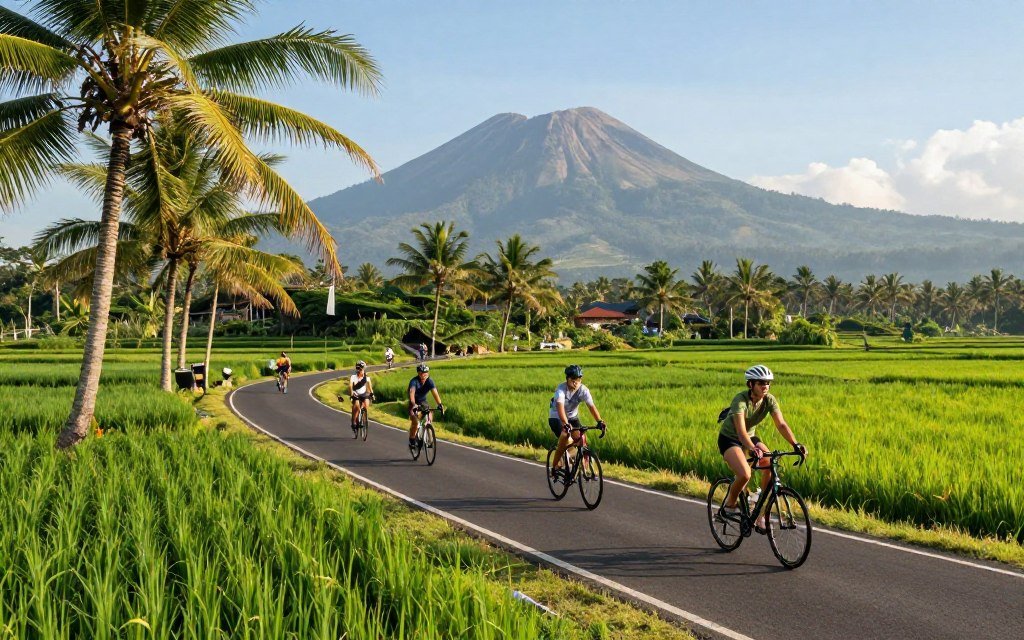
The backroads around Ubud are the classic win. You ride past rice terraces, small temples and local villages away from busy main streets.
Why go: close-up rural views and calmer traffic on side lanes. Watch for short buzzy sections near markets.
Kintamani & Mount Batur
This highland area gives cooler air and big caldera view. The popular route from Lake Batur toward Ubud threads plantations, rice and villages.
It suits both casual downhill tours and stronger riders who want climbs.
Jatiluwih, Sidemen and eastern options
Jatiluwih is a bucket-list rice landscape but has unmarked tracks — a guided tour helps you stay on route.
Sidemen feels like “old Ubud” with Mount Agung views and less traffic. For thrill-seekers, Putung Village drops you toward Pantai Perasi with rugged downhills and a rewarding coastal finish.
Coastal and beginner-friendly areas
Sanur’s boardwalk and Candidasa’s flat roads are ideal for easy spins, recovery days or family rides. Beginner villages near Ubud — Carangsari, Bongkasa and Mengwi — offer gentle gradients and local pace.
| Place | Why it stands out | Best for |
|---|---|---|
| Ubud backroads | Rice paddies, temples, quieter lanes | Scenic short rides, cultural views |
| Kintamani / Mount Batur | Cooler highlands, caldera and lake views | Downhill tours & stronger climbs |
| Jatiluwih | Iconic rice terraces, unmarked tracks | Bucket-list scenery (guided recommended) |
| Sidemen | Old-Ubud vibes, Mount Agung vistas | Less traffic, peaceful countryside rides |
| Sanur / Candidasa | Flat coast roads, boardwalk access | Family-friendly, easy recovery rides |
Scenic routes to plan around (and what each feels like)
Pick a route by how it feels on the pedals — ease, views or full-on grunt. Choose by mood rather than just distance. That helps you match energy to scenery and avoid unhappy surprises.
Kintamani to Ubud: classic downhill flow
The day often starts cool on the plateau and finishes warm near the lowlands. Expect sweeping plantations, rice fields and small temples as you descend.
Feel: mostly flowing and scenic. Great for relaxed riders who want a long, rewarding descent.
Lake Batur loops: mixed-terrain road cycling
This popular route begins around the lake and heads toward Ubud via villages and terraces. It suits a road bike for most sections but watch for cracks and potholes.
Feel: firm efforts with steady climbs, then open views across the caldera — good for fitness-focused riders.
Volcano challenge rides: Mount Agung (expert only)
Mount Agung delivers steep gradients and long climbs. Only attempt with support, plenty of water and mechanical backup.
Feel: a serious leg-burner for experienced riders chasing a mountain test.
| Route | Best vibe | Who it’s for |
|---|---|---|
| Kintamani → Ubud | Cool start, flowing downhill, rice views | Relaxed travellers / downhill tour |
| Lake Batur loops | Mixed climbs, caldera lake view, road sections | Fit riders seeking road cycling |
| Mount Agung | Steep hills, full mountain challenge | Experienced cyclists with support |
“Start early to beat heat and town traffic — mornings give the best light and calmest roads.”
What a typical Bali cycling tour day looks like
Start early and know what’s included. Most days begin with a hotel pick-up around 7:30–8:00am in an air‑conditioned car. You then drive up to the highlands where the air is cooler and the views open up.
Hotel pick-up and the drive into the highlands
The short drive sets the pace. It gives you time to chat, sip water and hear the guide’s plan. Expect a mix of quiet roads and quick photo stops.
Breakfast with views (tour-dependent)
Check your booking: some tours include breakfast overlooking Mount Batur and Lake Batur. Others skip this and head straight to scenic stops like Tegalalang. Always confirm before you leave.
Coffee plantation stop and practical breaks
Most tours pause for a coffee tasting and a shop visit. It’s fun and useful — the toilets are often here, so use them before the main ride.
Main ride, rice fields and lunch
The ride usually runs about three hours and feels mostly downhill. You’ll roll past palm-lined lanes, small temples and a village or two. Guides explain local ceremonies and daily life, so it’s more than just a bike day.
A meaningful stop at rice fields lets you meet farmers and learn how rice is grown. The finish is often a traditional lunch in a family compound — one of the tastiest cultural moments of the tour.
Bike rentals in Bali: how to hire a bike without getting a dud
Hiring the right bike makes or breaks a great day on two wheels. Ask the right questions and you’ll avoid a surprise mechanical or a nervous ride on busy roads.
What to ask for and quick confusion fix
When you rent, say “push bike” so locals don’t assume you mean a scooter or motorbike. That simple phrase saves time and awkward signals. 😊
Don’t get a dud: quick pre-ride checks
- Brakes: squeeze hard and feel for firm response.
- Gears: shift through each gear; listen for skipping.
- Tyres: check tread and pressure by thumb—soft tyres ride poorly downhill.
- Fit: confirm seat and handlebar height so you sit comfortably.
- Helmet: if none provided, treat that as a red flag.
Where you’ll commonly find rentals
Many hotels around Ubud and Candidasa lend bikes for free. Beach stalls at Sanur rent roadside options but quality varies. Local tour operators also rent standalone bikes if you want support or a guided start.
Comfort tip: pick a bike that feels stable, not flashy. Confidence on the seat matters more than speed. And always carry a bottle of water — even a short ride gets hot fast.
Bike shops and repairs: where to go if you need gear or servicing
A reliable local shop can turn a near-disaster into a minor delay. If you plan more than a casual cruise, having trusted repair options reduces stress massively. You’ll fix flats fast and keep your day on track.
Denpasar: your practical hub for parts and bike boxes
Denpasar hosts the main service points for parts, same‑day repairs and bike boxes. Keep these contacts handy before you land:
- The Bike Shop Bali — Ikat Plaza, Jl. Bypass Ngurah Rai No.505x
- Build A Bike Bali — Jl. Bypass Ngurah Rai No.653
- Rodalink Denpasar — Jl. Teuku Umar No.202 (bike boxes available)
- Specialized Bike Store Dewata Bali — Jl. Gatot Subroto Tengah No.100x
What to sort before a big ride
Pre-ride tune-up: brakes aligned, gears indexed, tyres firm, chain lubed and bolts checked. This is essential for a smooth road cycling day.
| Service | Why it matters | Where to go |
|---|---|---|
| Tune-up | Stops mid-ride failures | The Bike Shop Bali / Rodalink |
| Parts & boxes | Travel gear and spares for your road bike | Rodalink Denpasar |
| Same-day repairs | Gets you back on the route fast | Build A Bike Bali |
Carry the basics: two spare tubes, tyre levers, mini pump or CO₂, and a multi-tool. Small items like these can save your trip.
Reality check: outside major hubs you may not find every part. Sort critical gear early and you’ll ride with more confidence. 🙂
How much tours and rentals cost (and what’s usually included)
Plan a clear budget first — prices vary but most half-day options cluster around the same figure.
Typical price anchor: expect about 500,000 IDR, roughly $35–$50 AUD depending on exchange rates and inclusions. That number is common for a half-day cycling tour and helps you compare offers quickly.
What good value includes
- Transport: AC pick-up and drop-off.
- Guide: local knowledge and safety management.
- Bike & helmet: decent kit that actually fits.
- Water/fruit stops, cultural stops (Tegalalang, coffee tasting) and a proper lunch.
| Operator | Price (approx) | Payment | Key inclusions |
|---|---|---|---|
| Jegeg Bali Cycling | 500,000–550,000 IDR | Cash on day | AC transport, guide, lunch, bike |
| Love Bali Bike Tours | ~$40 AUD | Prepay online | Guide, stops, coffee tasting, lunch |
| Booking platforms | Varies | Reserve now, pay later / free cancellation | Flexible refunds, options across operators |
Practical tip: always confirm whether breakfast at Kintamani is included — it changes how early you need to start and what you carry for the day.
Want to compare operators and read local tips? See this guide to rides for more detail and booking links.
Safety on Bali roads: traffic, timing, and riding etiquette
A safe ride depends less on speed and more on timing, route choice and simple rules. Start by choosing quieter lanes and avoid major vehicle hubs when you can.
High-stress zones to steer clear of: Denpasar, freeways and busy beach-town strips. These places stack traffic and fast scooter flows, which are not friendly to a push bike.
Best time of day to ride
Start early. Mornings offer cooler air, fewer vehicles and calmer roads. Many shops open after 8am, so leaving before that often means a smoother run.
How to ride defensively with scooters
Hold a predictable line and signal clearly. Check over your shoulder before moving and assume scooters will pass close.
- Be visible: bright kit or a reflective vest helps.
- Expect beeps: horns usually mean “I’m here”, not anger — keep calm and steady.
Handling tough surface conditions
Scan for potholes, cracks and ragged edges. After rain, road surfaces get slick fast. Low river crossings near Ubud can flood quickly — be ready to turn back if water rises.
Why a guided tour can feel safer
Tours often include a guide and a support vehicle. Guides manage tricky intersections and the support car can collect anyone who can’t finish the day. That extra backup makes a big difference for less experienced riders.
“Set your safety baseline: the island can be safe to ride, but only if you choose the right way, the right time and the right support.”
| Risk | Practical tip | Why it matters |
|---|---|---|
| Denpasar & freeways | Avoid these on a bike | High traffic complexity and fast vehicles |
| Peak beach-town traffic | Use backroads or ride early | Heavy scooter flows raise close-pass risk |
| Surface hazards & floods | Scan ahead; abort if flooded | Potholes and water cause crashes |
| Touring with support | Choose operators with a support car | Helps with mechanicals and rider recovery |
What to pack for a comfortable, respectful ride
What you bring matters: comfort, sun protection and a little cultural respect make the difference. Pack light so you enjoy the day and stop for photos without feeling weighed down.
Clothing for humidity and modesty
Choose breathable, quick-dry tops and shorts. A light long-sleeve or thin wind layer helps if you start cool on the plateau.
Respect tip: avoid overly revealing outfits when you pass a village or temple. A simple cover-up for stops keeps things comfortable and polite.
Sun and hydration essentials
Sunscreen (high SPF) and sunglasses are must-haves. Reapply often when you stop.
Bring a reusable water bottle so you stay topped up and reduce plastic waste. Carry extra water if the route looks long or remote.
Comfort add-ons
Padded shorts and cycling gloves make a big difference on saddle time. They cut chafing and improve grip when hands get sweaty.
Tech, valuables and a light pack
A small backpack or sling fits your phone, camera and some cash without feeling bulky. Zip bags protect electronics from a sudden shower.
If your tour has a support car, you can leave bigger items there and ride lighter — handy if you plan a stop by rice terraces or a short village visit.
Final bit of advice: pack the basics, expect a bit of humidity and choose comfort over flash. You’ll enjoy the ride more and feel ready for any small surprise on the route.
Conclusion
A short, well-chosen ride can turn a regular holiday into a memory that lasts.
Takeaway: pick the right place, the right time and the right kind of tour and you’ll get one of the best cycling add‑ons to your trip.
You don’t need elite fitness. Many guided options are mostly downhill and e‑bikes make the day easy for varied groups.
Decide quickly: favour quiet backroads (Ubud, highlands, east), start early, and avoid Denpasar or major freeways for calmer roads.
Good value usually looks like ~500,000 IDR with transport, a guide, water and a local lunch. Shortlist 1–2 routes, check seasonal weather and choose guided or DIY.
Want a first pick? Consider a trusted guided cycling tour and go explore the rice fields, temples and village lanes you’ll talk about for years.