
Here’s a quirky moment that quietly changed routine at the park. In a now-notable story from AT&T Park in San Francisco, Mark McGwire decided on the fly to get a trim during a day of play. That single act signalled how on-site grooming moved from unheard-of to normal for many teams.
You’ve likely seen players taped up, stretched and fed at the venue. Now, a baseball stadium haircut has slotted into the weekly rhythm as a handy extra. It sounds small, but it reshaped how image and prep fit within a match day.
We’ll walk you through what the in-park set-up looked like, who the barbers were, and why many kept coming back. Expect clear snapshots of the trend across the past year, and why fans and players alike started to care about hair on game day. 🙂
Key Takeaways
- On-site grooming went from novelty to routine in recent seasons.
- High-profile names made the practice visible and acceptable.
- Teams set up simple, professional barber spaces inside the venue.
- Fans turned the look into a light-hearted conversation about style.
- Not everyone agreed — traditionalists worried it could distract from the game.
Why haircuts at the ballpark are suddenly a thing
When days pack up with travel and training, finding time for a cut became a real problem. During spring training, players usually find pockets to tidy up. But once the season tightens, errands fall away fast.
From spring training trims to game-day touch-ups: the “daily grind” factor
Players and coaches called the schedule the “daily grind.” With few off days, booking at a local shop felt like added hassle. Having services inside the venue removed that friction and saved precious recovery time.
“Look good, feel good, play good”: image, routine and confidence in baseball
Many reported getting trims about once a week. Quick touch-ups could fit the pre-game routine without disrupting practice. The line in the clubhouse summed it up:
“Look good, feel good, play good.”
For players, convenience beat vanity. A trim between batting practice and warm-ups felt like a small win. Compared with a shop visit, an on-site trim meant less travel, fewer missed naps and one less chore on a busy day.
Inside a baseball stadium haircut: what actually happens
Players slip into a small room between drills for a fast tidy-up that barely interrupts the schedule. These trims are practical, not fancy. They fit into tight routines and keep focus on the game.
Pop-up set-ups near the action
Most cuts happen in a storage room or the team’s family room, a few steps from the dugout. A portable chair, clippers and a mirror are all you need. The space feels temporary, but it works.
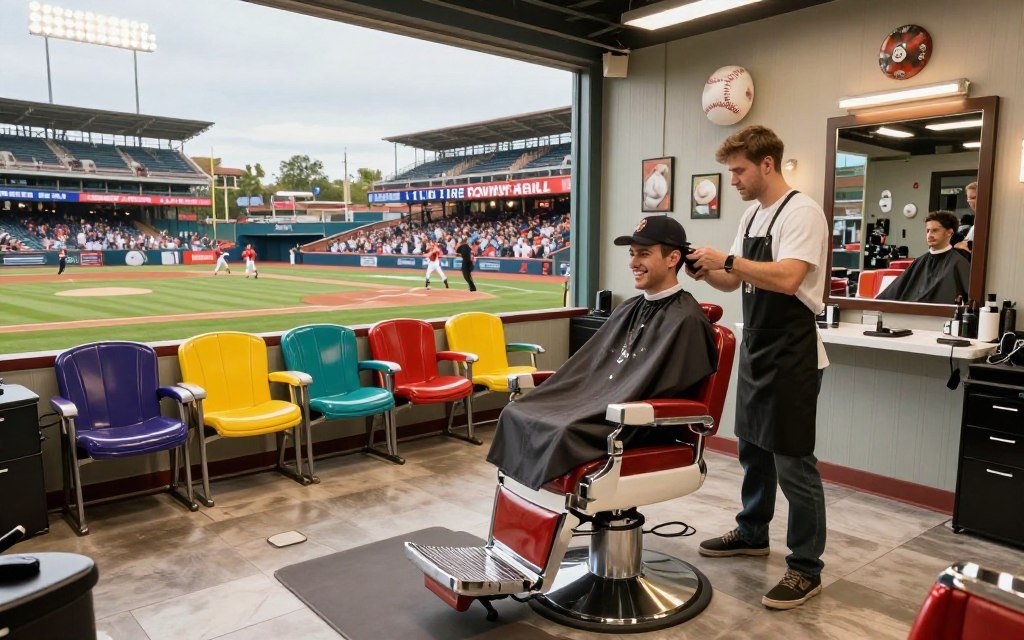
AT&T Park’s “Big Mac Salon”
At AT&T Park the small cut space was nicknamed the salon—complete with a Mark McGwire photo under a sign. That spontaneous visit helped normalise the idea for others.
How players find the chair
Players hear about it from simple signs in the clubhouse, or by bumping into the stylist — like Francisco Cervelli grabbing bats and spotting the set-up. Word of mouth spreads fast.
Time, cost and tipping
Most trims took minutes. Payment was informal: payment by tips kept the process quick and appointment-free. The low cost and easy tipping system suited a packed schedule.
The barbers behind the clippers: travelling pros and trusted relationships
A tight network of travelling barbers quietly became essential to many teams’ routines. These were not random helpers. They were trusted pros who knew players, schedules and superstitions.
Oscar “The Crazy Barber” Mamber
Oscar, a Venezuelan barber, hopped from club to club across the league. He even showed up at the All‑Star Game in Miami. Felix Hernandez once gifted him US$3,000 — a bold sign of loyalty from a high-profile outfielder and pitcher fan.
Henry Garcia’s long-haul trips
Henry, born in the Dominican Republic and based near Nationals Park, flew to South Korea and to Japan just to cut Roger Bernadina’s hair. Bernadina covered flights and food. The trip proves how far a barber will go for a regular.
Jordan López and the Bronx connection
Jordan (Jose Moises) López runs a famous Bronx barbershop in New York. Players like Luis Castillo and Robinson Cano helped grow his roster. Sabathia said only López and one Tropicana Field barber cut his hair for years.
Barbers weren’t just stylists. They became confidants for customers on the road, building trust over years and turns in the schedule.
More than vanity: culture, superstition and clubhouse tradition
Barbershop routines travelled with players, bringing a slice of home to unfamiliar cities. For many from the Dominican Republic and wider Caribbean, a weekly visit was part of life.
Carlos Gomez called it “cultural.” He noted many get a trim on Fridays. That ritual kept a sense of normality in a busy season and marked readiness for the day.
Caribbean and Latino barbershop culture
Players said the shop was where stories, food tips and jokes were shared. It was a social hub as much as a service. Henry Garcia warned that Caribbean hair needs know-how. He said some barbers overseas do not cut it well, so loyalty to a trusted pro grows fast.
Superstition at the plate and on the mound
Luis Severino explained a simple rule: one bad cut, one bad game, and you might never return to that barber. For many, grooming is ritual. It ties comfort, focus and confidence together before a big match.
- Identity: hair is part of how players keep culture alive.
- Routine: a Friday trim fits the weekly rhythm and saves time.
- Trust: texture issues mean picky choices and loyal bonds.
In short, grooming in the clubhouse was part comfort, part confidence, and part ritual — not a shallow flex. It mattered, a lot, across the season and last year too.🙂
Not every player’s sold: old-school views and modern grooming expectations
A fair few veterans shrugged — trimming at work felt like crossing a line they’d kept for years.
“Wouldn’t have been caught getting my hair done at work,” said Vida Blue, noting it felt like a distraction before the game.
Clint Hurdle laughed that he’s “old school” and that getting a cut at the park wasn’t his thing. Still, he admitted the season and time pressures have nudged teams to adapt.
There’s a simple split here. Some guys value quiet prep and a routine they’ve run for years. Others see a quick tidy as basic upkeep, especially when cameras and social clips follow every play.
Key points
- Quiet routine: older players kept preparation isolated to protect focus.
- Practical change: family rooms and casual spaces made in-park services easy.
- Generational shift: younger players treat hair and style as part of their brand.
The takeaway? It’s not about who’s right. It’s about how convenience, visibility and habit collide to change what feels normal at work and during the season.
Conclusion
Teams found a tidy fix for tight schedules — a small room, a chair and a trusted barber.
That simple layout solved a real problem: little time between travel, practice and game day. A weekly trim in the clubhouse became practical for many players and staff.
From New York to Los Angeles, barbers like Jordan López built regular rosters that included Luis Castillo and Robinson Cano. Cuts at Citi Field and near Yankee Stadium showed how routine spread across cities and clubs.
What matters for you as a reader is the takeaway: convenience + habit keeps grooming alive. It’s not about spectacle; it’s about a quick, effective way to save time and stay ready.
Some still said they wouldn’t do it, but enough players ’ve gotten regular trims that the practice stopped being odd and started feeling normal. For a neat historical aside, see the well-known haircut story.